



At the 30th China International Manmade Fiber Conference (CIMFC), held in September 24-25 in Haining, Zhejiang Province, China, experts and executives expressed cautious optimism about the Chinese and global manmade fiber industry, although also admitting that the current global economic climate, shaped by shifting trade dynamics and, most notably, the ongoing China-U.S. trade tensions, had inevitably impaired the potential of the industry.
More than 30 speakers and nearly 400 fiber professionals attended the conference for two days of programming. Speakers and attendees were primarily from Mainland China, with representatives from Europe, Japan, South Korea, Taiwan, and Thailand also in attendance.
The conference was organized by the China National Textile & Apparel Council (CNTAC), the China Chemical Fibers Association (CCFA), the China Textile International Exchange Center (CTIEC), Haining Warp Knitting Industry Association (HWKIA), Haining Home Textile Industry Association (HHTIA), and Zhengjiang Hengyi Group (Hengyi). Hengyi, headquartered and founded in Haining, is one of the world’s largest producer of petrochemicals and manmade fibers, ranking 220th in the 2025 Fortune Global 500 company list with $62.79 billion in revenue. Currently, the company has a capacity of 6.37 million metric tons of polyester filaments and 1.18 million metric tons of polyester staple fibers per year.
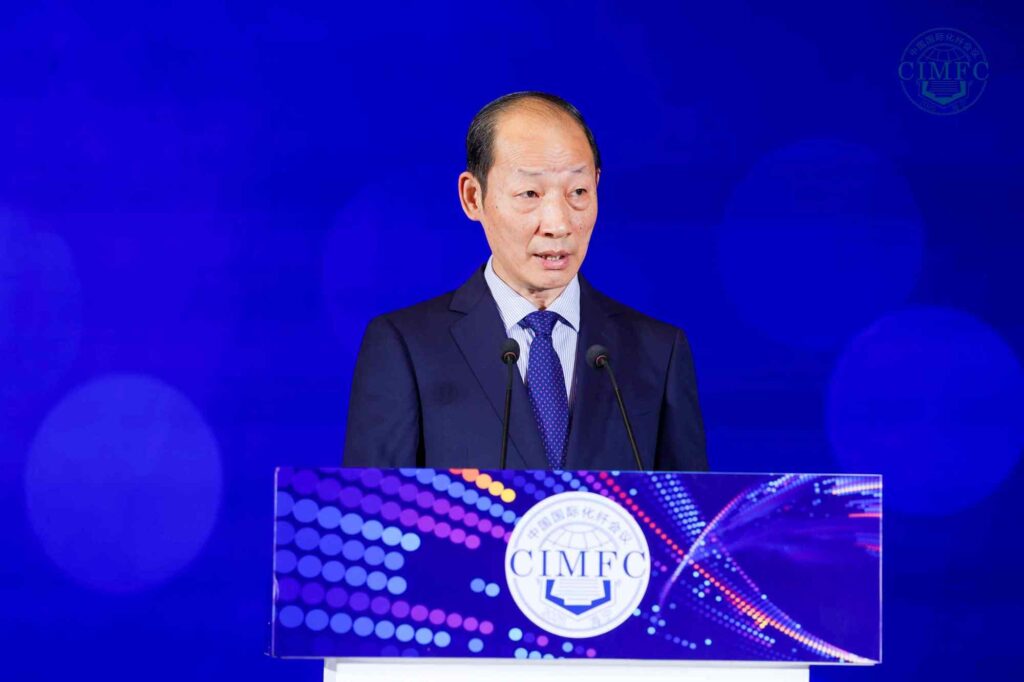
Mr. Chen Xinwei, president of CCFA, hosted the first day of the Development Forum, which focused on the current situation, challenges, and opportunities in the Chinese and global manmade industry.
China-U.S. Trade Tensions
One of the hot topics in the forum was the China-U.S. trade tensions, which would ultimately culminate in agreements that would limit the negative impact on the manmade fiber industry, experts said.
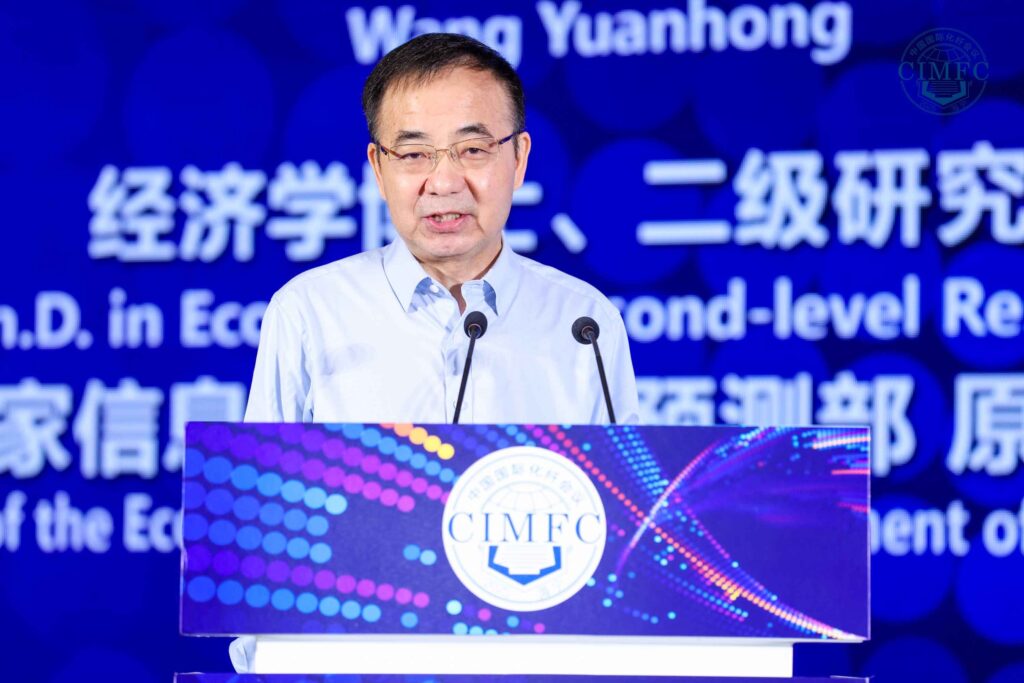
Mr. Wang Hongyuan, the former vice director of the Department of Economic Forecasting of China’s State Information Center, said that the temporary tariff agreement between the U.S. and China was the result of competition-driven cooperation, a key step toward rebuilding the new global trade order. He highlighted China’s strategy of “dialogue rather than confrontation” in trade talks with the U.S. and said this strategy would be an effective way to resolve or limit the impact of trade conflicts, supporting the growth of the manmade fiber industry.
Steady Economic Growth
Amid current economic uncertainty, Mr. Wang said that China would still achieve its target of 5% annual gross domestic product (GDP) growth this year, and that steady economic growth would continue to boost the Chinese manmade fiber industry.
Economic growth has shifted to manmade fiber consumption and production. In the first half of this year, China’s production of chemical fibers reached 42.358 million metric tons, up 4.9% from the same period of the previous year, at a level similar to its economic growth, according to CCFA.
The Decreased Export to the U.S.
Still, the China-U.S. trade tensions have reduced the export and import between these two largest economies. In the first half of this year, China’s textile exports to the U.S. dropped 5.3%. However, its total textile exports still grew by 0.8% to $143.98 billion.
Where did the growth come from? Data from China Customs showed that the country’s textile exports to the European Union, the UK, Canada, Korea, Pakistan, Chile, and Nigeria grew significantly during that period. For example, China’s textile exports to the European Union in May 2025 were $4.22 billion, a 19.4% increase from the same month the previous year.
In addition, the export of non-garment textiles, including manmade fibers and yarns, performed much better than the garment sector: China’s non-garment export grew by 1.8% in the first half of this year, while its garment export suffered a decline of 0.2%. Manmade fiber is the champion of all textiles, growing by 14.73% to reach a total of 3.45 million metric tons of export in that period.
New Markets
Experts also believed that new applications in new markets would partially drive the growth. Mr. Duan Xiaoping, vice president of CNTAC and former president of CCFA, suggested that new-energy vehicles, aerospace, healthcare, and high-end equipment would be the new driving forces for the manmade fiber industry.
For example, China’s production of new-energy vehicles, including electric vehicles and hybrid electric vehicles, grew by 41.4% in the first half of this year. New-energy vehicles have different demands for automotive textiles than conventional vehicles. For example, electric vehicles require high-performance fireproof and thermal-insulating fabrics, such as aramid composites and flame-retardant nonwovens.
Value Creation
Although China’s manmade fiber industry maintained steady growth, the production didn’t convert to profit. The main reason is that the industry’s position stay relatively weak in the industry chain from oil production to end consumers of textile products. It has a weak bargaining power against its raw material suppliers: China’s average price of polyester fully drawn yarn (FDY) decreased 6.53% from January to July this year as the demand turned weak, while the price of the main raw material, pure terephthalic acid (PTA), lowered only 1.03%. The price decline reduced turnover: in the first half of this year, sales by Chinese manmade fiber producers decreased 6.9% from the same period the previous year. The weak bargaining power led to lower profits: the Chinese manmade fiber industry’s profits dropped by 2.81% during that period.
To solve this problem, Mr. Duan suggested the industry to focus on high-end products and value creation. With the development and commercialization of multi-functional and advanced fibers, the fiber industry could have a stronger market position and thus secure its profits.
One of the second day’s two forums focused on the advanced fiber materials. The topics include functional carbon microfiber by Teijin, the development and applications of next-generation functional polymer materials by Taiwan University of Science and Technology, and thermal and moisture comfort smart fibers by Wuhan Textile University. The speakers believed that the development and application of advanced materials would create value and secure profits for fiber producers.
Green Developments
Green technologies and developments are not only the fiber industry’s answers to the global environmental calls, but also one of the primary growth drivers, said experts in Mainland China, Europe, Japan, and South Korea.
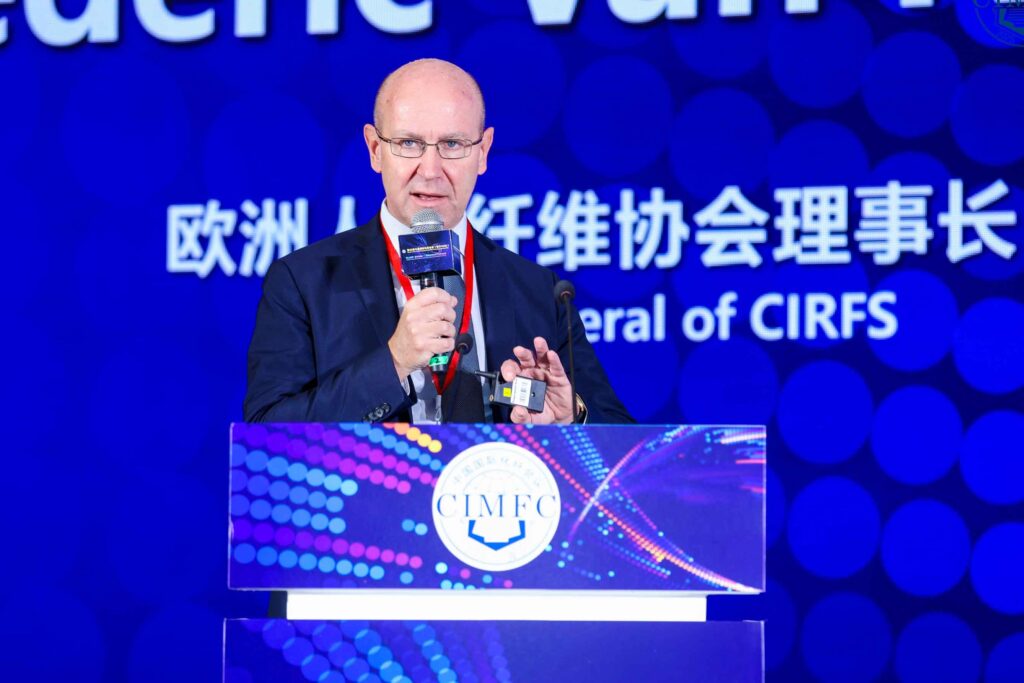
Currently, Europe, Japan and South Korea are keeping their positions as main global fiber producers through a series of green efforts. On the first day of the Development Forum, Mr. Frederic Van Houte, Director General of the European Man-made Fibres Association (CIRFS), said that Europe maintains its unique status as a specialty fiber producer, which stems from green development on both the production and consumption sides. Based on European regulations, for example the Industrial and Livestock Rearing Emissions Directive (IED 2.0), the European manmade fiber industry are working on emissions reduction, energy savings, waste management, bio-based fibers, and carbon reduction through the carbon trading system.
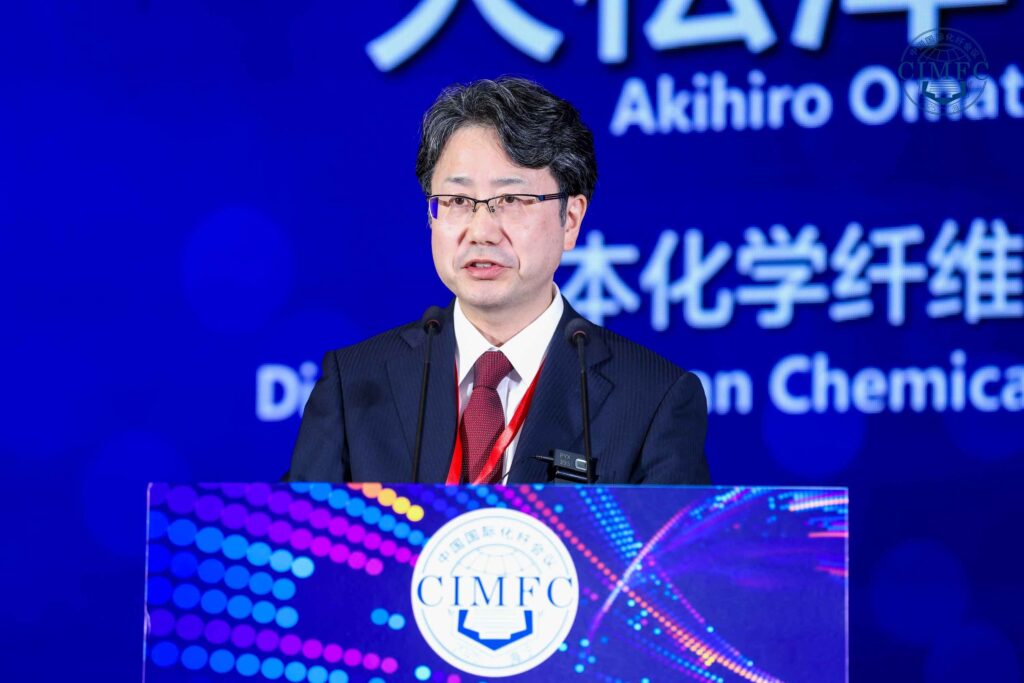
For the Japanese manmade fiber industry, achieving “textile-to-textile” recycling is a key way for the goal of a circular economy; however, significant challenges remain in both technology and system sides, according to Mr. Akihiro Omatsuzawa, director of the Japan Chemical Fibers Association (JCFA). Japan is now focusing on developing polyethylene terephthalate (PET) recycling systems, textile-to-textile recycling technologies, and bio-based fibers. He suggested the industry to share the latest policies, harmonize the regulations, and promote the international standards for resource recycling and sustainable development.
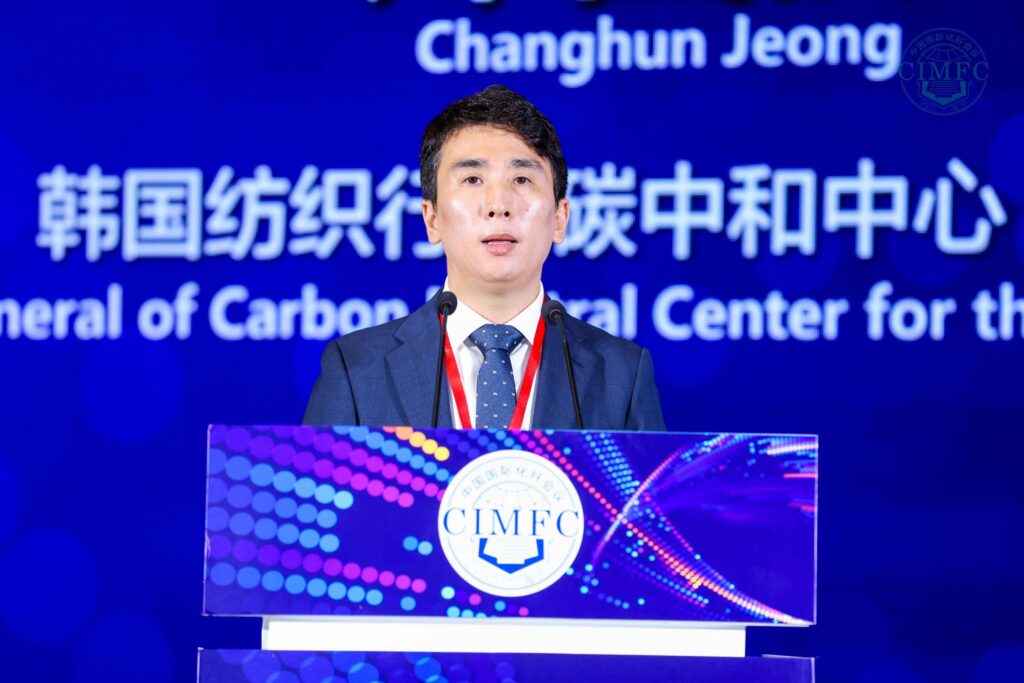
In South Korea, the textile industry aims to leverage innovative technologies and cross-industry collaboration to establish an “industrial supply chain carbon partnership,” said Mr. Changhun Jeong, sec-
retary general of the Carbon Neutral Center for the Korean textile industry. This initiative seeks to enable the efficient sharing of carbon-emission data and coordinated reduction efforts among companies across the supply chain – paving the way for a more sustainable future.
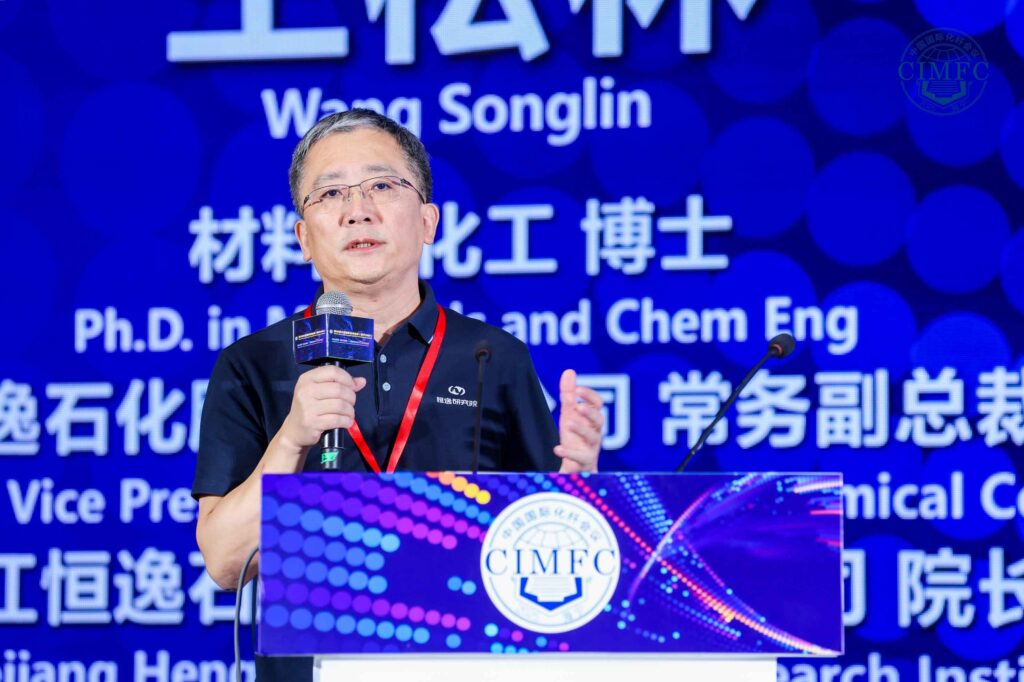
In China, leading man-made fiber companies also rely on green development to balance growth with environmental needs. For example, Hengyi is now working on four major green projects: waste textile recycling, 2,5-furandicarboxylic acid (FDCA) and polyethylene furanoate (PEF) bio-based materials, biodegradable polytrimethylene terephthalate (PTT) fibers, and using greener technologies, such as nylon direct spinning and dope dyeing, to replace conventional ways in their production lines, according to Mr. Wang Sonlin, executive vice president of Hengyi Petrochemical Co., Ltd., a Hengyi subsidiary.
PEF is a bio-based, 100% recyclable plastic made from renewable materials like plant sugars, as a next-generation alternative to petroleum-based PET. Yet, FDCA is a platform chemical derived from sugars that serves as a renewable building block for making plastics like PEF.