



China just took an important step toward the artificial intelligence (AI) era for its manufacturing sector. China’s Ministry of Industry and Information Technology (MIIT), alongside seven other departments, recently announced an initiative to accelerate the country’s AI-integrated manufacturing. The most recent goals set for 2026 and 2027 include deploying three to five large, general-purpose AI models, 1,000 industrial intelligent agents and 100 high-quality datasets, promoting 500 typical application scenarios, and nominating 1,000 benchmarking enterprises.
This initiative is a follow-up to the State Council’s “AI+” strategy launched last year, which aims to empower science, manufacturing, consumption, and many sectors with AI technologies, and ultimately lead China to a “smart society” by 2035.
Often, an initiative like this in China will substantially benefit those companies that follow the government’s guidance. In addition to the government’s promise to fund the research and development (R&D) and applications and to create mechanisms and policies for facilitating the deployment of AI systems, manufacturers who adopt AI technologies may also see other benefits such as high-tech subsidies or tax cuts, low-interest loans from banks, and land price discounts.
This is good news for the Chinese man-made fiber manufacturers, as some of them have been leveraging AI technologies to deal with the challenges they face for nearly a decade. The AI initiative will no doubt help them accelerate their AI efforts over the next decade.
Challenges Call For AI Solutions
The Chinese man-made fiber industry grew rapidly from almost nothing to today’s dominant position in just four decades. However, problems such as low profit rates, low values, severe overcapacity, weak bargaining power, and environmental issues have also hurt the industry. Supply was often much larger than demand; prices and profits were often too low to support the healthy growth; and when the prices of raw materials fluctuated, manufacturers often suffered losses.
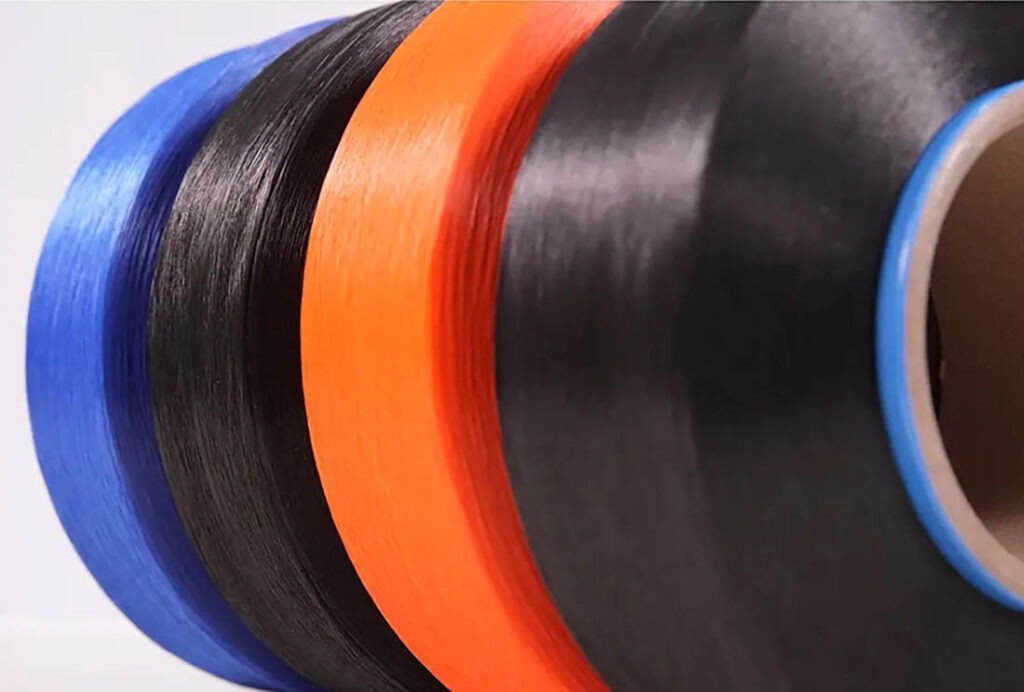
In 2024, China produced 74.75 million metric tons of man-made fibers, accounting for about three quarters of the world’s total and generating revenues of 1.17 trillion RMB ($160 billion), according to the China Chemical Fiber Association (CCFA). In the first three quarters of 2025, the output grew by 5.6 percent. At this rate, China’s man-made fiber production would reach a total of 78.94 million metric tons on an annual basis.
However, the industry’s average profit remained low at only around 3 percent, and some segments performed worse or even reported significant losses. For example, the average profit rate of polyester filaments was below 2 percent in the first seven months of 2025, according to Longzhong Information, a China-based commodity data provider. The Chinese spandex industry also suffered big losses for three years from 2023 to 2025; and Tayho, China’s fifth-largest spandex producer, reported a gross loss of almost 12 percent for its spandex segment in 2024.
The problem of low profits or losses also exists in part because of severe competition. Leading Chinese spandex companies invested to increase capacity over the past few years even though it was known that the industry had fallen into severe overcapacity. Companies were trying to wipe out their small- or mid-size competitors to grab additional market share at a cost of several years of losses. Overcapacity causes huge oversupply, and as a result, spandex prices and profits plunged to a historical low, which forced many small- and mid-size producers to retreat from the market. In addition, the industry concentration kept rising and by the end of 2025, the top five spandex producers owned more than 86 percent of the total capacity in China. As the rapid expansion is coming to an end, the competition is expected to ease, and profits will likely return to a normal level.
Low profits and losses also exist in part because the fiber producers typically have relatively weak bargaining power with both their customers and suppliers: when the prices of raw materials increase, manufacturers find it is difficult to pass along any increase to customers when demand is weak.
One solution to this problem is for manufacturers to focus on advanced or differentiated fibers with higher values and less competition. However, R&D on advanced fibers can be difficult and expensive, and low profits can make a move to advanced materials nearly impossible.
The good news is that in recent years, Chinese man-made fiber producers have found AI to be an effective and efficient tool to lower their production and R&D costs, while improving the quality of their products. They have leveraged machine learning, the Internet of Things (IoT), computer vision, data analytics and other AI technologies to optimize production processes, enable predictive maintenance, improve efficiency, enhance quality control, automate supply chains, and reduce energy consumption and emissions.
Success Stories: Polyester Champion And Spandex Rebound
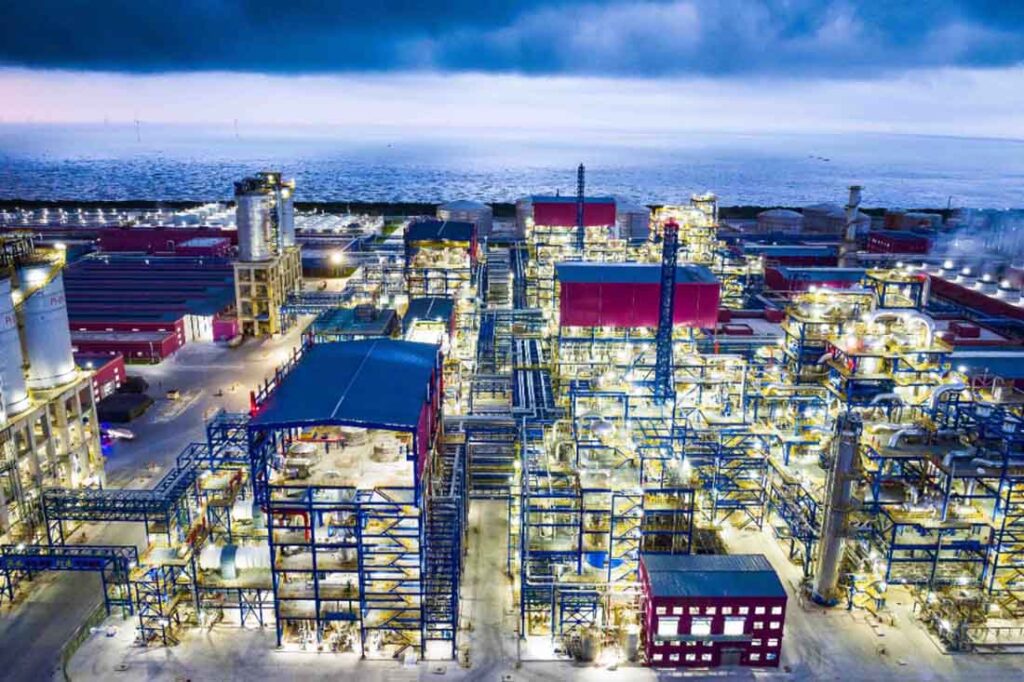
The first success story comes from man-made fiber and polyester producer Tongkun Holding Group Co. Ltd., Tongxiang, China, which started its AI journey in 2019. Tongkun has established an AI factory that connects more than 28,000 pieces of equipment with more than 1.5 million data collection points. The factory has the capacity to process 12 billion pieces of data per day, which allows the company to optimize production, reducing energy consumption by 23 percent and operating costs by 31 percent.
The company was the winner of an AI manufacturing competition held by MIIT late last year, making it eligible to become an AI benchmarking enterprise. Currently, Tongkun has a capacity of 15.1 million metric tons of polyester filament per year, which accounts for more than one-fifth of the world’s total capacity. Partially driven by the success of the AI factory, Tongkun’s profits increased significantly over the past two years. It was estimated the company’s proceeds would grow approximately 70 percent to reach around $300 million in 2025 at a profit rate of about 3 percent — much higher than the industry average.
In the spandex sector, Yantai Tayho Advanced Materials Co. Ltd. set up a digital twin for its factory to reduce costs, energy consumption, storage areas and emissions. The digital twin is a dynamic, virtual model of Tayho’s physical factory that uses real-time data from sensors to accurately simulate, monitor, and predict the real factory’s performance, enabling the company to optimize production processes and test scenarios in a virtual environment without risking any physical asset. With this digital twin, Tayho reports it consumes 15 percent less energy, uses 30 percent less storage space, has reduced maintenance costs by 1.5 million RMB ($210,000) a year, has lowered the factory’s accident rate by 30 percent, and has achieved a 100 percent emission control goal — all while improving the quality of its products.
By the end of 2025, Tayho’s spandex capacity reached 100,000 metric tons per year, accounting for about 5.6 percent of the global total. The company said in a recent press release that losses in its spandex business in 2025 decreased significantly compared to 2024 as a result of reduced costs and improved quality partially achieved through the use of a digital twin and other AI technologies.
AI Solutions: Energy Consumption
Success stories are seen in almost every man-made fiber category, from polyester and viscose to nylon, carbon and recycled fibers. In these cases, AI technologies have penetrated into almost every step of man-made fiber producers’ life cycles.
In production, AI technologies are used to collect, monitor, and analyze data to optimize processes and improve product quality and production efficiency, increase the utilization rate of raw materials, reduce equipment wear, lower the rejection rate of final products, and save energy.
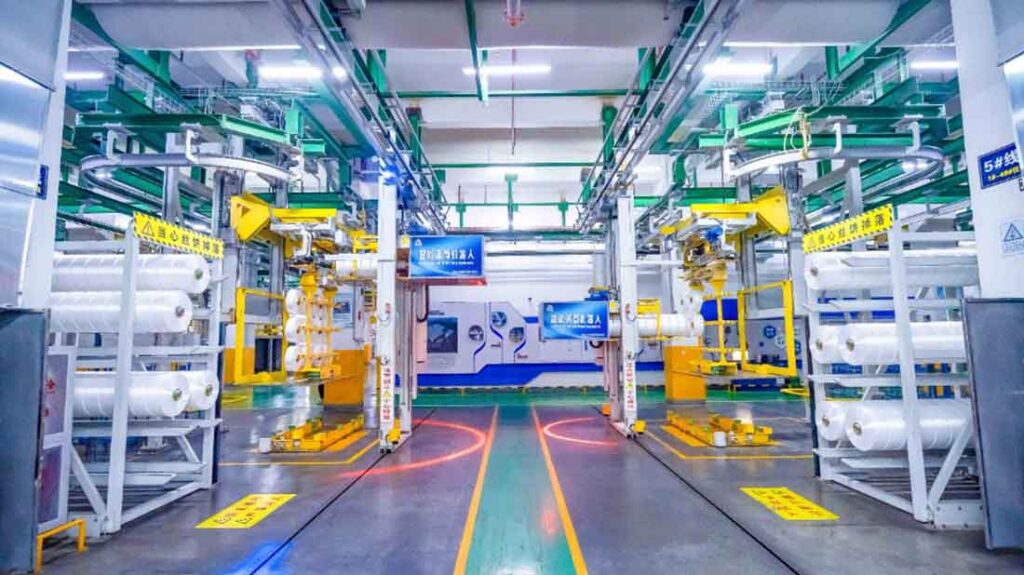
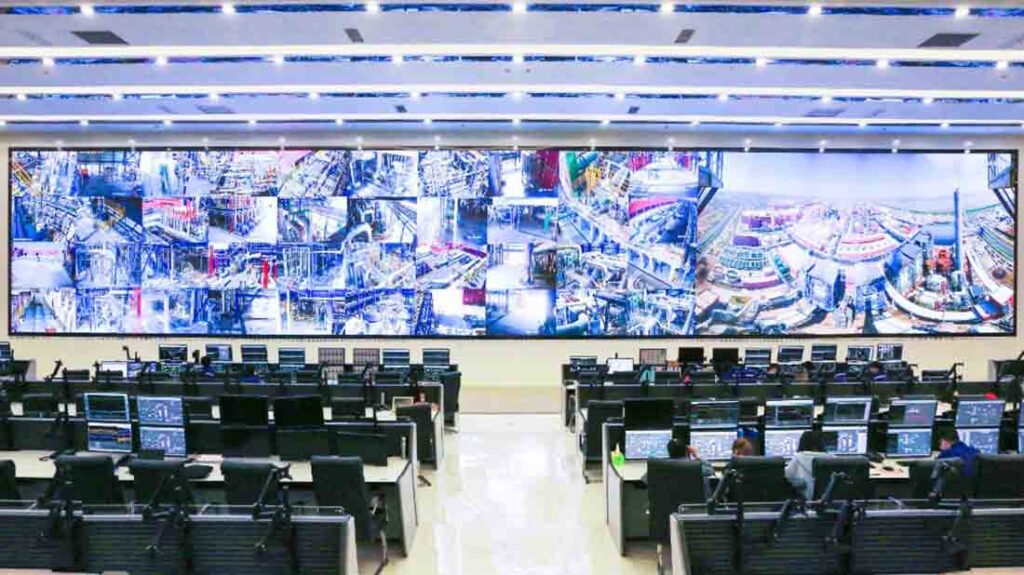
Tongkun and Tayho both set energy savings as a priority for their AI factories because it is important for both cost and environmental reasons. By using AI technologies, manufacturers can easily collect energy consumption data and analyze energy efficiency in order to optimize production time or inform decisions about advanced equipment or new technology purchases to save energy.
Quality Control
A quality prediction and defect detection system is also key to the success of production optimization. These systems often combine real-time monitoring of material and product parameters with a feedback mechanism and quality management system. For example, Xingshida, a recycled polyester producer based in Jinjiang, China, has developed a patented AI technology to detect and predict the impurity distribution and melt flow during post-consumer PET bottle or textile waste melting to enable adjustments to equipment parameters and operations. In an implementation example, this AI technology enhanced the fiber strength by nearly 20 percent, while reducing the energy consumption by 25 percent and the equipment wear rate by 50 percent, according to the company.
Supply Chain Management And R&D
In supply chain and logistics management, AI technologies are used for various purposes, including demand forecasting and inventory management, intelligent logistics and distribution optimization, and raw material procurement analysis and prediction. These efforts increase efficiency while reducing costs and labor requirements for a more profitable process.
In advanced fiber materials R&D, AI systems are deployed for various purposes including new material assistance, discovery and design acceleration, R&D cost reduction, new material performance optimization, interdisciplinary communication between fiber materials and other industries, automated testing and iterative learning, as well as production process simulation and optimization. Using AI technologies in R&D may increase development efficiency and the likelihood of success, while significantly reducing costs.
Risks And Challenges For AI Manufacturing
While AI manufacturing is promising, its integration into the man-made fiber industry will also face many challenges. Some of the challenges include:
- Fragmentation of AI application scenarios — Some fiber companies use only limited AI solutions in their production processes such as computer vision for quality control or predictive maintenance of equipment. Failing to connect and integrate AI into core operations including supply chain, quality management and production planning may limit the full potential of the technology.
- Inadequate data support — Problems in the quality, quantity, and format of data could result in inadequate information to train the AI model, thus affecting the performance of the AI systems.
- Communication and workforce problems — A lack of talented people who really understand both the manufacturing process and AI/information technology may impair the deployment and implementation of AI systems.
- Lack of evaluation method for AI options — The use of AI often requires a substantial investment in computing power, data management and workforce. An appropriate evaluation model is needed in order to choose the right solution.
What Does The Future Look Like With AI?
In an optimistic scenario using AI technologies, advanced and differentiated fibers will appear on the market mor quickly and in greater quantity as R&D and simulation costs drop and development efficiency increases dramatically. Manufacturers will be able to create more value while avoiding overcapacity and
severe competition in the fiber segments.
On the other hand, manufacturing costs may be reduced by optimizing the production processes and supply chain using AI technologies. Energy consumption will be reduced and emissions will be managed better, which will also make the industry more sustainable and greener.
Ultimately, the increased value and decreased costs will provide enough profit to support the healthy growth of the man-made fiber sector, which will feed the R&D and environmental protection efforts in turn, thus forming a positive cycle for the future growth of the man-made fiber industry.