



Thomas Jefferson University programs use summer camps and industry shadowing to introduce students to textile design, engineering and career pathways.
The textile and fashion industries are at an inflection point. Because of declines in U.S. manufacturing and enrollment, many of the textile programs in the United States have closed during the past 25 years. However, a recent wave of retirements among textile and apparel professionals has created renewed demand for qualified replacements across industry, education and research. The textile and fashion programs at Philadelphia-based Thomas Jefferson University, formerly Philadelphia University and Philadelphia College of Textiles & Science, are actively engaged in attracting more young people to the fashion and textile industries.
For the past five years, the Fashion Design (FD), Textile Design (TD) and Fashion Merchandising & Management (FMM) programs of the newly formed College of Fashion and Textiles have collaborated to host a weeklong summer camp for high school students. Participants attend because of their interest in fashion and related creative fields, though most are unaware of textiles as a concept beyond fashion or associated career paths. During the week, they are introduced to fashion design, textile design and production processes, and the role of branding and marketing in consumer behavior.
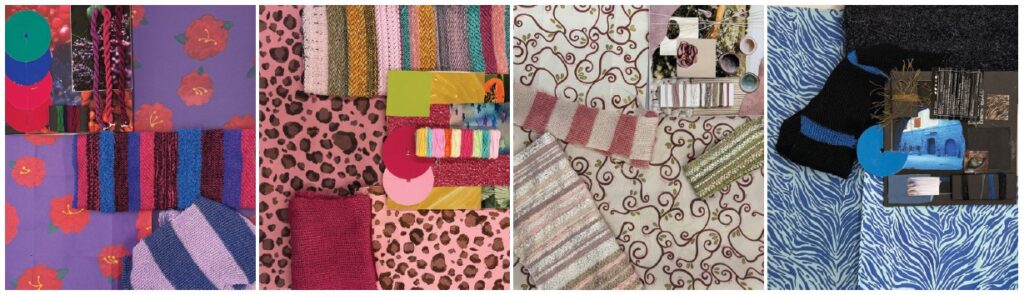
The summer camp curriculum is structured around a shared theme that provides continuity across the week. Students begin in Fashion Merchandising & Management, where they create vision boards and develop an imaginary brand. Activities include discussions of color stories, trend forecasting and target demographics. Students then move to Textile Design, where they are introduced to basic weaving, knitting and surface design techniques. Over approximately a day and a half, they produce handwoven samples, machine-knit swatches and printed fabrics using their own hand-drawn motifs translated into repeating patterns. They also receive a tour of the facilities and attend a presentation by current college students about their academic work and experiences.
Given the evolving needs and expanding opportunities across the textile industry, enrollment in college textile and apparel programs must continue to grow.
The final portion of the week takes place in Fashion Design. In this section, students draw croquis and drape garments on dress forms using muslin, buttons and pins. On Friday afternoon, faculty from all three programs meet with the students and their families for a final presentation. Each student presents their vision board, discusses their intended customer, shows the textile samples developed during the week, and concludes by presenting their draped muslin garments.
Beyond The University
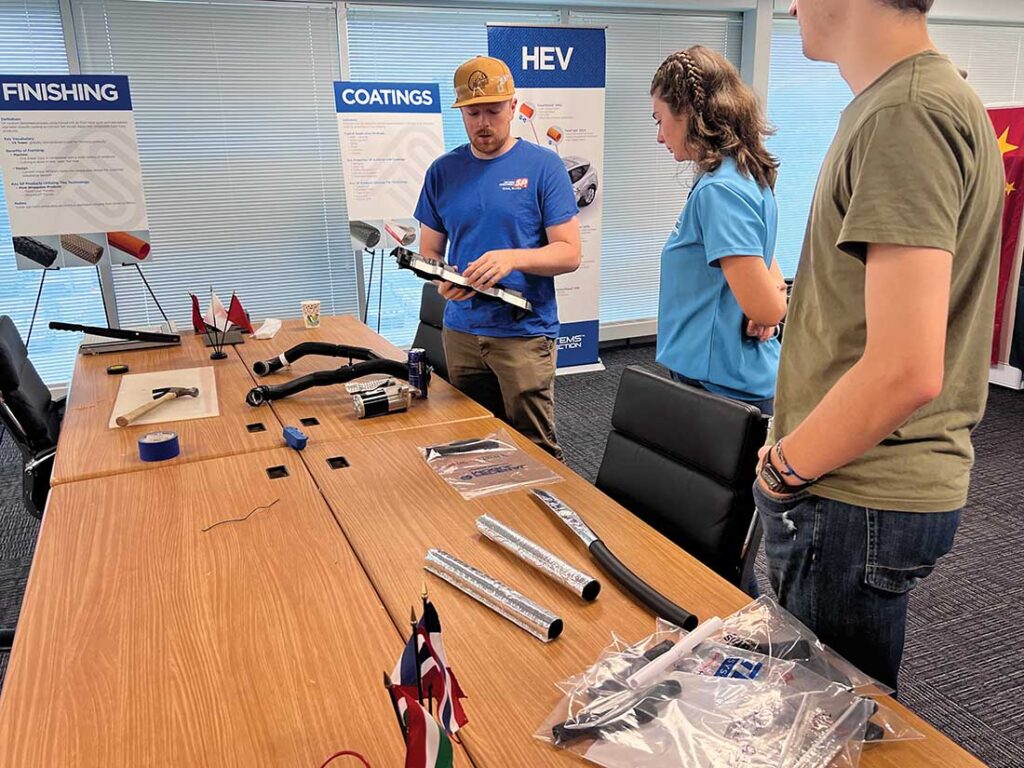
Last year, the director of the graduate technical textile programs gave a presentation on textile engineering at a nearby high school. Two students showed an interest in learning more, so the director reached out to alumni at Tenneco’s Systems Protection Group in Exton, Pa., to set up a shadowing program for these students over two days. The students, a rising senior and a rising junior from Twin Valley High School, shadowed employees of Tenneco’s Systems Protection Group and learned about textile engineering and the process of making products from fibers, yarns, and fabrics. They also were introduced to mechanical engineering in the form of modeling material behavior, as well as quality control processes and the relevance of intellectual property to the development of processes and products. Feedback from the students was positive; they came away from the experience with a better understanding of textiles and the processes involved in making them. This collaboration between industry and academia to expose young people to textiles was deemed a success, and the university will look at expanding this program with Tenneco and industry contacts in other areas in the future.
Given the evolving needs and expanding opportunities across the textile industry, enrollment in college textile and apparel programs must continue to grow. Jefferson’s legacy programs have sustained efforts to introduce prospective students to textile design processes, fashion and apparel studies, and advanced textile manufacturing, while simultaneously engaging with ongoing developments in technology and sustainability. One of our most significant challenges is increasing the visibility of textile related career pathways among college seeking audiences. The university welcomes innovative strategies for broadening our outreach and for converting early interest in textiles and fashion into active enrollment in degree programs.