



A new partnership between Panda Biotech and Culturewell connects American-grown hemp with degumming, spinning and yarn production in India.
Founded in 2019, not long after industrial hemp farming became legal in the United States, Dallas-based Panda Biotech LLC is dedicated to advancing hemp fiber materials for a variety of end-uses.
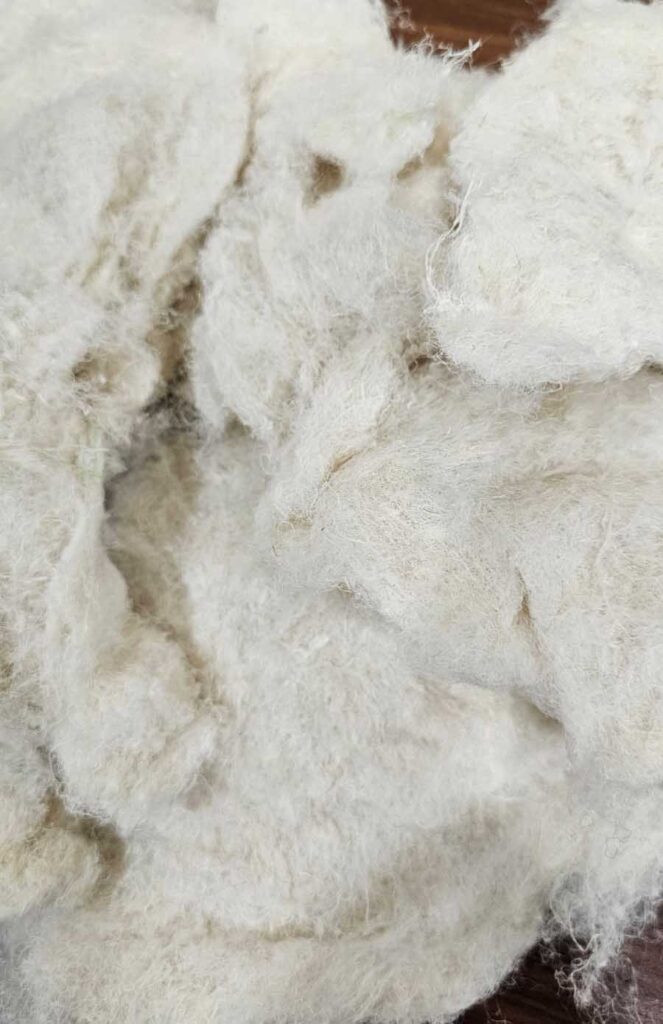
The company’s 500,000-square-foot Panda Hemp Gin in Wichita Falls, Texas, processes 22,000 pounds of American-grown hemp straw feedstock per hour. Using proprietary decortication technology, Panda produces textile-grade and nonwoven-grade fiber, hurd, micronized hemp and a blend of short fibers and hurd. The fiber and hurd are used in a wide variety of applications including textiles and nonwovens as well as construction and transportation materials.
Hemp is a sustainable and eco-friendly product, and Panda’s Hemp Gin is USDA BioPreferred® as well as OEKO-TEX® STANDARD 100 certified.
Panda recently announced a partnership with India-based Culturewell Trading LLP and its subsidiary Culturewell Hemp Pvt. Ltd. to establish an integrated hemp fiber-to-yarn supply chain in India. According to a recent press release issued by Panda, the partnership will “transform U.S.-grown hemp from mechanically cottonized fiber into finished yarn, including degumming and spinning capabilities that were previously unavailable in India.”
“What we have built with Panda Biotech is not simply a supply agreement, it is the foundation of an entirely new industrial framework for hemp in India,” Culturewell CEO Rajesh Raizada said. “Indian customers have been asking for hemp yarn, not just fiber. For the first time, we can deliver it — certified American-grown hemp, degummed, spun and ready for the mills.”
International Fiber Journal recently spoke with Panda Biotech President Dixie Carter about the partnership.
IFJ: How did the partnership with Culturewell Trading come about?
Dixie Carter: Culturewell wanted a partner and mentor that was a world leader in the hemp processing sector and its research pointed to us. Our ability to deliver quality and consistency at scale to support the burgeoning Indian textile and apparel supply chain is what cemented the partnership. Culturewell understood the Indian textile industry, had the technical relationships needed to support degumming and spinning, and believed, as we did, that commercial adoption depends on solving the entire supply chain—not simply supplying raw fiber.

IFJ: What were the biggest technical or logistical gaps that had to be solved to establish an integrated fiber-to-yarn supply chain in India?
Carter: One of the initial challenges was overcoming skepticism created by inconsistent hemp fiber sourced from other parts of the world. Many manufacturers had experienced wide variations in quality and performance, so our first priority was demonstrating that Panda’s American-grown hemp fiber could consistently deliver the quality, traceability and regenerative benefits global brands increasingly expect.
Historically, India could import hemp fiber, but there wasn’t an established commercial system for consistently converting imported textile-grade fiber into yarn at scale. As a result, mills often had to solve technical challenges themselves or rely on materials that varied significantly in quality from shipment to shipment.
Our partnership with Culturewell closes that gap by connecting every step of the value chain. Panda has invested in the infrastructure needed to make hemp commercially reliable, producing mechanically cottonized fiber with consistent specifications, low hurd content and full traceability. Culturewell then provides the local expertise to degum, spin and distribute that fiber for export or into yarns and products that Indian manufacturers can immediately incorporate into their operations.
Just as importantly, we’ve aligned quality standards across the entire supply chain. Every shipment is supported by OEKO-TEX STANDARD 100 and USDA BioPreferred certifications, giving brands and manufacturers confidence that they’re sourcing fiber that meets increasingly rigorous quality, traceability and compliance expectations.
IFJ: Why is India the right market for Panda Biotech’s next stage of growth, and what kinds of Indian textile producers are showing the strongest early interest?
Carter: The growing Indian domestic market combined with the export sector makes it a very attractive destination. India is one of the world’s premier textile manufacturing centers, serving global apparel brands across denim, knitwear, woven fabrics, home textiles, technical textiles and nonwovens. In addition, it has a rich tradition alive and thriving today of woven textiles with complex dobby and jacquard designs dating back several hundred years. The confluence of the past and the present makes it a natural market for expanding the commercial adoption of hemp.
What we’ve found is that Indian manufacturers are extremely sophisticated. They’re looking for natural fibers that deliver consistent performance, competitive pricing, traceability, and scalability. Those requirements align directly with what Panda has built.
We’ve seen particularly strong interest from spinning mills, denim manufacturers, knitwear producers and companies supplying export markets where sustainability documentation and certified sourcing have become increasingly important. Interest at the recent Yarns & Fibers Expo in Mumbai reinforced that demand, especially for degummed fiber and hemp yarn in 20s and 30s yarn counts.
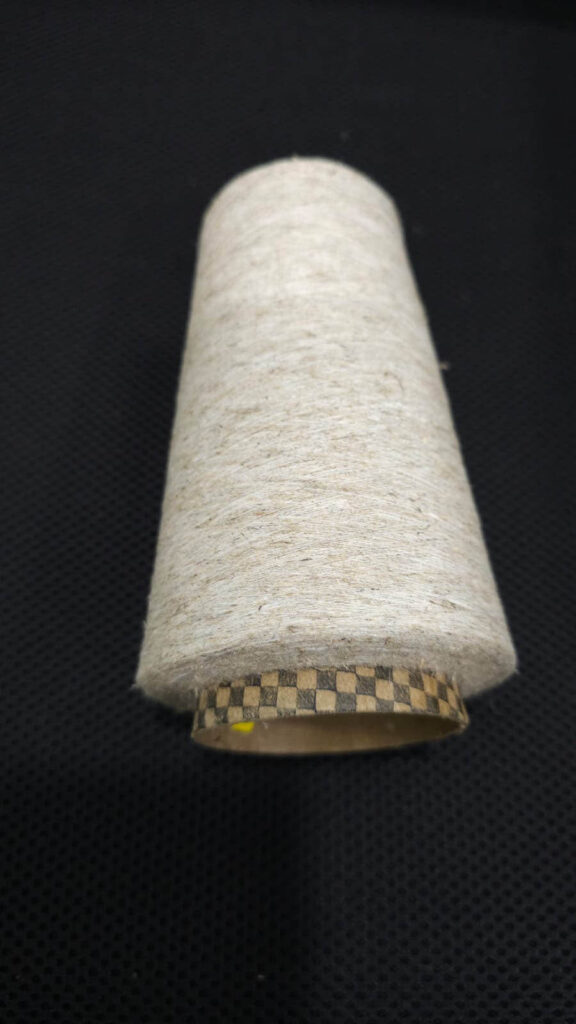
IFJ: How does mechanically cottonized hemp behave in existing spinning systems, and do spinning mills need to make any adjustments when blending it with other fibers?
Carter: Panda’s mechanically cottonized hemp fiber is unique, as it is produced without water or chemicals, making it a very sustainable product. It is friendly with staple fiber spinning systems and can be spun into coarse-count yarns used for woven fabrics. For finer yarn counts used in knitwear and lightweight shirting, the fiber can be further optimized to support those applications. Today, Panda fiber has been successfully spun into 20 percent and 30 percent hemp-blend yarns in counts up to 30s for knit applications, and we’re continuing to work with spinning partners to expand those capabilities. Our fiber also blends well with cotton, viscose, lyocell and other cellulosic fibers. As with any natural fiber, mills optimize processing parameters based on the desired blend and yarn characteristics, but our objective has always been to produce a consistent fiber that works within existing manufacturing systems rather than requiring manufacturers to adapt to the fiber. This kind of compatibility is one of the keys to accelerating commercial adoption.
IFJ: What applications are most realistic in the near term for Panda Biotech’s different hemp fiber products, from mechanically cottonized fiber to degummed fiber and yarn?
Carter: Each product serves a different segment of the textile market.
Mechanically cottonized fiber is well-suited for coarser yarns used in denim, canvas, twills, knitwear, and a wide range of nonwoven applications, including insulation, acoustic materials, carpet backing, mattress components and other industrial products.
Degummed fiber supports finer yarn counts for lightweight woven and knitted fabrics where softness and appearance become increasingly important. It also creates opportunities in absorbent hygiene products, filtration, wipes and certain medical textile applications.
Finished yarn gives mills and brands the fastest entry point because it removes another processing step from the supply chain. Customers can immediately begin developing fabrics and products using hemp blends ranging from 20 to 100 percent, depending on the intended application.
IFJ: How is Panda Biotech addressing fiber uniformity, traceability and quality control from the United States through to processing, export and spinning in India?
Carter: Consistency is one of the biggest factors determining whether hemp can scale commercially. At Panda, quality begins with American-grown hemp sourced through our contracted grower network and continues through our mechanical processing operation in Wichita Falls. Each bale is marked and we know what field it came from; which farmer grew it; the details from the genetics used; and the amount of rain the fields received. Since every bale is processed within a single commercial facility using a standardized cottonization process, we’re able to deliver fiber with consistent specifications, very low hurd content, repeatable performance, and complete visibility from cultivation through processing, export and downstream manufacturing.
Every shipment is fully traceable and supported by OEKO-TEX STANDARD 100 and USDA BioPreferred certifications. Our partnership with Culturewell extends that same commitment to quality throughout degumming, spinning and delivery to customers in India, ensuring consistency across the entire supply chain.
For global brands and manufacturers, traceability has become as important as fiber performance. We believe both are essential to building long-term confidence in hemp as a commercially viable, mainstream textile fiber.
IFJ: Beyond apparel and denim, where do you see the greatest opportunity for hemp in nonwovens or technical textile applications?
Carter: Some of hemp’s most exciting opportunities extend well beyond apparel.
The fiber’s strength, durability, lightweight properties, and renewable origin make it well-suited for nonwoven and technical textile applications where performance often outweighs aesthetics. We’re already seeing interest in thermal and acoustic insulation, automotive components, vacuum insulation panels, filtration media, carpet backing, mattress materials and geotextiles.
Many of these markets are actively seeking lower-impact alternatives to petroleum-based synthetic materials while maintaining performance requirements. Hemp is uniquely positioned to meet both objectives, particularly as commercial-scale, consistent fiber becomes more widely available.
Panda is developing a fire-retardant hemp fiber as well as building products using our FR-treated fiber that complies with the ASTM E84 standard for flame spread and smoke development.
We believe nonwovens will be an important driver of hemp adoption alongside traditional textile applications.
IFJ: How important will cost competitiveness be in driving hemp adoption, and where do you see the strongest economic advantages for U.S.-grown hemp processed through this India-based supply chain?
Carter: Cost competitiveness will absolutely be a major driver of hemp adoption, and together with our value proposition of a sustainable, traceable, reliable, coveted source of U.S. origin, it should become a household name in the industry. For hemp to become a mainstream textile fiber, it can’t remain a specialty material. It has to compete on reliability, availability, processing efficiency and ultimately economics.
That’s where Panda’s model creates a distinct advantage. We’ve invested in commercial-scale processing capable of producing consistent, mechanically cottonized hemp fiber that integrates into existing spinning systems with minimal disruption. That reduces the need for mills to make capital investments or fundamentally change how they manufacture yarn — lowering both the cost and risk of adoption.
Our partnership with Culturewell extends those advantages even further by connecting American-grown, certified hemp fiber, as well as developing the world’s most advanced hemp textile manufacturing ecosystem. Instead of selling raw fiber into a fragmented supply chain, we’ve created an integrated pathway from cultivation and processing in the United States through degumming, spinning and yarn production in India. That improves efficiency, shortens the path to market, and provides brands with the traceability and consistency they increasingly require.
We also believe there are meaningful economic advantages for customers serving global markets. By pairing U.S.-grown hemp with India’s world-class textile manufacturing capabilities, manufacturers gain access to a reliable supply of certified fiber while leveraging one of the most competitive and efficient spinning ecosystems in the world. For products exported back to the United States and around the world, that model may also create favorable trade and duty opportunities, depending on the finished product and applicable regulations.
Ultimately, our goal isn’t simply to make hemp more sustainable. It’s to make hemp commercially practical. When manufacturers can source a consistent, traceable fiber that performs reliably, fits within existing manufacturing systems and makes economic sense, that’s when hemp begins to move from a niche material to a mainstream textile fiber.