
Companies in the Supply Chain Share Strategies for Hemp as an Industrial-Scale Fiber
Companies in this article:
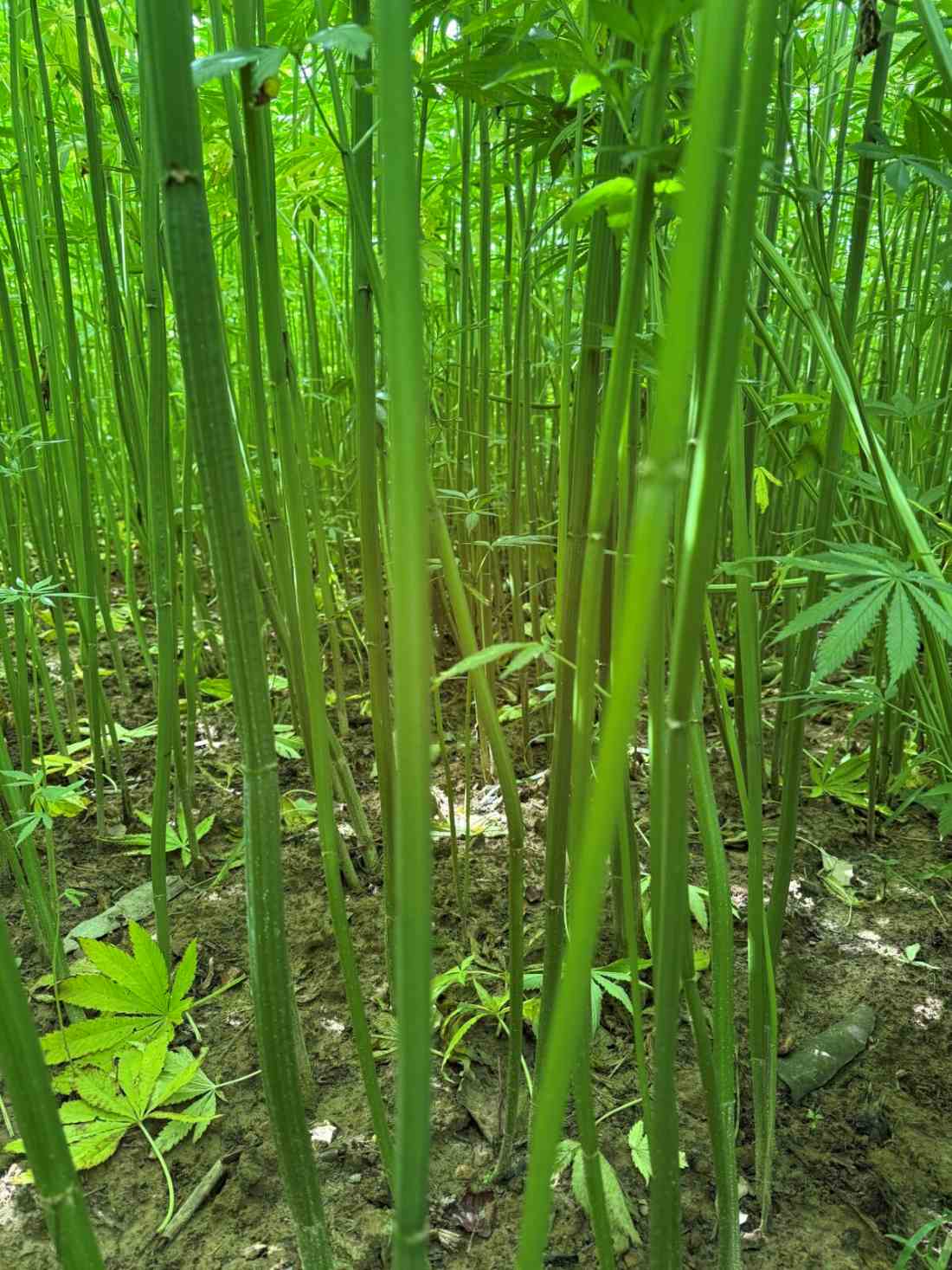
Hemp is often referred to as a “miracle fiber.” It is exceptionally strong, very durable, and provides numerous environmental benefits. It is so strong that it has a tensile strength up to eight times that of cotton. The fibers do not degrade; they only get softer, and with each textile wash, they maintain structural integrity.
Growing the fiber requires less water than cotton, and rainwater meets most of its needs. It is naturally disease-resistant, thereby reducing the need for pesticides. It offers soil enrichment benefits, and can remediate soil polluted with heavy metals. The finest aspect of this versatile fiber is that it sequesters a substantial amount of carbon dioxide, making it carbon-negative during the growth process.
The fiber has been in use for thousands of years, yet the transition to modern industrial production has been slow, technically speaking. Yet, the numerous benefits of hemp fiber are attracting corporate investments that confirm it is worth the hard work, and is driving product development across the globe.
Hemp Hot Spots
The global market for hemp-based products was valued at US$1.8 billion in 2023 and is projected to reach US$16.2 billion by the end of 2033. Sales of hemp-based products are projected to skyrocket at a CAGR of 24.5% from 2023 to 20331. Major producers are China, France, Canada. Combined efforts in Europe have also dominated the industrial hemp market, with a 31.04% share in 20242, supported by large-scale hemp cultivation in countries such as France and the Netherlands. Emerging markets include India, specifically the provinces of Uttarakhand and Himachal Pradesh, and Vietnam, a rising producer of industrial hemp.
In the United States, the industrial hemp market is projected to grow significantly, reaching an estimated value of US$8.38 billion by 20323, driving product adoption across industries such as pharmaceuticals, food and beverages, textiles, cosmetics, and others.
Current thriving niches include fashion, construction, and automotive, with China providing these industries 73,000 metric tons of hemp fiber4. European countries utilized over 45,000 metric tons of hemp fiber5 in insulation and hempcrete for energy-efficient housing. The fashion industry saw a 30% increase in hemp-fabric utilization for denim, outerwear, and everyday garments, primarily driven by urban millennials and Gen Z consumers.
Hemp bio-composites surged in the automotive sector, where companies like Mercedes-Benz and BMW are using hemp-based door panels and dashboards in over 1.3 million vehicles. Hemp packaging for cosmetics and consumer goods saw a 25% increase in orders across North America and Western Europe. Rising niche applications include acoustic panels, filters, and nonwoven geotextiles.
In North America, over 20,000 acres are dedicated to fiber-specific hemp crops in 2024, up 15% from 2023, with the U.S. increasing fiber-focused cultivation by 17%6. The U.S. market continues to grapple with significant regulatory roadblocks, inadequate processing infrastructure, and low profit margins for growers.
Advocacy groups, such as the National Industrial Hemp Council (NIHC), are moving the needle on U.S. industrial hemp. NIHC held its Global Industrial Hemp Fiber Summit at North Carolina State University’s Wilson College of Textiles for the first time in July. This new collaboration brought approximately 200 leaders from across the industrial hemp value chain – researchers, educators, growers, processors, manufacturers, brands, and policymakers – for the multi-day event. Attendees even visited Biophil Natural Fibers, a rising hemp facility located in Lumberton, NC, to see their working-scale decortication and premium fiber production.
“The Summit proved what NIHC has always believed: When we bring the right people together, we create the conditions for real growth,” said Patrick Atagi, President and CEO. “This is how we build a sustainable, world-class U.S. hemp fiber industry.”
Investments Are Paying Off at IND HEMP


Collaboration is a key ingredient at IND HEMP, and this North Central Montana, U.S.-based company is making strides. “Supply chains need collaboration and partnership, especially with a new and developing material,” says Gregg Gnecco, Brand and Marketing Director. “IND HEMP has been fortunate to establish relationships with our customers’ development and engineering teams to identify specific needs. We often trial multiple grades to find the right fit and co-develop our standard specifications to match the needs of various production systems.”
Currently, the company has integrated its IH Gold Decorticated Technical Hemp Fiber in Hempitecture’s Hempwool® and PlantPanel® X insulation manufacturing, on an airlaid nonwoven system. Additionally, needle-punch Platinum fiber is utilized in the headliner of a limited-run vehicle at one of the top three U.S. automakers. The company’s Hurd Fiber has been compounded into plastics and was used in the front and rear molded fenders of the Livewire Electric motorcycle, a Harley-Davidson brand. IND HEMP’s Platinum fiber is verified to meet the European Standard by a leading needle-punch nonwoven manufacturer that services the European auto industry.
IND HEMP invests in its R&D initiatives to prove usability and compatibility for downstream customers. In early 2025, the company conducted a trial project using spunlace hydro-entangled nonwovens for both wet and dry wipes, in collaboration with the Nonwovens Institute (NWI) at NC State University. “This trial allows potential customers and manufacturers to see, touch, feel, and understand that our fibers will work in their processes, eliminating the initial risk of testing on their lines without a baseline understanding of compatibility,” says Gnecco.


IND HEMP and NWI successfully demonstrated the compatibility of hemp fiber with carded spunlace hydroentangled systems at the roll scale. Tests blended IND HEMP Premium Cottonized hemp fiber with cotton and then with wood-based Lyocell in blends. This grade of fiber is the same as required for spinning into textiles and presents what IND HEMP considers the finest hemp fiber nonwovens made in the U.S. to date.
“This kind of testing is necessary as manufacturers consider adopting new materials. We can answer the inevitable questions, ‘Will your hemp fiber break my machines and shut down my line? Is it commercially viable to run at scale? Can you consistently supply necessary volume at approved specifications?’” says Gnecco. “This is why we are committed to spending our R&D dollars to prove viability and compatibility, so that our customers can spend their R&D dollars optimizing adoption for product and market fit.”
At IDEA® Show in April, IND HEMP showcased their spunlace hydro-entangled nonwovens test rolls in multiple material blends and grams per square meter (GSM) to highlight the fibers material compatibility with various systems. These samples facilitated conversations beyond possibilities into viable pathways for products or applications. From these discussions, combined with feedback from the WOW Show, which focuses on wipes, IND HEMP identified the next steps for R&D. They have since contracted with SENW and NWI for next steps of development and additional testing. These results will be presented on in a session at the RISE conference in October.


“We are performing deeper material property testing, working with Southeast Nonwovens for comparative testing on specific existing product targets,” says Gnecco. “From here we will work NWI for finishing tests such as perforations, folding et. We will complete this research in Q3/Q4 2025, and be ready for companies that are planning development trials with this material.”
IND HEMP identified wipes and dry towels as a focus of hemp applications due to increased usage since the pandemic, and rising environmental initiatives to eliminate manmade synthetic petroleum-based fibers, i.e., plastic. “Technically, hemp’s absorption and strength performance add value to natural fibers and provide a sustainable alternative to synthetic fibers,” says Gnecco. “The renewability benefits of hemp at a product’s end of life are significant. Also, hemp is the leading carbon-sequestering, sustainably produced crop today.” Growing global regulations, such as the UK’s ban on wet wipes containing plastic, which takes effect in 2026, are also contributing factors.
IND HEMP is an advocate for the U.S. hemp fiber market. “The reemergence of common-sense hemp fiber advocacy in the U.S., the resurgence of committed hemp farmers, and accelerated overseas growth present a multitude of economic opportunities, added to hemp’s environmental benefits,” shares Gnecco.
“Hemp as an industrial commodity provides U.S. farmers a cash rotation crop to boost bottom lines and improve soil health,” says Gnecco. “Processing facilities provide rural jobs and economic development opportunities in small-town America. Furthermore, products can perform better, last longer, and have a more environmentally friendly end of life. Hemp blends well with other natural fibers for spinning/textile and nonwovens applications. For example, when a 70:30 cotton-hemp blend is spun into fabric to make a shirt, the hemp fiber adds more than twice the abrasion and tensile strength compared to cotton alone, resulting in a shirt that lasts longer and wears better. In fact, we provide life cycle analysis data on all of our supplied materials for manufacturing partners to determine the carbon footprint in their ESG calculations.”
Cretes Has Solutions for Hemp Processing


Cretes, located in Wevelgem, Belgium, develops and builds industrial turnkey systems for the processing of bast fibers such as flax and hemp, handling of process waste, and manipulation of textiles and fabrics. The company has provided hemp processing technology to top industry manufacturers in France, the Netherlands, and Sweden – all key hubs for hemp production.
As a specialist in hemp processing technology, the challenge lies in processing straw that exhibits high variability in thickness, retting degree, and fiber content. Cretes’ technology is known to be 100% reliable for processing high volumes of quality hemp into valuable products at very high capacity, and is trusted by the most prominent players in the hemp industry.
“Cretes is a prominent machine manufacturer,” says CEO Edward Vandeputte. “Engineering and innovation are in our veins; it is what we live for. We have over a century of experience in designing and building machinery for the processing of bast fibers. Yet, every day, we strive to improve our machines, making them better, faster, more robust, and more efficient. This innovation means reducing the cost of maintenance and energy consumption. We also prioritize the safety of the operators and maintenance technicians who ultimately work with our equipment. Automation has played an increasingly significant role in our development over the last couple of years. Our focus is to offer value to our customers through lasting cooperation!”


“We see an increased demand for hemp processing systems on a global scale,” says Vandeputte. “Popular and innovative end-use applications are nonwoven insulating mats for the construction industry, fibers for degumming and blending with cotton, and building blocks from shives for the construction industry. Interest in composite material is also increasing but requires further study.”
“We believe hemp has a bright future ahead. We are only at the start of a hemp revolution,” he says. “Hemp textiles are a significant addition to the existing flax linen industry. Both products are unique, but they share strengths on the agricultural, processing, and product levels. Breakthroughs are on the verge in the construction industry – innovative building blocks made from hemp shives are a top-quality, eco-
friendly, breathable, and highly fire-resistant product. Hemp nonwoven mats for building insulation will soon conquer market share, if they remain competitive against the more traditional, energy-consuming, and CO2-boosting mineral wool mats.”
Hemp Gets into Personal Care
Harper Hygienics is a leading manufacturer of hygiene products in Central and Eastern Europe. They have mastered the understanding of and response to consumer needs. The company headquarters and central production facility are in Minsk Mazowiecki, Poland, with a commercial office in Warsaw. In 2017, Harper Hygienics joined forces with iCotton, a Latvian company, forming the iCotton-Harper Group – strengthening technological capabilities and broadening their international reach.

Harper products are distributed globally in key markets across Europe, Asia, Africa, and the Americas. The broader American market is important to the company for growth, expanding their presence and partnerships in North America.
Natural Products Spurred Growth
Harper Hygienics operates with an umbrella strategy, uniting diverse product categories under strong, trusted brands, and utilizing natural fibers such as cotton and now hemp-based products. The company began with cotton pads and cotton swabs, and expanded into baby wipes, makeup remover wipes, intimate hygiene products, and household cleaning.
“Notably, we were the first company in our domestic market to introduce wet wipes for home use,” says Dmitrij Kostojanskij, CEO, “setting new standards in everyday hygiene solutions.”
“A milestone in our development was Harper Hygienics’ listing on the Warsaw Stock Exchange, while expanding infrastructure by building new production and warehouse facilities to meet growing demand for higher volumes. We have built a vertically integrated production system – from fiber processing to the finished product – ensuring full control over quality and efficiency at every stage,” says Kostojanskij.
Their brands target primarily female consumers across all age groups and include Cleanic, a wide range of natural fiber personal care products; Kindii, dedicated to babies and young children; and Presto, offering convenient and effective wet and dry wipes for household cleaning.
“Cleanic has earned us remarkable brand recognition of over 90% in the domestic Polish market,” says Kostojanskij. “In the brand’s evolution, we now leverage sustainable feminine hygiene products. Based on in-depth research, we launched Cleanic Naturals Organic Cotton sanitary pads, and now includes pantyliners, cotton swabs, cosmetic pads, and wet wipes – all aligned with our mission to combine performance, comfort, and sustainability.”
Harper followed with the Cleanic Naturals Hemp line for sanitary pads and pantyliners. In 2024, the products were finalists for the Hygienix 2024 Innovation Award. The new hemp line also includes cotton swabs, cotton pads, and intimate wipes.
Exploring Hemp Fibers
The company developed optimal fiber hemp blends to overcome the coarse nature of hemp and achieve the right balance between softness, durability, and performance. A more technical challenge – the length of the hemp fibers, which are generally longer than those of more common fibers – required adjustments in the production process and the precise selection of fiber compositions to ensure compatibility with Harper’s existing machinery and quality standards.
“We use Sero™ regenerative hemp fibers by Bast Fibre Technologies according to our specific requirements,” adds Kostojanskij. “We do not modify the raw fibers in-house; instead, we focus on selecting the right blend of materials and processing them into nonwoven fabrics that meet our quality and performance standards. This ensures that the hemp is prepared in a way that aligns with our product needs, allowing us to focus on fabric development and final product innovation.”
When testing Cleanic Naturals Hemp, the fiber demonstrated notable antibacterial properties, making it a compelling choice for personal hygiene applications. Harper engaged ITA-TEST, one of the largest and advanced hygiene testing laboratories in Poland. They confirmed a significant reduction in bacterial growth for two common strains: Staphylococcus aureus at 89.7% reduction and Escherichia coli at 21.6% reduction. Further consumer testing confirmed the comfort, performance, and safety of the hemp sanitary pads including a 90% rating of absorbency as high or medium and 90% praising the softness of the surface, proving that hemp is viable in even the most intimate of uses.
Hygiene and Hemp
In 2023, iCotton acquired U.S.-based Hempress Hygienics, headquartered in Austin, Texas. This next-generation period and personal care brand is committed to make sustainable and intentional hemp-based personal care products mainstream. It is the U.S. market’s first 100% organic hemp and cotton-based day and night pads, liners, swabs, cosmetic pads, and silicone menstrual cups. Hempress Hygienics is now part of the iCotton-Harper Group of Companies, in which Harper Hygienics is a stakeholder.
In 2024, Harper Hygienics launched Hemplace™, Harper’s proprietary technology platform dedicated to growing its hemp-based hygiene solutions. It brings together a range of technologies, scientific expertise, and expert collaboration to integrate hemp into materials, setting new industry standards. It focuses on cutting-edge innovation from teams of experts to help industry partners and leaders collaborate on sustainable hygiene solutions.
Tapping Canada’s Hemp Market

Zylotex™ is an emerging Canadian start-up that is reshaping the future of materials by transforming Canadian hemp in an innovative lyocell process to produce biodegradable fibers for specialized textiles. “By leveraging local sources of fiber, we support onshoring and strengthening the Canadian value chain,” says Lelia Lawson, Founder and Chief Technology Officer. “Our commitment to the bioeconomy and the Canadian textile industry ensures we meet the highest standards of sustainability and performance. Moreover, the design of our products caters to the global textile market, is suitable for international applications, and paves the way for a greener future.”
Why does this matter? “Today, global textiles drive deforestation, pollute waterways, and fill landfills with microplastics, while cotton and synthetics dominate supply,” she says.
With over two decades of experience in industrial personal protective clothing, Lawson brings deep expertise in textiles, product development, and quality systems. Working alongside local partners, early experiments demonstrated that agricultural byproducts – specifically bast and hurd from hemp stalks – could be transformed into high-quality lyocell pulp, now known as ZyloPulp™.
Zylotex also formed a pivotal partnership with Plantae Technologies, positioning the company to move from pilot to commercial scale, bringing Canadian hemp-based lyocell one step closer to market.
Tackling Hemp’s Challenge in Unison
Zylotex focuses on supply-chain collaboration and technical innovation rather than working in isolation. Hemp presents well-known hurdles for manufacturers, including variability in fiber quality, higher lignin levels in oilseed cultivars, and limited infrastructure for processing. Zylotex collaborates with its partners across the value chain to develop a system that addresses these challenges and bridges the gap between agricultural supply and industrial fiber production.
“A central part of this effort is our joint development agreement with Plantae Technologies,” says Lawson. “Plantae leads all the engagement with growers and biomass sourcing, while Zylotex concentrates on converting the raw feedstock into high-purity dissolving Zylotex pulp suitable for lyocell production. This division of expertise ensures that agricultural realities are aligned with processing requirements, allowing for a more consistent and scalable input stream.”
On the customer side, Zylotex is collaborating directly with brands and manufacturers during early prototyping and testing. By engaging in fiber development trials, Zylotex ensures that the regenerated hemp-based fibers can meet the specific performance and sustainability targets needed in textiles, nonwovens, and composites. This co-development model addresses technical hurdles while reducing adoption risk by giving customers confidence in both quality and supply chain reliability.

Student to CTO
“We formed Zylotex to commercialize the research outcomes from the University of Alberta, Canada, program, to transform Canadian-grown hemp into a consistent, high-purity feedstock for regenerated cellulosic fibers,” shares Lawson. “Ultimately, I am a PhD student in the Department of Human Ecology at the university, working under the supervision of Dr. Patricia Dolez, while also serving as the Chief Technology Officer and Founder of Zylotex.”
“Our current R&D focuses on developing pulping and pre-treatment strategies that can convert variable hemp stalks, often grown as oilseed crops, into dissolving pulp suitable for lyocell production,” she continues. “We have demonstrated that hemp can achieve more than 90 percent α-cellulose content with very low lignin and ash. This pulp quality is comparable to wood-based dissolving pulp and supports the viability of hemp as a substitute feedstock for regenerated cellulosics.”
Published work on solvent recovery and wastewater characterization for the NMMO-based lyocell process further validates the effort, underpinning the environmental and economic claims of closed-loop production. Modeled impacts show a reduction intensity of 12.8 tCO₂e per tonne of hemp-based lyocell fiber due to displacement of petroleum-based textiles and reduced water consumption, with cumulative reductions scaling significantly through 2050. At the end of life, the fibers are biodegradable, leaving no microplastic residues.
Developing the Lyocell Product
“Working alongside Plantae Technologies, we are advancing hemp-based dissolving pulp into lyocell fiber prototypes currently being tested in consumer textile and nonwoven applications. The work spans spans from baled hemp straw to regenerated fibres that can be spun, blended and converted into fabrics or absorbent materials. We are converting Canadian-grown hemp into high-purity dissolving pulp, while ensuring compatibility with the NMMO-based lyocell process. This pulp is then spun into trial fibers and evaluated for various properties with conventional fibers. These trials demonstrate that hemp-based Lyocell can be processed using existing infrastructure while delivering the same performance benchmarks as wood-based Lyocell.”
Key challenges included removing the higher lignin and ash content found in oilseed hemp cultivars, as well as dealing with variability in stalk quality. “Our pre-treatment and pulping sequences are specifically designed to address these issues,” she notes, “producing a pulp that meets industry standards. Another obstacle was proving solvent recovery and closed-loop viability at lab scale, which we validated through targeted recovery experiments and wastewater analysis.”
Sustainable Change in Textiles and Nonwovens
Lawson believes that hemp represents one of the most promising pathways for real sustainable change in textiles and nonwovens. The industry is facing an urgent cellulose shortage as demand for cotton and manmade cellulosics continues to outpace supply. Hemp fills a gap by leveraging an agricultural crop that grows quickly, requires fewer inputs than cotton, and sequesters significant amounts of carbon during cultivation.
For change to be meaningful, however, sustainability must extend across the entire value chain. Hemp is not a plug-and-play solution. The team’s position is that the breakthrough will come from integrating hemp into regenerated cellulose platforms like lyocell, where pulping and pre-treatments can transform agricultural residues into a dissolving pulp that meets strict technical standards.
“We see hemp as a driver of holistic sustainability,” says Lawson. “By connecting growers, decorticators, processors, and end-users in a coordinated supply chain, hemp can reduce reliance on imports, create local manufacturing opportunities, and support circular economy models. In nonwovens, where performance, biodegradability, and lifecycle impact are crucial, hemp-based Lyocell is particularly well-positioned to displace synthetic inputs that contribute to microplastic pollution.
“In our view,” she notes, “hemp will not replace cotton or wood-based cellulosics outright. Instead, its role is to diversify and strengthen the industry’s portfolio of sustainable fibers. With the right processing innovations and collaborative partnerships, hemp has the potential to shift textiles and nonwovens toward a lower-carbon, more resilient future.”
Canadian Supply Chain Booster

“We deliberately focus on Canadian oilseed and dual-purpose cultivars because that is what is most widely available here today. While these cultivars were not originally bred for textiles and contain higher lignin and ash than traditional European or Asian fiber hemp, they represent a realistic, scalable feedstock that farmers are already growing rather than waiting for ‘perfect’ fiber cultivars to be developed,” notes Lawson.
This approach builds on whole-plant utilization, creates value for material that would otherwise be treated as low-value residue, and keeps supply chains domestic. That is why the partnership model between Zylotex and Plantae is crucial in connecting the dots between agriculture, processing, and market demand.
“Often misunderstood, hemp is considered a coarse, rustic fiber,” Lawson shares, “when in fact we can transform it into high-performance regenerated cellulosics with softness, strength, and versatility that matches any natural or synthetic fiber available today. The challenge isn’t whether hemp can work, but rather how we design the right processing strategies and supply chains to unlock its potential.”
Hemp is not a silver bullet. It varies by cultivar and environment, and the infrastructure for processing it is still in development. By connecting farmers, processors, and manufacturers into a coordinated ecosystem, it can turn what is currently agricultural residue into a premium fiber stream.
“Because we approach hemp with the right mix of science and collaboration,” she says, “Zylotex will redefine how the textile industry thinks about sustainability.”
Growing the U.S. Hemp Marketplace
As a seasoned expert in nonwovens and fibers and a consultant to the hygiene industry, Olaf Isele’s involvement with hemp fiber is extensive. He is now Founder/CEO of Metaxi Simbiosys. His work includes developing test methods and standards for evaluating hemp fiber quality, facilitating the development of specifications for various applications, development and production of hygiene products using hemp fibers, and ensuring quality control. He believes that recognized standards are crucial to develop trust in the hemp fiber supply chain, its end-users, and throughout society.


“My work has demonstrated that when we process hemp fiber the right way, it is suitable for us in even the most discerning textile and hygiene products applications,” says Isele. “The feminine care products company, Trace Femcare, has shown that hemp fiber is a viable fiber for use in even medical devices, like tampons, by successfully passing rigorous biocompatibility tests.” He was Product Development Director for the company.
His involvement in the launch of many products available to consumers today confirms his position. He has worked in product development for Trace Femcare on tampons and menstrual pads, Harper Hygienics wipes, analyzed the hemp-fiber clothing of Smith & Rogue apparel company and evaluated hemp fiber quality of several European processors, and other bast fiber projects.
“Using the European marketplace as a template, we can create supply chains, products and markets in North America, as well. In the creation of existing products, the entire supply chain – from farm to finished product – was targeted towards high-quality hemp fiber, encompassing its farming, harvesting, retting, processing, and ultimately refining. For our applications today, with standards and quality control in its early days still, it required hands-on attention and trial and error learning to achieve our success,” he says.
“While anachronistic, the re-birth of the hemp industry in the USA allows us to work from the farm to the finished product. Traceability, transparency, and sustainability for us go hand in hand,” he says.
Building a vibrant U.S.-based hemp textile marketplace requires considerable effort, including conducting more lifecycle assessments and exploring regenerative agriculture and climate-neutral
processing technologies; however, the road ahead is clearly visible. “A favorite quote of mine from a client is, ‘Hemp is a multi-purpose crop that allows us to be proud of its ecological benefits, its thousands of years of history, and integrate it into modern science and industry for sustainable products with facts and stories that people can relate to and corroborate.’”
“On one hand, hemp has an almost magical trait to it,” he continues. “There are expert farmers, processors, and artisans who practice ancient traditions in creating textiles from hemp, and that is beautiful. On the other hand, to achieve the full potential of hemp sustainably to thrive in the future, we must bring it to a commodity scale. Then, industrial-level availability, as well as financial and economic systems worldwide, will seek to incorporate the benefits of hemp, where realistically, almost every product can benefit. However, that requires doing the hard work of fully understanding the properties of hemp and developing the necessary tools and test methods to establish it as a commodity with reliable quality and trust throughout industry and society.”
References
1 https://www.factmr.com/report/4504/hemp-based-products-market
2, 3 https://www.fortunebusinessinsights.com/industrial-hemp-market-102459
4, 5, 6 https://www.marketgrowthreports.com/market-reports/hemp-fiber-market-113377