


India-based KTex Nonwovens Pvt. Ltd. has carved a distinctive niche in the nonwoven fabrics industry through its super-soft fabrics. These materials deliver a luxurious cotton-like, silky texture, offering tailored comfort and quality. Developed through extensive research by the company’s dedicated Research & Development (R&D) team, the proprietary formula gives KTex a competitive advantage.
These premium fabrics are specifically engineered for high-end hygiene products, including top-tier diapers and sanitary pads. The most compelling benefit of KTex’s innovation is its skin-friendly nature — the ultra-gentle surface virtually eliminates the risk of skin irritation and rashes, a common concern with conventional materials. This makes KTex’s fabrics preferable for sensitive skin applications.
Arun Rao, IFJ’s international correspondent in India, recently had the opportunity to meet with Nimesh Sanghrajka, KTex Nonwovens’ director, to learn more about the company and its specialty products.
International Fiber Journal: Kindly provide a brief history of your company.
Sanghrajka: KTex Nonwovens began as a joint venture, was incorporated in 2017, and actual production started in 2018. Prior to starting the company, we were already trading and exporting nonwoven fabrics to the European Union and the United States since 1995. Incidentally, the first nonwoven fabric roll in India was sold by our trading company in 1995. The fabric was sourced from a 100 percent export-oriented Indian nonwoven fabrics manufacturer and since they had surplus material, they approached us. We sold the fabric to a renowned diaper brand that was earlier importing the fabric.
IFJ: Please share details about manufacturing infrastructure and annual capacity.
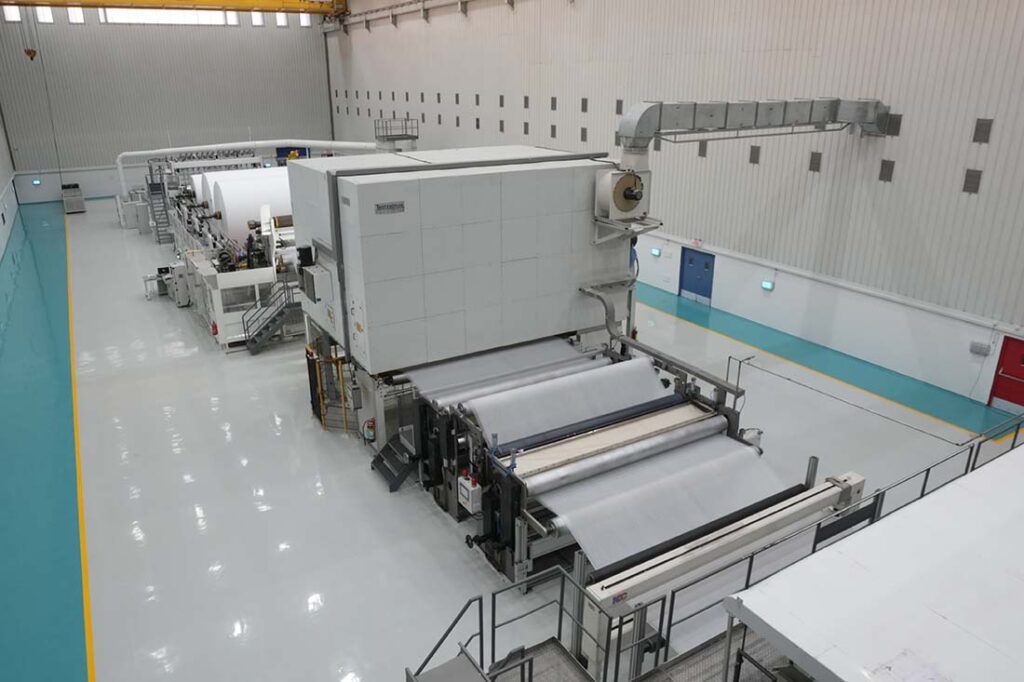
Sanghrajka: Our first production line was ordered from China. But we ordered only the frame of the machine, while all the machine components and parts were sourced from Germany. This SSMMS [spunbond-spunbond-meltblown-meltblown-spunbond] line has a width of 1.8 meters and had a production capacity of 6,000 tons per annum and within a period of three months, we were utilizing 100 percent capacity producing fabrics for the hygiene market. During the COVID-19 pandemic, our production capacity was sold out for two years. But even during the pandemic, we grew our hygiene business by selling 70 percent of production to the hygiene market and the rest in the open market. That’s how we built relationships with major companies like Johnson & Johnson as we supplied them fabrics even during the pandemic while others were concentrating on selling medical fabrics.
In 2022, we sourced two Reifenhäuser Reicofil lines from a closed-down Saudi Arabian nonwoven production factory. One is a 3.2-meter-wide SMMS bicomponent line and to the best of our knowledge, we are the only company in India to have a bicomponent line. The fabric also gives a very soft feel. These fabrics are particularly preferred by companies producing hygiene products.
Once the first line bought from Saudi Arabia was fully operational, we began installing the second 4.2-meter-wide SSMMS line, which was operational in 2024. This is also a one-of-a-kind line in India. After the addition of the two new lines, our production capacity jumped from 6,000 tons per annum to 36,000 tons per annum or a six-fold increase. With the addition of these two lines, more hygiene product manufacturers started getting associated with us as we were giving them the option to purchase fabrics from three production lines with fabrics of various characteristics and parameters. We have also installed lamination machines.
IFJ: Which are the core products and solutions KTex offers?
Sanghrajka: We can supply fabrics from 8 to 100 grams per square meter (gsm), but normally we produce 25 gsm fabrics for the hygiene industry and around 50 gsm for medical applications. Our unique selling proposition is producing one-of-a-kind super-soft fabrics, which have a very cotton-like and silky feel. We are using a proprietary formula developed by our R&D team. These fabrics are used in premium diapers or sanitary pads. The biggest benefit provided by the super-soft fabrics is that the wearer will not develop rashes. Between 75 and 80 percent of our fabrics go to the hygiene industry, 15 percent goes into medical applications, and the rest is used for packaging and agriculture crop covers, among other applications. We also manufacture breathable laminated nonwoven fabrics that are laminated with films.
Most of our business comes from our relationships. We do not sell products; we sell an experience. — Nimesh Sanghrajka
IFJ: Please provide details of the R&D department and its achievements.
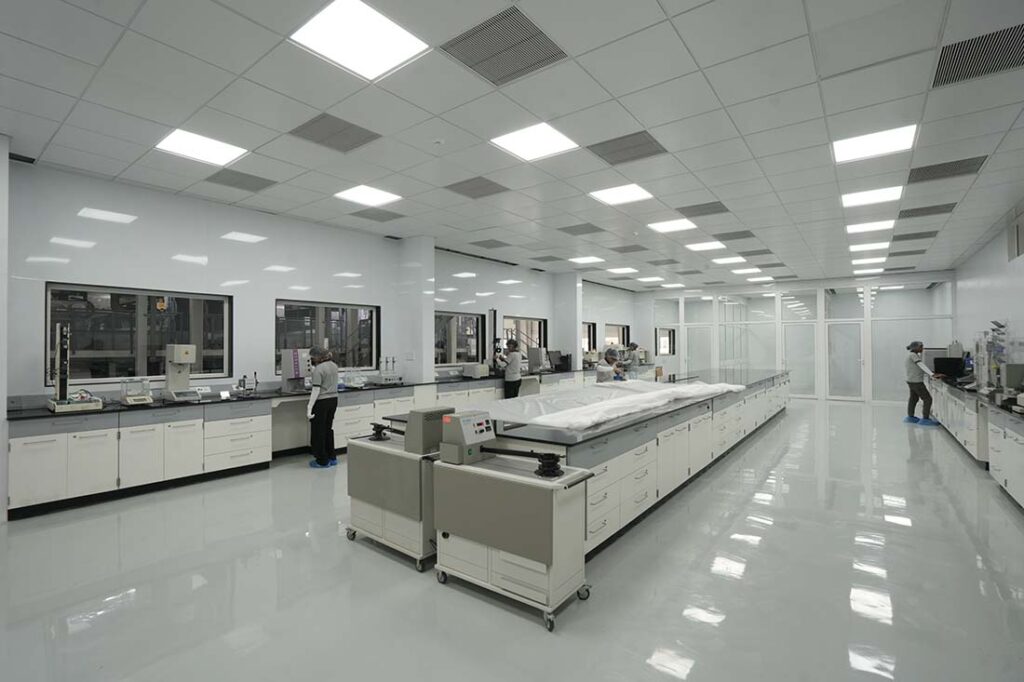
Sanghrajka: We have an R&D lab and also a quality control lab with state-of-the-art equipment imported from the United States. We always look to add value to our fabrics that can benefit our customers. For example, the super-soft nonwoven fabrics have been developed by our R&D team using a proprietary formula.
IFJ: What is the advantage of the products offered by KTex compared to those offered by competitors?
Sanghrajka: The main difference between us and our competitors is our product quality and timely deliveries. Most of our business comes from our relationships. We do not sell products; we sell an experience. Whenever a customer buys a new nonwoven fabric product, our technical teams visit the customer’s factory and help guide them, and if needed, we also modify the fabrics. We have been able to supply lower-gsm fabrics — down by 20 percent — with the same strength and properties as higher-gsm fabrics. This brings down the cost of the product for the customer.
IFJ: How important is sustainability for your company?
Sanghrajka: Sustainability is very important. Even reducing the gsm of the fabric for a particular application can make it more sustainable. We have installed a waste recycling machine that recycles the side trims and converts them into pellets that are reused as raw material, and so there’s no waste. Now companies are introducing polymers with additives that make the fabric biodegradable. We are yet to start using those additives, but we plan to do so in the near future.
IFJ: Please share details of your presence in the Indian domestic and export markets. Also, please share details on your distribution or sales channels.
Sanghrajka: Every customer has requirements for fabrics with different parameters even if both are producing diapers. So, we manufacture only on confirmed orders. The factory was started with a primary goal to export the fabrics since we were earlier exporting nonwoven fabrics and had a huge clientele. But during the COVID pandemic, when there were export restrictions, we started developing the domestic market. Both the hygiene and medical sectors grew phenomenally during and post the pandemic. This helped us gain a good market share in the domestic market. But since 2023, export markets have revived. However, U.S. tariffs hit our exports in 2025. So, now we are exploring new regions like Africa — where the African market is growing in leaps and bounds — as well as European countries.
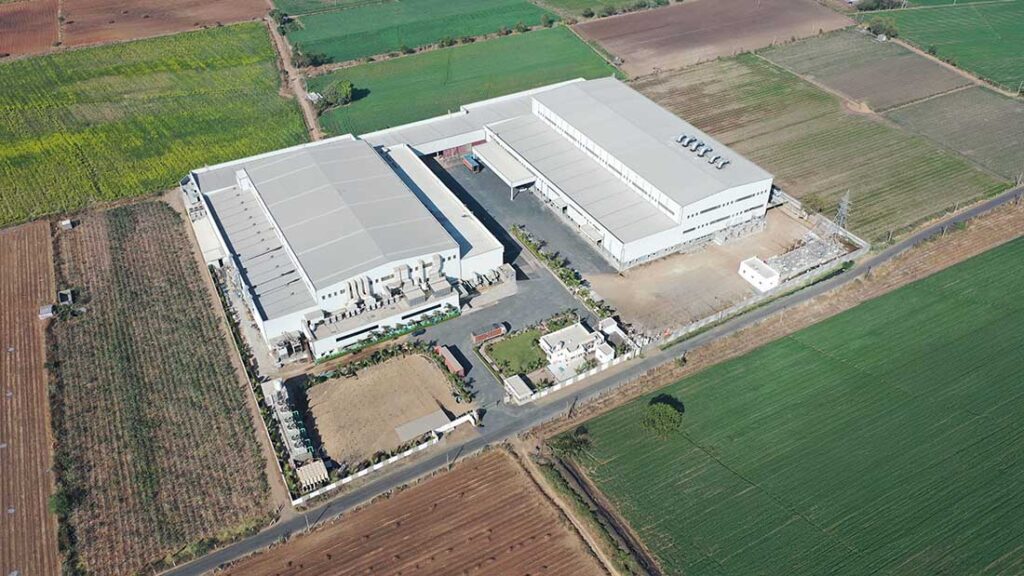
Nonwovens. Photo courtesy of KTex
IFJ: Does KTex plan any capacity expansions or investments?
Sanghrajka: We may put up another production line in 2027 depending on the market conditions. We have already shortlisted the production line we will purchase. We are also planning to foray into converting fabrics into medical garments in 2026 and this will serve as an OEM business for our U.S. and European buyers.
IFJ: Can you talk about key trends in consumer demand and the growth trajectory of the Indian and global nonwoven fabric markets?
Sanghrajka: During the two-year COVID-19 period, a lot of nonwovens production capacity was added on the premise that COVID would continue for a few years. But demand dropped once the pandemic ended and due to overcapacity, the years between 2022 and 2024 were a very difficult period. But since the third quarter of 2025, both domestic and global demand has revived, and we are optimistic about generating good business in the next two years.
In the last five years, the number of converting lines for various applications like diapers and sanitary napkins has more than doubled in India, which is a good indicator for the nonwovens fabric industry in India. Prior to COVID-19, there may have been just 40 converting lines for both diapers and sanitary napkins. But now there may be more than 200 such lines. Consumption of medical garments too has gone up by more than 50 to 60 percent. We expect the converting industry for both diapers and sanitary pads to grow at a steady compound annual growth rate of 15 percent until 2030.
The current usage of disposable baby diapers is only for five out of 100 babies in India, while in the United States it is around 70 out of 100 babies and in China it is 50 out of 100. So, even if the usage of baby diapers doubles to 10 out of every 100 babies, it is still a huge figure. Baby diaper consumption in recent years has mainly increased due to disposable incomes. For lower-income families and those living in rural areas, now even single-piece baby diaper packs are available in the market, which they can use while traveling. Once they start using those diapers, they will realize the benefit and continue using them.
In case of adult diapers, there were earlier just three or four companies manufacturing those diapers. Now there are at least six companies. Now when an older person is admitted to a hospital, they are provided adult diapers by the hospital, which they then continue to use even after leaving the hospital.
The medical segment consumption took off during the two-year pandemic. Demand faded after the pandemic, but consumption in 2025 was still double the 2019 level as consumption has shot up compared to the pre-pandemic years. Now even patients insist that doctors should wear a medical gown during an operation. A lot of multinational companies have also shifted their production of medical gowns to India, which has led to an increase in medical fabrics sales.
IFJ: Do you have expectations on the future growth and opportunities in the Indian as well as overseas markets?
Sanghrajka: India is now the fastest-growing diaper manufacturing and consumer market in the world. New entrepreneurs are entering the converting industry, and they are setting up and selling in the tier 2 and tier 3 cities and towns. They are focused on selling in the regions in which they have the production plant and are not stretching themselves. They just need 4,000 square feet of production space, a majority of which goes into storing the finished product. Since the production lines are automated, they do not have the hassle of employing a high number of workers. We expect that as incomes keep growing and there is more disposable income, the Indian market for hygiene products will explode.