
Consumer demand for softer hygiene products has transformed air-through bonding from a Japanese premium concept into an East Asian manufacturing strategy.
At the recent INDEX™26 in Geneva, two major contracts for air-through bonding (ATB) technology were announced by Germany-based Trützschler Nonwovens, highlighting the growth of a differentiated approach to nonwovens manufacturing that is somewhat distinct to East Asia.
For much of the history of industrial nonwovens manufacturing, production economics, machine productivity, absorbency and tensile strength have generally dictated material development — particularly in hygiene applications where huge volumes and relentless cost pressures have shaped technology choices.
Gradually, however — first in Japan, then Taiwan and now in China — softness has evolved from being merely a desirable product characteristic into a measurable performance parameter and marketing tool, ultimately shaping an industrial strategy.
The rise of ATB technology is frequently explained simply by referencing consumer demand for softer diapers, but the reality is considerably more nuanced, reflecting changing demographics, evolving consumer psychology, shifting supply chains and the development of industrial manufacturing centers that increasingly treat tactile perception as something that can be engineered with the same precision as absorbency or tensile strength.
Japanese Origins
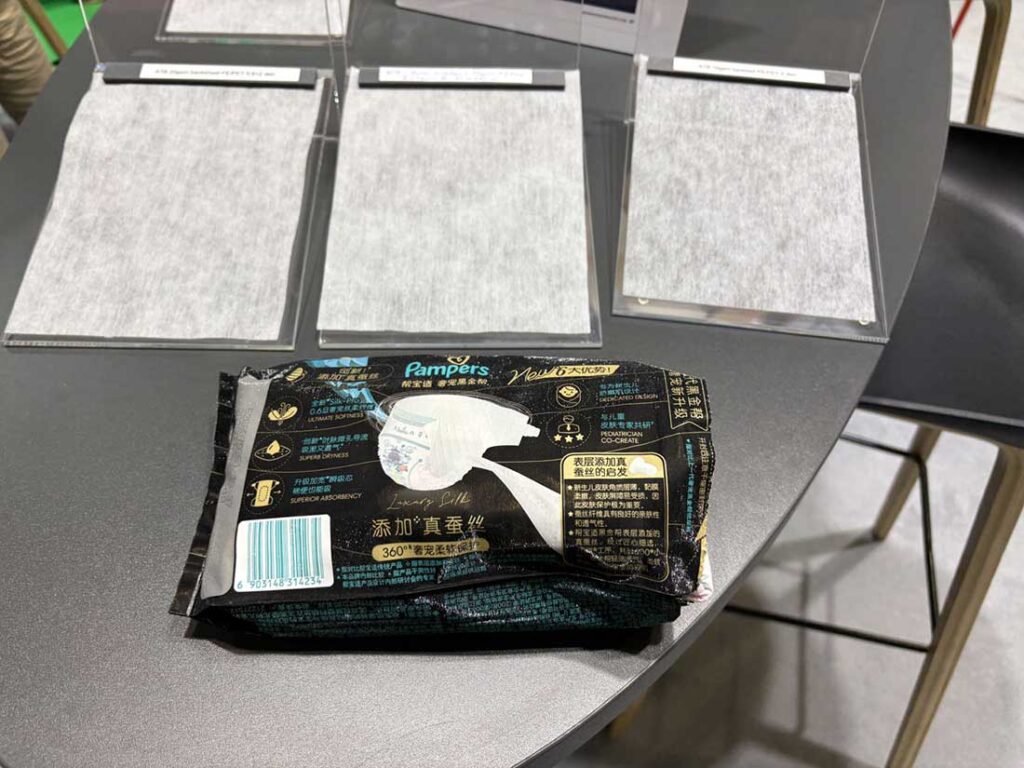
The origins of this lie in Japan during the 1980s, when disposable hygiene products began moving rapidly beyond purely functional products and into premium consumer categories. As birth rates declined and household spending power increased, competition among manufacturers increasingly shifted away from simple leakage protection towards comfort, convenience and perceived product quality.
Companies such as Kao, through its Merries brand, and Unicharm with Moony and later MamyPoko, increasingly competed not only on technical performance but on the sensory experience their products delivered.
Japanese consumers proved particularly receptive to products that delivered not only superior function but also a premium sensory experience, and diaper manufacturers rapidly recognized that parents associated softness with care, safety and product quality and were willing to pay premiums for it.
As such, products that felt softer, quieter and more textile-like, gradually transformed softness from a marketing claim into a measurable product attribute and meeting this need called for a new approach.
The traditional calender bonding of nonwovens creates strength through pressure and heat applied between rollers, producing strong and efficient structures but also creating compressed bond points that inevitably reduce loft and create denser materials. ATB offered an alternative route. Instead of compressing fibers mechanically, hot air is passed through the web structure, allowing the outer sheath of bicomponent fibers to soften and bond while largely preserving the bulk and openness of the material.
Combined with advances in sheath-core bicomponent fibers from companies such as Asahi Kasei, Mitsui Chemicals and Toray, ATB materials created products that felt fundamentally different from conventional hygiene substrates, being noticeably softer, bulkier and more textile-like in their appearance and feel.
Simultaneous Advantages
These characteristics aligned perfectly with the direction in which Japanese hygiene brands were evolving. Softness against skin became important, but so too did quieter products that rustled less during movement and materials that visually resembled textiles rather than industrial substrates. ATB structures offered advantages across all of these characteristics simultaneously, and premium products increasingly standardized around such materials.
By the 1990s, Japan had effectively created an entire industrial ecosystem around premium hygiene materials. Fiber producers invested heavily in specialized bicomponent fiber systems while machinery builders refined production platforms capable of producing the sophisticated structures.
Brand owners, converters and material suppliers evolved together, reinforcing a supply chain in which premium performance inevitably became inseparable from softness itself. Once consumers became accustomed to such tactile qualities, softness gradually ceased to function as a differentiator and instead became an expectation.
Taiwan’s Role
Taiwan has played a critical, although sometimes overlooked role in transforming Japanese softness from a domestic premium concept into a broader Asian manufacturing philosophy. Through close commercial relationships with Japanese hygiene producers and converters, Taiwanese manufacturers gradually became integrated into premium hygiene supply chains during the 1990s and early 2000s.
Companies such as Nan Liu Enterprise and KNH Enterprise expanded rapidly into these hygiene substrates, while fiber producers including Far Eastern New Century and Formosa Plastics helped create the material infrastructure necessary to support them. Rather than competing solely on volume, Taiwanese manufacturers began specializing in producing higher-value substrates where softness created meaningful differentiation and stronger margins.
Taiwan effectively became the industrial bridge between Japanese consumer expectations and the much larger manufacturing systems emerging elsewhere in Asia, and especially China. By the time hygiene markets accelerated across mainland China, much of the expertise surrounding premium nonwoven structures, bicomponent fiber processing and ATB production had already spent years moving through Taiwanese supply chains.
China’s Trajectory
China’s initial growth differed significantly. Throughout much of the 2000s and early 2010s, hygiene market growth was driven primarily by penetration rather than premiumization. Conventional thermal bonded materials remained widespread because they supported lower production costs and enabled rapid manufacturing expansion. Consumer expectations, however, were changing rapidly and Japanese diaper brands increasingly acquired premium status among Chinese consumers, because imported products were associated with superior softness, comfort and infant care.
Domestic manufacturers recognized that softness itself had become commercially valuable and competition gradually shifted away from purely functional performance, with Chinese manufacturers initially attempting to reproduce Japanese premium characteristics before developing their own approaches to engineering softness more systematically.
Over time, softness has also ceased to be treated simply as a characteristic for diaper topsheets and instead became integrated into entire products as manufacturers increasingly optimized acquisition and distribution layers, fastening systems, backsheet materials and external surfaces.
Next Phase
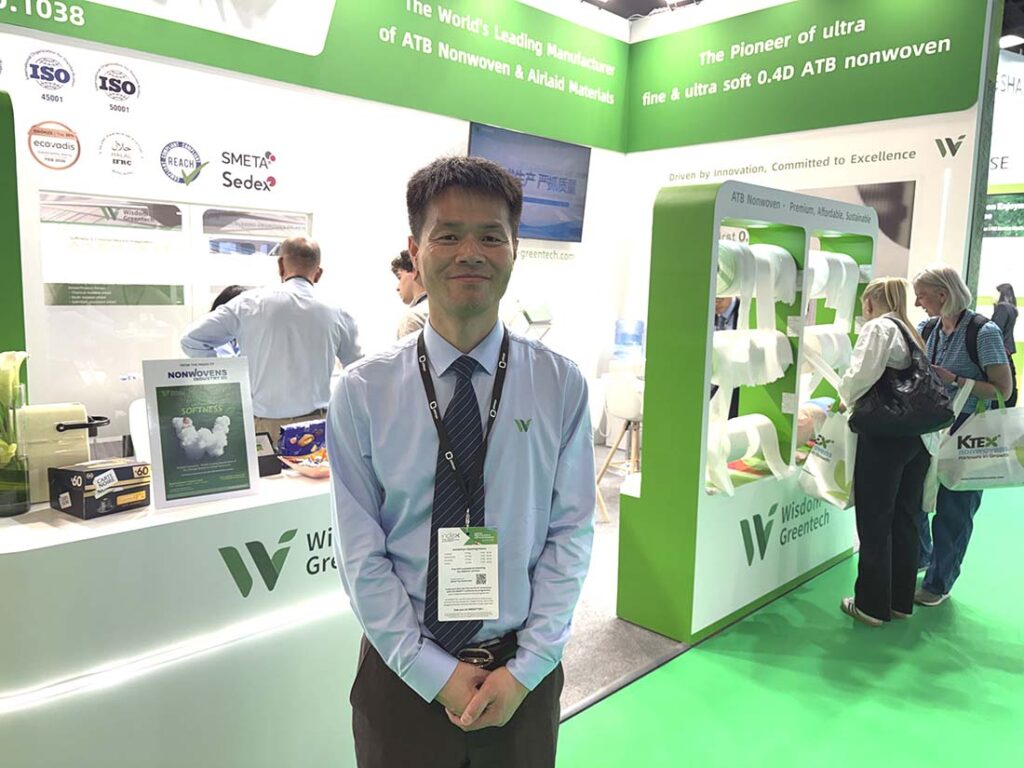
This background helps explain why Chinese investment in ATB technologies has accelerated so dramatically in recent years and why the two companies buying new lines from Trützschler Nonwovens — Liao Group and Wisdom Greentech, both based in Fujian, illustrate what the next phase of softness engineering will look like.
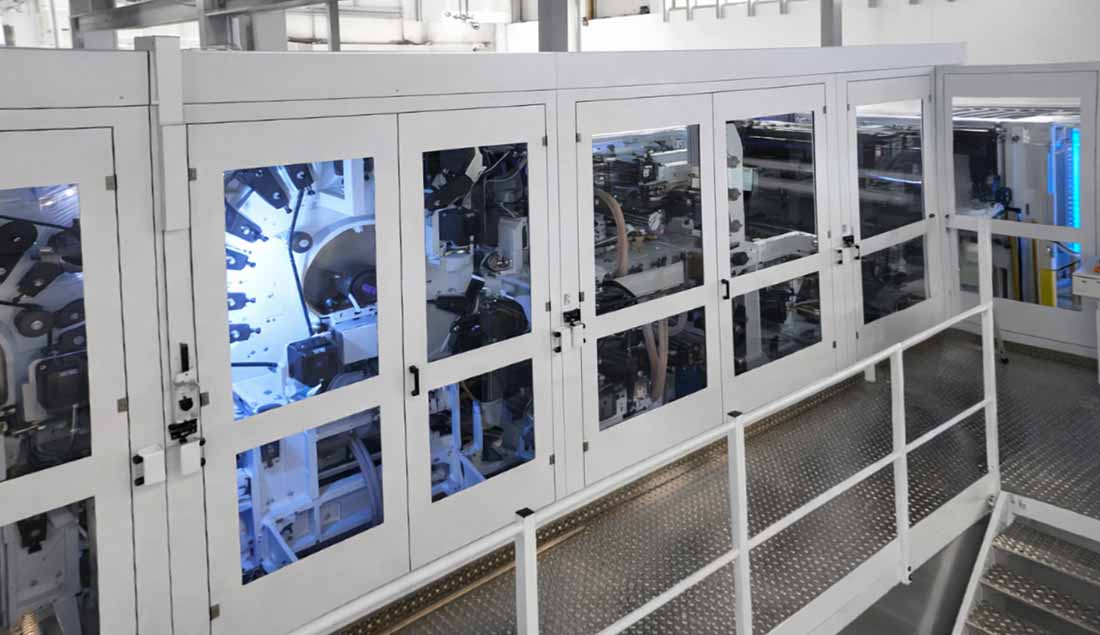
Liao’s strategy is fundamentally industrial. At INDEX, the company announced a major expansion program involving 10 additional 4.2 meter ATB lines, bringing its total number of Trützschler ATB systems to 20. This follows earlier investments that included nine 3.8-meter production lines and one existing 4.2-meter system, creating one of the world’s largest concentrations of ATB production capacity.
Through wider production lines, higher productivity and increasingly automated process control, Liao is pursuing perhaps the most characteristically Chinese interpretation of Japanese softness — transforming a premium sensory characteristic into an industrial manufacturing architecture capable of delivering softness economically and repeatedly at enormous scale.
Wisdom Greentech, by contrast, is increasingly focused on extending the technical boundaries of softness itself.
At INDEX26, the company’s research and development director Luis Wu explained that working with Trützschler, an ultra-high-speed 4.2-meter ATB line has been developed to operate at designed speeds approaching 200 meters per minute and capable of successfully converting fibers as fine as 0.4 denier. This represents Wisdom’s 14th ATB installation from Trützschler.
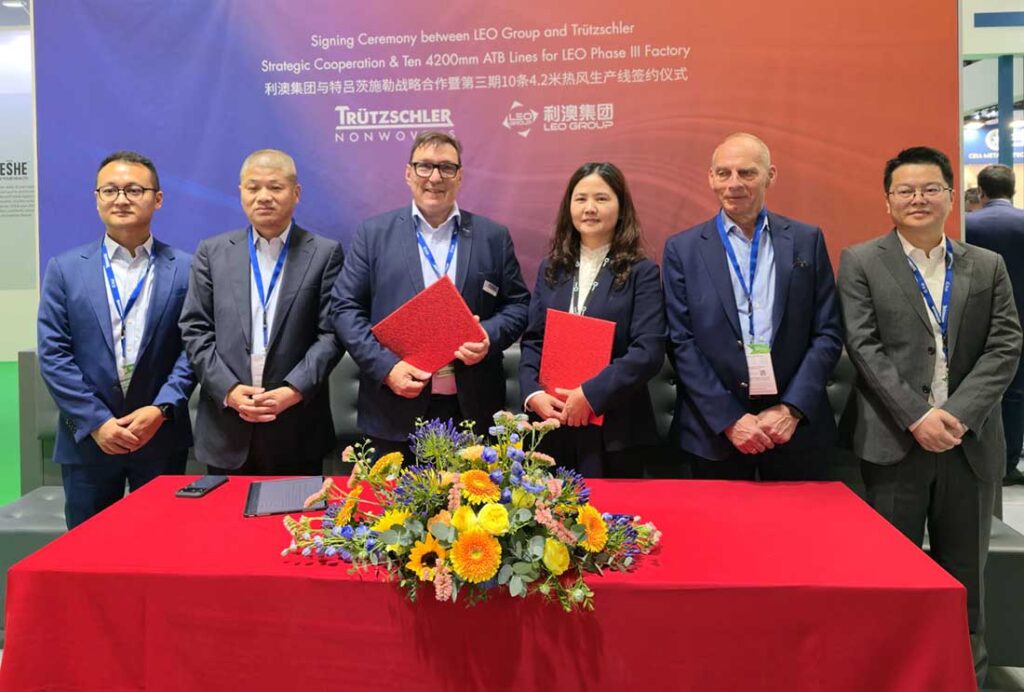
major expansion program during the recent INDEX™26
in Geneva, involving 10 additional 4.2 meter ATB lines. (left to right): ZhengYu Hu and WeiZhong Zhu of Trützschler Jiaxing, Trützschler Nonwovens MD Matthias Schemken,
MeiLing Chen, Liao Group’s director of procurement,
Trützschler China general manager Harald Schoepp and Weiping Zhang of Trützschler Jiaxing. Photo courtesy of Trützschler
Bigger Picture
The market for ATB nonwovens, however, is still very much niche in the overall picture of nonwovens production in Asia.
According to ANFA figures, in 2025, spunbonded and meltblown (spunmelt) materials — with much faster production speeds than carded products — accounted for around 3.6 million tons of the overall 7.7 million tons produced, while needlepunched materials accounted for a further 1.7 million tons and spunlaced nonwovens for 1.4 million tons.
Thermal bonded materials represented just 5 percent, or 362,000 tons of the market, with specific ATB presumably just a percentage of that last figure.
Nevertheless, the recent history of ATB in Asia demonstrates something unusual, because in many industrial sectors technology shapes consumer expectations, but the history of ATB in Asia illustrates the reverse — consumer expectations shaped the technology.
Japanese consumers transformed softness into a premium expectation, Taiwan helped industrialize that expectation and China is now scaling, refining and increasingly redefining it.
The result is that a tactile sensation which cannot be measured in tons or production speeds has nevertheless influenced fiber development, machine design, supply-chain investment and manufacturing strategy across an entire region.
As such, while ATB may remain a niche technology in volume terms, its development demonstrates how something as intangible as touch can become a powerful force in both industrial innovation and brand differentiation.