



The Proposed INDA and EDANA Collaboration with Global Nonwoven Alliance Gains Traction Towards an Official Launch as a new Federation
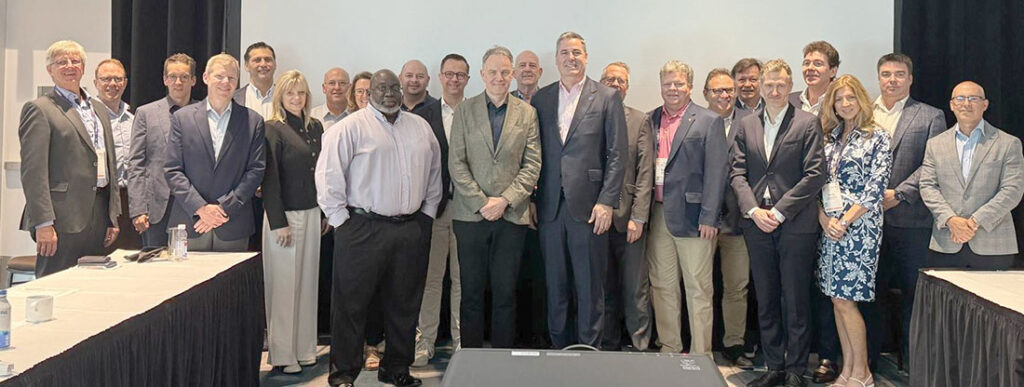
The future of the Nonwovens Industry was center stage at the IDEA®25 Show in Miami Beach, Florida, April 28-May 1.
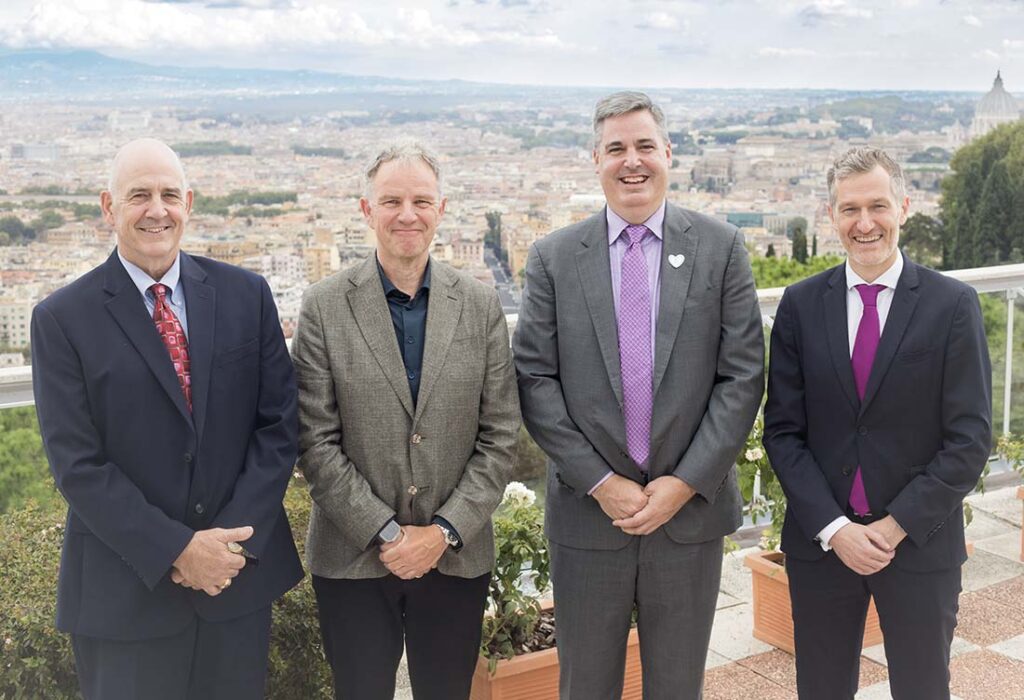
Yet, held off stage was the showstopper as the Board of Directors of INDA and EDANA continued progress toward a vision of broad collaboration for the benefit of the industry, detailed in a Letter of Intent signed by both organizations in September 2024 in Rome, Italy, at EDANA’s Outlook 24 event.
The LOI mapped out four areas that could add value to the industry to explore if a more globally focused entity existed, including:
- Enhance the scope and value to Members: The increased integration of resources will enable both organizations to deliver greater value to members, offering an expanded range of educational programs, enhanced networking opportunities, and access to a wider breadth of industry insights.
- Joint Advocacy and Representation: The alliance will amplify both organizations’ collective voice, enhancing their ability to advocate for members’ interests at local, regional, and global levels, ensuring that their needs and concerns are effectively addressed.
- Operational Synergies: The alliance will create efficiencies, strengthen the collective talent pool, and optimize the use of financial resources to support member and industry initiatives better.
- Innovation and Growth: The alliance will drive joint initiatives and projects that foster innovation, enhance industry leadership, and support the long-term growth and sustainability of the nonwovens industry.
This work has progressed to include a recommendation to incorporate a separate tax-exempt federation, the Global Nonwoven Alliance (GNA), with INDA and EDANA as the founding members. The purpose of this federation is to provide international leadership for the representation and responsible advancement of the global nonwovens industry (“Industry”) while respecting and benefiting its Members.
By aligning resources and expanding collaboration, GNA will deliver a more unified and coordinated strategy for the industry’s issues and opportunities. GNA will enable enhanced program and service value, reach, and efficiency. These benefits will translate into increased local and regional benefits and drive innovation, operational efficiencies, and long-term industry growth.
Under the proposed framework, INDA and EDANA will continue operating as independent legal entities, focusing on regional markets and advocacy. They will also serve as founding members of GNA committed to leadership, staff, and program coordination designed to enhance collaboration on cross-border industry priorities.
While the INDA and EDANA boards are assessing some organizational details, transition provisions, and approval timelines, both have expressed their strong support for GNA’s vision and purpose and are committed to responsibly advancing this initiative.
International Fiber Journal spoke with Tony Fragnito, President and CEO of INDA, and Murat Dogru, General Manager of EDANA, to hear their thoughts on the joint board meeting held at IDEA®25, the approval of GNA’s Workforce Development Director, and their view of the future for the nonwovens industry considering the formation of GNA.
International Fiber Journal: With Global Nonwoven Alliance becoming a reality, how have you viewed your work over the last year, exploring common interests within the proposed GNA framework?
Murat Dogru: I am more excited than ever. Over the past year, the Boards of Directors and Executive Committees of both INDA and EDANA have come together to shape a clear and compelling vision for what the Global Nonwoven Alliance (GNA) could become. What began as an exploratory dialogue has quickly gained momentum – faster than any of us initially anticipated. All potential opportunities of collaboration that we were considering and even dreaming of are proving to be possible.
We’ve evolved from discussing a strategic alliance to defining the contours of a true federation, with INDA and EDANA as its founding members. There is strong alignment and commitment from both boards, and, to my knowledge, the level of exchange and cooperation between our two organizations has never been this strong. It’s a testament to the shared belief that by working together, we can deliver far greater value to our members and the broader industry.
Tony Fragnito: I am also happy to see this coming to fruition. We will continue to gain momentum and support from our leadership as we clarify the vision and opportunities for the industry. We acknowledge that the industry has challenges that can be better met by collaborating between the two associations. In the future, inviting other entities to the table will broaden our scope and expand GNA’s capability to serve the global industry.
Our volunteer boards are incredibly supportive and excited to continue this effort, and many have stated, ‘this should have happened a long time ago,’ speaking of the INDA/EDANA effort to work closely
together.
Dogru: The common thread is ensuring that everyone benefits from this strategic alliance, considering our commonalities and differences. We have found quick wins, easy wins, and significant ways to add value to benefit all the members. We are now seeking joint resources that will leverage common goals. For example, we have decided to hire together the position of GNA Workforce Development Director. This person will drive the training platform effort for GNA, whereas our individual associations will continue to direct training content relevant to our demographic needs.
IFJ: This is a highly bold proposition, with many moving pieces. What has surprised you in this process?
Dogru: Two keywords guided the effort: transparency and openness. What surprised me most was how quickly we have been able to share information openly including at times quite sensitive organizational details, with a level of trust that’s rare in cross-organizational collaborations.
We agreed at the onset to have a high level of openness, and that intention has been supported by our boards. This desire doesn’t mean the board members have not been challenging us, sometimes looking for assurances, which we expected and appreciated, and acted upon.
Fragnito: You never want to go into a new idea thinking everything will be easy. Murat and I knew we had to take our time to assimilate everyone to the opportunities. I was very encouraged that the Executive Committees saw the vision very early and said, ‘Yes, we see this.’ The boards were open to the conversation, and came to see the potential very quickly as well.
We have very smart, business savy, people involved in our volunteer leadership and they asked good questions and challenged us in some areas to improve the concept. It was very constructive. We received feedback from the industry, and it was appreciated that we were communicating the vision and incorporating new information as appropriate.
Both of our organizations have long and varied histories, and everyone agrees that it is time to look forward, which was encouraging.
IFJ: What is the timeline now? What is still in development, and what obstacles are left to resolve?
Fragnito: Both EDANA and INDA have their mid-year Board Meetings this summer. Both board meetings will include a motion to approve joining GNA as a founding member. We hope to accomplish that here in the next couple of months. As such, this enables our organizations to work together as Founding Members to refine and approve the new GNA Bylaws. I don’t anticipate that we will have challenges there, but it’s ultimately the board’s decision. We have been cautious not to get ahead of where our volunteer leaders are in the process. This effort is their journey.
We will continue to onboard the GNA Workforce Development Director as part of that effort and identify a transitional provision to seat the founding board for GNA, which will be composed of six members from INDA and six members from EDANA by late summer. It is important to note that no one company can have double representation with participation on the INDA/EDANA Boards and the GNA Board. INDA and EDANA will identify the six directors from each organization.
Then, we will begin developing our first consolidated budget for 2026. To be clear, INDA has its budget, and EDANA has its budget. Then, we will identify GNA’s initial budgetary needs and how we’re going to support them as Founding Members.
A great example, still being formulated, is the new GNA Workforce Development Director, a position tasked with creating, building, and managing a platform for training. This position is something both EDANA and INDA wanted to do, but separately, we did not have the resources and volume of work. The Founding Members will share the cost of that effort. This position will relieve internal bottlenecks and allow our organizational Directors to focus on content and education for our regions (North America and Europe, respectively).
Also, some INDA/EDANA employees may allocate a percentage of their time to GNA activities, allowing us to leverage resources better and more effectively on every level.
IFJ: Besides GNA, was there anything else noteworthy about the joint board meeting?
Dogru: One thing to note: GNA has the potential to be much bigger than just EDANA and INDA. GNA includes the idea of “allied” members, which could be another trade association or associations dedicated to one product category in one application.
This structure allows us to expand collaboration to other strategically aligned entities, expanding the scope and influence of GNA for the industry. We will ensure that whatever is decided with respect to adding other GNA members, the level of engagement and strategic alignment is evident.
IFJ: How are you preserving the integrity of your current associations?
Fragnito: We will continue to operate as separate legal entities, with all our existing programs and services serving the local markets and the members we represent. Nothing will change that direction. Participation in GNA opportunities should be an added-value effort, as we can collaborate more effectively within the structure it affords.
Going back to the Workforce Development position as an example, we both have one individual on our staff who is responsible for technical support, including resources, training, standards and test method development, and delivering in-person training. They have a full plate. We both saw the opportunity to have a resource coordinating these training efforts, working with subject matter experts to build a dynamic learning management system for the whole industry.
Our current staff were already spread thin, and we lacked the volume of work and resources for a new full-time person. Sharing that cost under GNA, we are freeing our two in-house staff to spend more time on technical issues that will add value to our members, while improving the workforce development programs under the GNA umbrella. This effort is also a great way to maintain a competitive
workforce for the industry, not just within our existing markets, but globally. We can offer lifelong learning opportunities broadly through virtual, self paced offerings, expanding our reach.
We have started these investments and expect a bigger impact coordinating through GNA.
Dogru: It is important to note that the power remains in the hands of the INDA and EDANA Board of Directors. They elect who will represent them at the GNA level and authorize the projects and initiatives that would benefit from centralized coordination.
Open communication, and balanced representation, will determine how GNA can maximize industry value.
Fragnito: We must have an established flow of communication between GNA and the INDA and EDANA Boards. We believe we will achieve this by the GNA Board members being active participants in the INDA and EDANA Boards, respectively. GNA is the table where we consider industry topics from a global perspective, it is not designed to dictate or “approve” regional approaches, but to inform and consider the global industry implications from these regional forces.
IFJ: Will GNA have an executive director?
Dogru: We’re actively evaluating that option right now. I think we’ll be ready to communicate something soon, but it is still under discussion. We have a clear direction that we could take towards that end, but we just want to make sure that the board supports and validates it first.
IFJ: Shifting to current news items, do you have any comments on the significant focus and positioning on global tariffs?
Dogru: Many of our members have an international supply chain. Components come from different places, and this is the reality of our industry. The strategic alliance is a great way to show that our industry is global and we seek a larger voice and more collaboration to fully support the industry and its sustained growth.
Fragnito: INDA and EDANA just released a joint statement in which we expressed concerns regarding escalating trade tensions. We urged policymakers to prioritize negotiations and seek mutually beneficial resolutions. The supply chains are interconnected, and any situation that creates an unfair advantage for any player over another, whether regionally or in any other way, is just not good for the industry. Industry players should be able to operate in a competitive environment, not influenced by non-market influences.
Both organizations are keenly focused on the challenges of unnecessary regulatory burden and the toll it places on manufacturers. We’ll always try to minimize that burden through smart, efficient rulemaking.
We released the INDA International Trade Handbook written in partnership with the law firm Sandler, Travis & Rosenberg P.A. and represents several months of work compiling U.S. trade and customs policy and compliance information impacting the nonwovens sector. It is available to our members, and we shared it with EDANA. It is more of an informational resource for members that discusses who the different agencies are, the tariff codes, and things like the import codes, how to get information, what agencies handle what, etc.
IFJ: What are the industry’s top regulatory issues right now?
Fragnito: Labeling, product disclosures, extended producer responsibility. I will use labeling as an example. If there is a different product labeling requirement in 50 states, it’s not operational. Also, there are requirements in Europe that differ from those in the U.S.
Our members will benefit from the work we do together to achieve consistency. The more we standardize and align frameworks the better for the efficiency of our members. Sustainability remains an important topic for all our members, not just their products, but also how they perform and end of life considerations. There is much focus on regulation either limiting or banning entire categories of raw materials. We need to continue educating regulators and investing in new technologies and processes to minimize the long-term impacts of our industry, something all responsible industry’s are working towards.
Dogru: We have similar issues. EUDR, the deforestation-free supply chain regulations, are ones we currently face and must answer.
Specific products are scrutinized. It is not the same scrutiny as in the U.S., but there is an added value to developing positions with a global mindset through GNA. It may be an issue in our respective countries at the moment. Now, we will work hand in hand on the 2.0 version and see what needs to be adapted, what needs to be endorsed in the U.S. and Europe, and what would be specific to each.
IFJ: Will GNA host collaborative shows and events?
Fragnito: I think there are opportunities for that. Several members mentioned it would be advantageous to have a longer planning window with a little more certainty about when the next INDA and EDANA shows will be held, so a joint industry calendar is one idea.
Dogru: We are not necessarily pushing for more but for better. I think we should first focus on ensuring that we provide the best events for the marketplace.
I would like to emphasize how INDA and EDANA have collaborated to exchange information and ideas from our teams over the last year and a half. We consider ourselves colleagues now, which is nice to see.
IFJ: Is there anything else you would like the industry to know?
Fragnito: A significant benefit is having members from both organizations bring industry issues to the forefront. With these priorities we facilitate collaboration to find broadly supported industry solutions. These are often bigger issues than any one organization can manage.
The Quality Assurance Programs (QAP) is an excellent example. Suppliers were undergoing multiple audits because the purchasing companies each had a different quality audit program. Everyone believed their version was unique and proprietary. When our members, through their industry association, decided to share their frameworks it was clear there were a lot of similarities in the programs. Supplier companies, and the customers, benefit because they adopted a common framework and criteria to assess quality measures. While this program was developed under EDANA, working together we have accelerated the acceptance of the program both in North America and in Asia. I hope our members will experience more examples of this through GNA, the opportunity to move forward and advance the industry efficiently and effectively.
Dogru: For all the reasons Tony has outlined, there was a multiplicative effect when INDA joined the project and Asian partners joined us. GNA could fly much faster.
INDA and EDANA remain committed to a transparent process, both for our members and the industry, and will provide regular updates as this work progresses. We encourage interested parties to visit the EDANA or INDA websites for GNA frequently asked questions.
EDITOR’S NOTE: Upon publication of this interview, an exciting update was announced!
On June 11, 2025, the Boards of Directors of INDA and EDANA have officially approved the formation of the Global Nonwoven Alliance (GNA) and have concurrently agreed to become its founding members. Both Boards have also approved a motion authorizing each organization to appoint six representatives from each founding organization – current chair and 5 additional representatives.
Please see the full Press Release for more details and comments from the INDA and EDANA leaders.