

Auro Spinning Mills’ Gurpreet Singh discusses the ReNova™ recycled cotton fiber expansion, traceability efforts and the quality challenges shaping demand from fashion and sportswear brands.
India-based Auro Spinning Mills, a business unit of the Vardhman Group, established its first ReNova™ recycled cotton fiber spinning unit in 2022 with a capacity of six tons per day using both pre-consumer and post-consumer waste. This capacity has now grown to 12 tons per day. ReNova fibers are turned into yarns that are used in both knitting and weaving applications, with most of the fabrics going into fashion garments for several global fashion and sportswear brands. The yarns are also used in high-end home textiles.
Arun Rao, IFJ’s international correspondent in India, recently met with Gurpreet Singh, chief general manager of Auro Spinning Mills, to learn more about ReNova recycled fiber, as well as the company’s plans to establish two additional recycled cotton fiber lines in its mills in central India.
International Fiber Journal: Kindly provide a brief history of the Vardhman Group.
Gurpreet Singh: ReNova, a cotton fiber recycling brand, was initiated by the Vardhman Group — one of the biggest textile groups in India with facilities beginning from spinning to garment making that operates in multiple locations.
The group had humble beginnings in 1965 when it started with just 6,000 spindles. Currently, the group manages 1.26 million spindles with an average count daily production capacity of 22,800 metric tons of yarn per month.
The group also has 1,790 advanced weaving looms with a capacity of 20 million meters of fabric per month, fabric dyeing capacity of 18.6 million meters per month, and fabric printing capacity of 2.2 million meters per month. Production capacity of garments is approximately 165,000 shirts per month. In addition, the group also has a facility for producing performance fabrics with average manufacturing capacity of 1.5 million meters per month, which are used in jackets, bags, coats, parachute, bulletproof jackets, among other applications.
IFJ: Can you tell me about the ReNova cotton recycling project and how it got started?
Singh: The first recycled cotton fiber production line was installed with a capacity of 6 tons per day in 2022 and recycled cotton fiber was produced from the pre-consumer hard waste generated by the various textile mills operated by the Vardhman Group. We installed a second line also of 6 tons per day in 2025 to produce fibers from fabric clippings from post-consumer waste and now have a total production capacity of 12 tons per day. Fabric clippings are sourced from specialized suppliers as the conversion process is highly labor-intensive and not undertaken in-house. Our recycled fiber is used exclusively within the Vardhman Group, with additional volumes sourced from buyer-nominated partners if required.
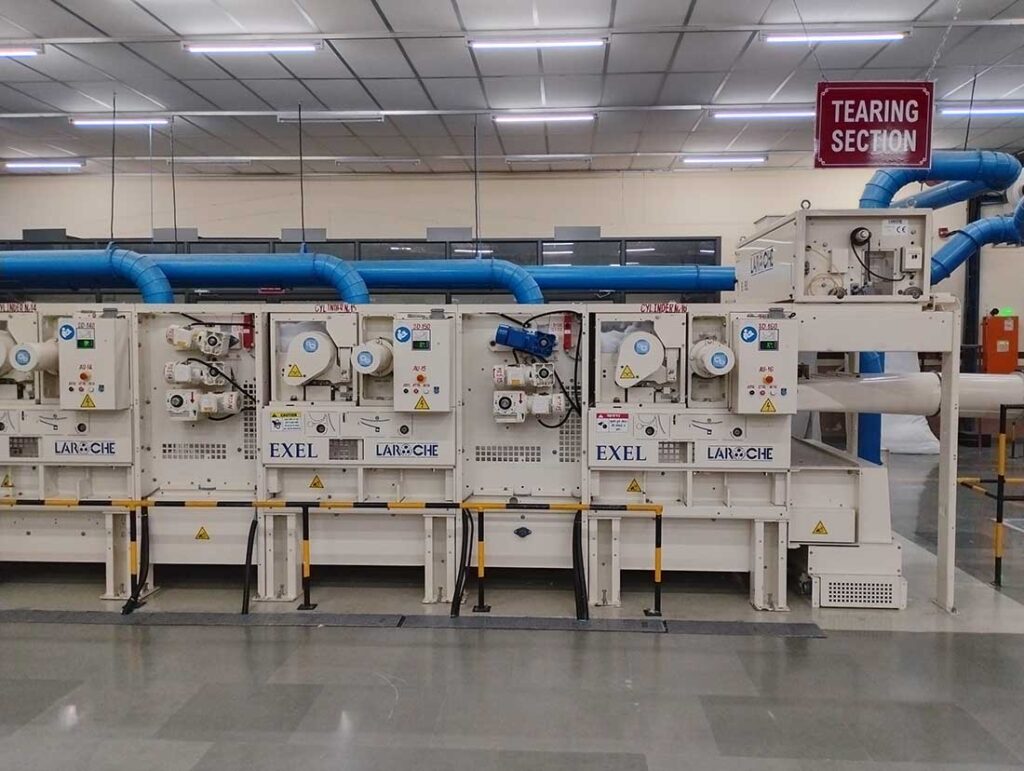
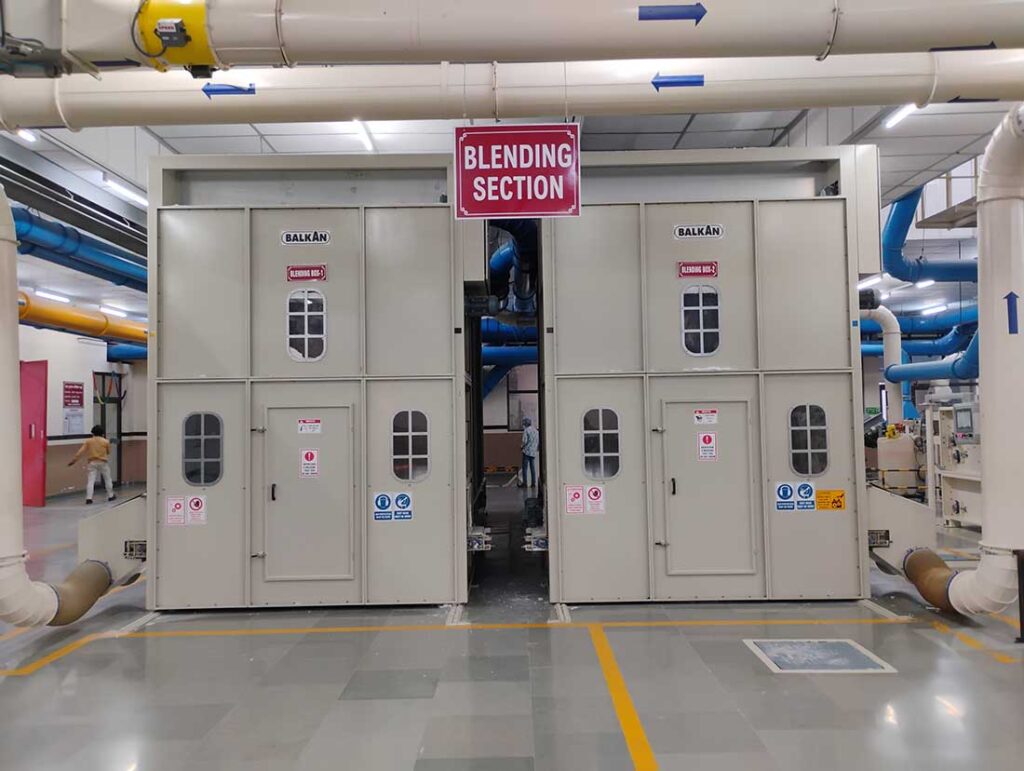
We operate state-of-the-art fiber processing technology, maintaining precise temperature and humidity control to prevent fiber rupture. Advanced air filtration systems refresh the unit’s air up to 50 times per hour, effectively managing dust and fly. We are among the very few facilities in India equipped with both integrated climate control and high-frequency air filtration systems.
Around 20 percent of our recycled cotton fiber comes from post-consumer waste, while 80 percent is derived from pre-consumer waste such as yarn and fabric residues generated within our mills and garmenting units. Recycled fiber from yarn waste offers superior quality compared to fabric or post-consumer sources, as fiber integrity declines further down the value chain. Nearly 90 percent of the recycled cotton yarns we produce are sold externally, with the remainder processed in-house through weaving, dyeing or printing.
IFJ: What prompted the recycling cotton fiber project?
Singh: Customers were not satisfied with the quality of yarns produced from recycled fibers. Secondly, there also used to be a question of verification as to whether the yarn contains recycled cotton. These two reasons led Vardhman to installing our own recycled cotton fibers plant under the brand name of ReNova. Another reason was that we have close to 1.3 million spindles and produce around 20 million meters per month of fabrics. Waste was generated from both these manufacturing processes that could be put to good use producing recycled fibers. Additionally installing this recycling plant gave more confidence to the fashion brands to buy our yarn.
Recycling post-consumer waste has been happening for decades in India and there are hundreds of such units in India. But these fibers are used only to produce carpets or towels typically. But over the past few years, a demand has been generated from fashion brands to produce apparel. There are very few recycled cotton fiber units like ours that supply to fashion brands.
IFJ: How do you maintain quality of the recycled cotton fibers and the yarns produced from them?
Singh: The fabric clippings sourced from suppliers are passed through ultraviolet ray chambers and sensors to detect material made from other fibers. Eighty percent of the quality of the final recycled fiber can be managed by controlling the quality of the feedstock. First the fabric clipping is passed through a cutter and then undergoes conditioning for 24 hours to ensure the moisture is consistent. Then it goes through the tearing line. After the tearing line there are some proprietary processes that make our fibers better than those available in the market.
When fabric or hard waste is recycled, the basic character of the fiber is lost. The fiber length is short and there are more neps and short fibers. There is also more contamination since it is a mechanical recycling process. We are continuously researching how to recycle cotton fiber with minimum damage to the fiber properties. Secondly, we are also researching again on the spinning yarn front to produce a better yarn from the recycled fibers. We are investing heavily on both fronts.
Premium yarn quality is achieved by blending recycled cotton with high-grade virgin cotton to offset its natural limitations. The best results come through close collaboration between brand design teams, the ReNova research and development team, the product development team, and our spinning experts to co-create solutions aligned with performance and aesthetic goals.
IFJ: How much recycled content is currently going into the fashion apparel?
Singh: Currently recycled fiber is blended with virgin fibers in proportion as mandated by our buyers. We also follow Textile Exchange guidelines that set strict mandates for adding recycled fibers for producing various counts of cotton yarn. There is a limit on blending recycled cotton fibers with virgin cotton fiber due to the shorter length of recycled fibers in order to produce higher count yarns of good quality.
IFJ: Does ReNova provide traceability of its recycled cotton fibers?
Singh: One way of providing traceability is through following Textile Exchange guidelines and audits. Another way is that we add a tracer in our recycled fiber when a customer requests it. We are also working on providing traceability through a blockchain solution which is a foolproof method and are striving to achieve the desired results.
IFJ: What is the advantage of the fiber products that you offer compared to those offered by competitors?
Singh: ReNova fibers offers a 2 to 3 millimeter (mm) longer staple length than conventional market options, with 10 to 15 percent lower short fiber content. These are key differentiators that enhance yarn quality. The ReNova branding signifies our commitment to delivering consistently superior-quality yarn.
IFJ: Do you have a research and development lab and how has it played a role in improving fiber length or quality?
Singh: Research and development is a continuous process at ReNova and we have installed state-of-the-art testing instruments in our lab. The research and development team has played a major role in developing fiber of the highest quality and ensures minimum rupture of the fibers, which includes length of the fiber, unopened fibers and reducing contamination. The team at ReNova has also done research and development on maintaining the correct climate control like maintaining the right humidity inside the plant. The length of our fibers has increased by 2 mm, and short fiber is 10 percent less today when compared with when we started the plant in 2022.
Our spinning research and development team has reengineered processes to deliver superior yarn quality despite the inherent limitations of recycled fibers. In addition to our in-house laboratory, we collaborate with leading
research institutes to drive continuous innovation.
IFJ: Which global fashion and sportswear brands work with ReNova?
Singh: ReNova has worked with multiple global fashion and sportswear brands including Decathlon, PUMA, Primark, H&M, Target, MUJI, and Marks & Spencer, among others.
IFJ: Does ReNova have any compliance certificates?
Singh: ReNova has ISO 45001:2018 — Occupational Health and Safety Management System— certification, ISO 14001:2015 — Environment Management System —certification and the Global Recycled Standard (GRS) certification.
IFJ: Please share details of sustainability initiatives undertaken by the Vardhman Group?
Singh: The Vardhman Group’s sustainability initiatives index expanding with each passing year. ReNova by itself is a sustainability initiative. In addition, we have 31.1 megawatt solar power energy installed to generate green energy. We have sewage treatment plant installations at nine plant locations, four locations with effluent treatment with zero liquid discharge, and also rainwater harvesting systems. We have also been able to reduce greenhouse gases and carbon emissions, utilize husk as a fuel, and have planted 450,000 trees in the last several years. Vardhman Group also installed two biogas plants. In addition, we have initiated a global water partnership with GAP Inc. and Ckinetics to enhance operational efficiency, and have also reduced use of plastic packaging over the past few years.
We feel that with newer environmental regulations from the European Union and the United States, the demand for recycled fibers will increase in the future.
— Gurpreet Singh
IFJ: What are your expectations on the future growth and opportunities for recycled fibers?
Singh: We feel that with newer environmental regulations from the European Union and the United States, the demand for recycled fibers will increase in the future. However, the main challenge is the maturity in thinking of buyers who are of the opinion that recycled yarn is another certified yarn like organic or Fairtrade or Better Cotton Initiative (BCI) cotton. They expect the same quality of yarn made from recycled fibers as when using BCI or organic certified cotton. This is a major challenge. The market has grown massively since we started in 2022. Now every fashion brand wants to include recycled fiber yarn in their fashion portfolio.
IFJ: Any planned capacity expansion or new investments in the near future?
Singh: We have plans to set up two more recycled fiber lines in our mills in central India where too we have major spinning and weaving capacities. We are working with technology partners to have more automation to control contamination and manufacture fibers with better length.