



Consumer-led resale is moving apparel circularity beyond recycling by extending garment life and reshaping expectations for durability, value and design.
The wastefulness of the $1.8 trillion global apparel industry has by now been widely documented. An estimated 150 billion garments are produced each year, yet a significant proportion are never sold or are discarded after only a few wears. Around 92 million tons of textile waste are generated annually worldwide, with most ending up in landfill or the incinerator, while the rise of fast fashion has only accelerated the problem by encouraging frequent purchases, shorter product lifespans and low-cost production.
For the past decade, much of the industry’s attention has focused on building a circular economy through fiber-to-fiber recycling. Governments have introduced extended producer responsibility (EPR) schemes, Digital Product Passports (DPPs), Ecodesign requirements and restrictions on textile waste, while companies have invested billions in mechanical and chemical recycling technologies.
Yet alongside this primarily policy-driven transformation, a separate and largely consumer-led revolution has quietly been gathering pace. Rather than waiting for discarded garments to be recycled into new fibers, millions of consumers are simply buying them again.
Ironically, while fiber-to-fiber recycling continues to attract much of the investment, political attention and technological innovation, resale has become the first truly global circular business model to achieve commercial scale. It is extending the useful lives of garments today, rather than promising to do so tomorrow.
No Longer Niche
For years, the secondhand clothing market was portrayed as a fast-growing niche, driven primarily by environmentally conscious consumers seeking to reduce fashion’s environmental footprint.
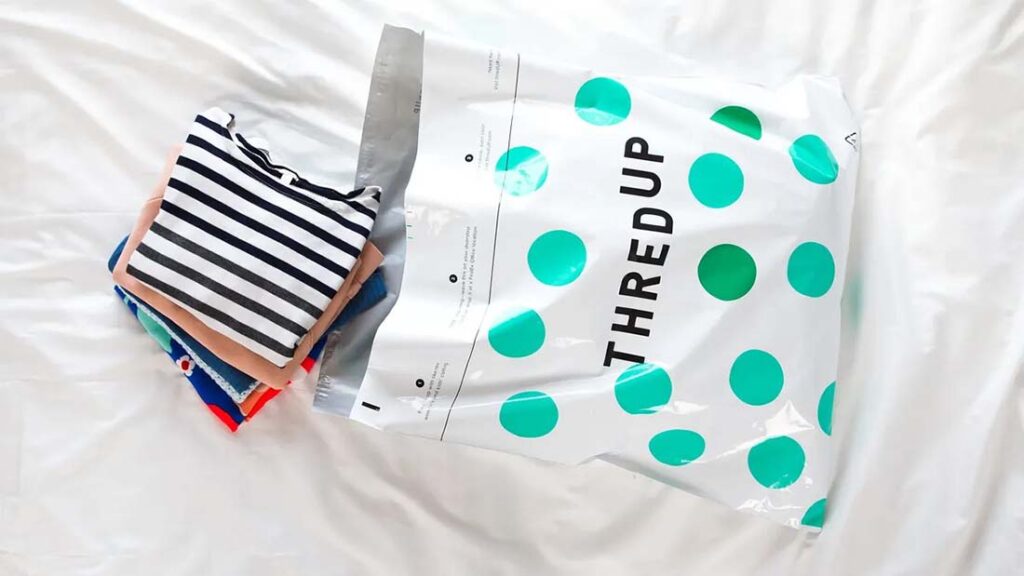
According to the latest 2026 Resale Report from Oakland, Calif.-based ThredUp, however, that description no longer fits.
Compiled in partnership with market analyst GlobalData, the report estimates the global resale market reached a value of $289 billion in 2025 and forecasts it will grow to $393 billion by 2030, expanding at around twice the rate of the overall apparel market. In the United States alone, resale grew by 19 percent during 2025 — almost four times faster than retail clothing as a whole.
The figures suggest that secondhand clothing has moved beyond complementing the primary apparel market and is now competing directly with it.
Worth the equivalent of around one dollar for every six dollars spent on new clothing, resale has become comparable in scale to the apparel markets of some of the world’s largest economies.
Affordability
Perhaps the report’s most significant finding is not simply the pace of growth, but why consumers are embracing resale.
Environmental considerations remain important, particularly among younger consumers, but they are now matched by economic realities. Inflation, rising living costs and pressure on household budgets have transformed secondhand clothing from an ethical choice into a practical financial decision.
Almost six in 10 consumers surveyed by ThredUp said they would be inclined to purchase more secondhand clothing if the price of new apparel increased further.
The implications are significant because affordability broadens resale’s appeal far beyond environmentally engaged consumers. What was once viewed as an alternative shopping channel is increasingly becoming the default starting point for millions of purchases.
Technology
Technology has played a decisive role in this transformation.
Secondhand shopping was once associated with charity shops, flea markets and hours spent searching through clothing rails in the hope of discovering an unexpected bargain.
Today’s leading resale platforms operate sophisticated digital marketplaces supported by artificial intelligence (AI), computer vision and personalized recommendation engines.
In many ways, resale presents one of the most compelling applications for AI in retail.
Unlike conventional online fashion retailers, which may be selling thousands of identical garments, resale platforms are managing millions of unique items. Every listing has different colors, sizes, brands, conditions and histories. AI enables these individual garments to be identified, categorized, priced and matched with potential buyers at a scale that would have been impossible only a few years ago.
Image recognition, automated descriptions, intelligent search and personalized recommendations are making unique products easier to discover, while social commerce and livestream shopping are introducing secondhand fashion to entirely new audiences.
Why Durability Matters Again
The rise of resale also has profound implications for textile manufacturing.
For decades, success in apparel production was largely measured by the number of new garments entering the market. As clothing increasingly circulates through multiple owners, however, longevity itself is becoming a commercial advantage.
Consumers are beginning to recognize this. Around 60 percent now say they consider an item’s future resale value when purchasing new clothing, encouraging greater emphasis on quality, durability and timeless design.
For textile manufacturers, this changes the equation. Fiber performance, colorfastness, seam strength, abrasion resistance, dimensional stability and resistance to pilling all become more valuable when garments are expected to survive second, third or even fourth ownership.
In effect, durability is no longer simply a quality attribute. It has become an economic one.
Two Apparel Markets
The emergence of resale may also be reshaping the structure of the wider apparel industry.
Rather than replacing fast fashion altogether, it appears increasingly likely that two parallel markets will continue to develop. One will remain driven by low-cost, trend-led garments designed for rapid consumption. The other will increasingly favor products capable of retaining both their physical quality and their financial value through repeated resale.
For brands operating in the second market, longevity becomes a competitive advantage rather than a manufacturing cost.
Specialist Platforms
There is, of course, reason to view the ThredUp report with a degree of caution since the company is itself one of the world’s largest resale platforms and naturally has an interest in highlighting the sector’s momentum. Nevertheless, because the market analysis is independently produced by GlobalData, its conclusions have gained considerable credibility across the fashion industry.
ThredUp generated revenue of $311 million in 2025, although Europe’s largest specialist platform is now Lithuania-based Vinted, which reported annual revenue of $1.26 billion (1.1 billion euros) in 2025 while continuing its rapid international expansion. London-based Depop has established a particularly strong following among Generation Z consumers, while other leading specialist platforms include France’s Vestiaire Collective, U.S. luxury marketplace The RealReal, and Poshmark, now owned by South Korea’s Naver.
It would be misleading, however, to focus solely on specialist resale businesses. In terms of transaction volumes, larger marketplaces such as eBay, Facebook Marketplace and, increasingly, Amazon, facilitate enormous volumes of secondhand clothing sales, even though fashion represents only one category within their much broader businesses.
eBay, in particular, has successfully repositioned itself around “pre-loved fashion”, partnering with brands including Marks & Spencer while strengthening its appeal among younger consumers through its acquisition of Depop. Amazon, too, has pursued a strategy of using partnerships with authenticated luxury resale specialists such as Rebag rather than attempting to build its own consumer-to-consumer marketplace.
Retail Embraces Resale
Perhaps the clearest indication that resale has become mainstream is the changing attitude of fashion brands themselves.
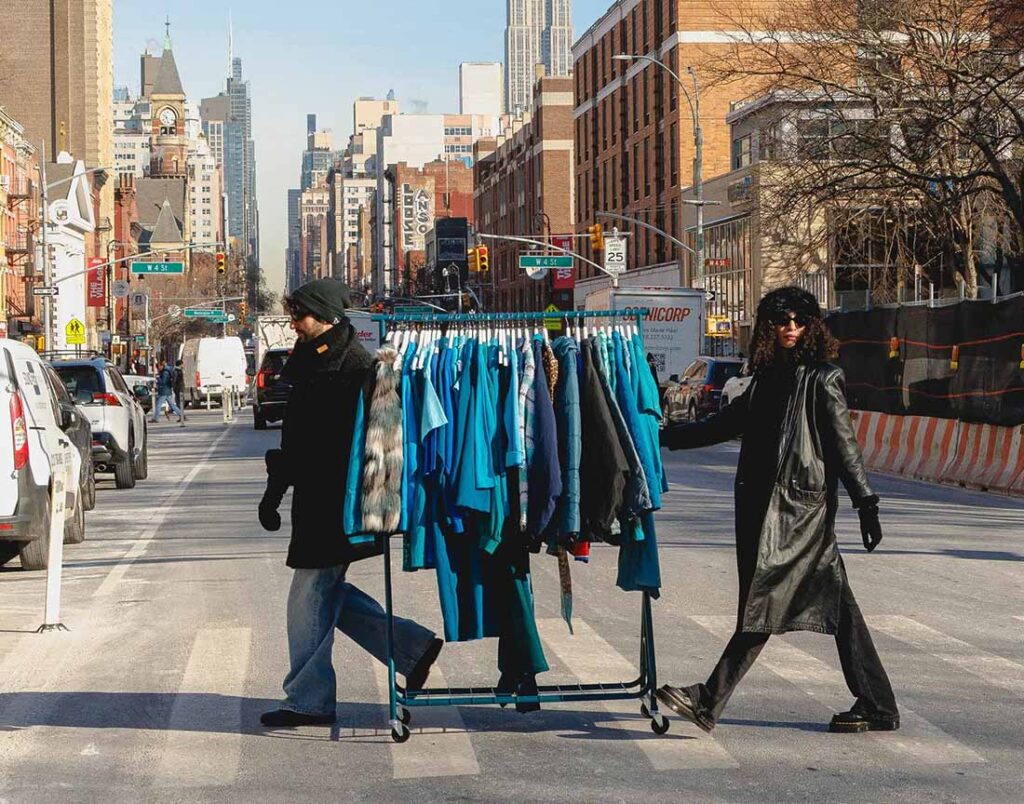
Rather than viewing secondhand clothing as competition, increasing numbers now regard it as another stage in the customer relationship. Patagonia, lululemon, Levi’s, COS and Marks & Spencer are among those brands introducing take-back programs, repair services, trade-in schemes or branded resale platforms, often working alongside specialist technology providers.
The benefits extend beyond sustainability. Resale allows brands to maintain contact with customers long after an initial purchase while generating valuable insight into which garments retain their desirability, durability and value over time.
European legislation is likely to accelerate this trend. From July 2026, major brands are prohibited from landfilling or incinerating unsold clothing under new EU rules, with smaller companies to follow by 2028. At the same time, the forthcoming introduction of EPR schemes, DPP and Ecodesign requirements all encourage garments to remain in productive use for longer before eventually entering recycling systems.
This also has implications for returned goods. According to the National Retail Federation’s 2025 Retail Returns Landscape report, retailers expect almost 16 percent of merchandise sold to be returned by consumers, with apparel, footwear and accessories accounting for one of the largest categories. Much of this clothing will increasingly find its way into resale channels rather than being written off as waste.

Beyond Recycling
None of this diminishes the importance of fiber-to-fiber recycling. On the contrary, recycling will remain essential for garments that have genuinely reached the end of their useful lives.
The emerging hierarchy is becoming increasingly clear, however. Before garments are mechanically shredded or chemically dissolved back into raw materials, they will first be repaired, resold and reused wherever possible. Companies specializing in sorting, grading and textile collection are already adapting to this reality by maximizing opportunities for reuse before directing lower-grade products toward recycling.
This approach reflects the principles of the circular economy itself. Preserving the value already embedded within a finished garment generally delivers greater environmental benefit than recovering only the fibers from which it was made.
The most important message emerging from this year’s ThredUp report is therefore not simply that the resale market continues to grow rapidly, but that its role within fashion has fundamentally changed.
For decades, the apparel industry measured success by how many new garments it could produce and sell. The rapid growth of resale suggests a different measure may now become equally important — how many times each garment can be sold before it eventually reaches the end of its life.
This shift has implications far beyond online marketplaces. It reaches back through the entire textile supply chain, influencing the fibers selected, the fabrics engineered, the garments designed and the technologies used to manufacture them.
The future of fashion will not be shaped solely by what is produced, but increasingly by how long products remain in circulation.