



Agricultural waste streams across Africa offer promising fiber sources for nonwovens, fashion, packaging and composites, but infrastructure and investment remain key to scale.
The global fiber and materials landscape is undergoing a structural shift. As sustainability pressures intensify, brands across fashion, hygiene, packaging and technical textiles are accelerating their transition away from resource-intensive cotton, chemically processed cellulosics and petrochemical synthetics. Biobased materials — particularly those derived from agricultural waste — have moved from niche experimentation to strategic necessity.
Yet one region with extraordinary potential remains largely absent from global sourcing conversations: Africa.
Across the continent, millions of metric tons of agricultural by-products are generated every year. Much of this biomass is burned, composted or left to decompose. Embedded within these waste streams, however, are cellulose-rich fibers with the performance characteristics needed for nonwovens, fashion textiles, packaging and biocomposites. Africa’s agricultural systems, climate and land availability position it as a future powerhouse in the global biofiber economy — but the opportunity remains underdeveloped and under-recognized.
As global brands seek new, traceable, low-carbon materials, Africa’s biofiber potential offers a compelling frontier. The question is no longer whether Africa can participate in the next generation of sustainable fibers, but how quickly industry stakeholders will engage.
Agricultural Waste As A Fiber Resource
Africa’s agricultural sector is vast and diverse. It produces enormous volumes of biomass that require no additional land, water, or fertilizer to generate — making these fibers inherently low impact and strongly aligned with circular economy principles.
The following are among the most promising African biofibers for nonwovens and fashion.
The question is no longer whether Africa can participate in the next generation of sustainable fibers, but how quickly industry stakeholders will engage.
Sisal: East Africa’s Legacy Fiber With New Technical Relevance
Kenya and Tanzania are key global producers of sisal. Historically used for ropes and twine, sisal’s long, coarse fibers offer high tensile strength, abrasion resistance and biodegradability. These properties make sisal suitable for geotextiles, automotive composites, insulation materials, reinforcement in needlepunched nonwovens, as well as construction and civil engineering applications.
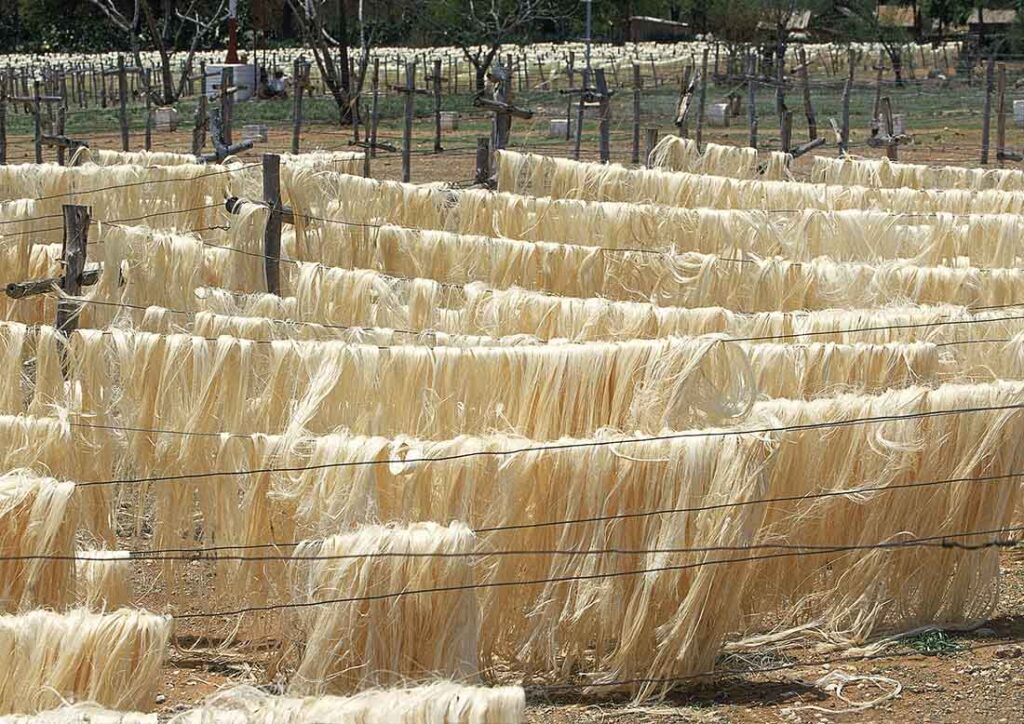
With modern decortication and fiber refinement, sisal can also be processed into shorter staple fibers suitable for carded nonwovens and blended fabrics. As global demand for natural reinforcement fibers grows, sisal’s relevance is increasing.
Sisal also aligns with global decarbonization goals. Compared to synthetic reinforcement fibers, sisal has a significantly lower carbon footprint and can be produced in rain-fed systems with minimal chemical inputs. This positions East Africa as a strategic supplier for industries seeking to reduce Scope 3 emissions.
In addition, initiatives among consumer goods companies to reduce their carbon footprint have elevated sisal fiber’s value proposition, as the material exhibits minimal environmental impact throughout its life cycle, from cultivation to end-of-life biodegradation. Investment in sustainable sourcing has intensified across the supply chain, with major retailers committing to 25 to 35 percent natural fiber content in textile products by 2030, according to a Data Intelo report.
The same report highlights how research institutions and fiber manufacturers have in recent years invested heavily in process optimization, reducing chemical waste by 40 to 50 percent while simultaneously improving fiber tensile strength. These technological breakthroughs allow manufacturers to fetch premium pricing for processed sisal variants. Bleached and dyed products command 15 to 25 percent price premiums over natural fiber equivalents, enhancing manufacturer profits and margins.
Pineapple Leaf Fiber: A Soft, Versatile Fiber For Fashion And Wipes
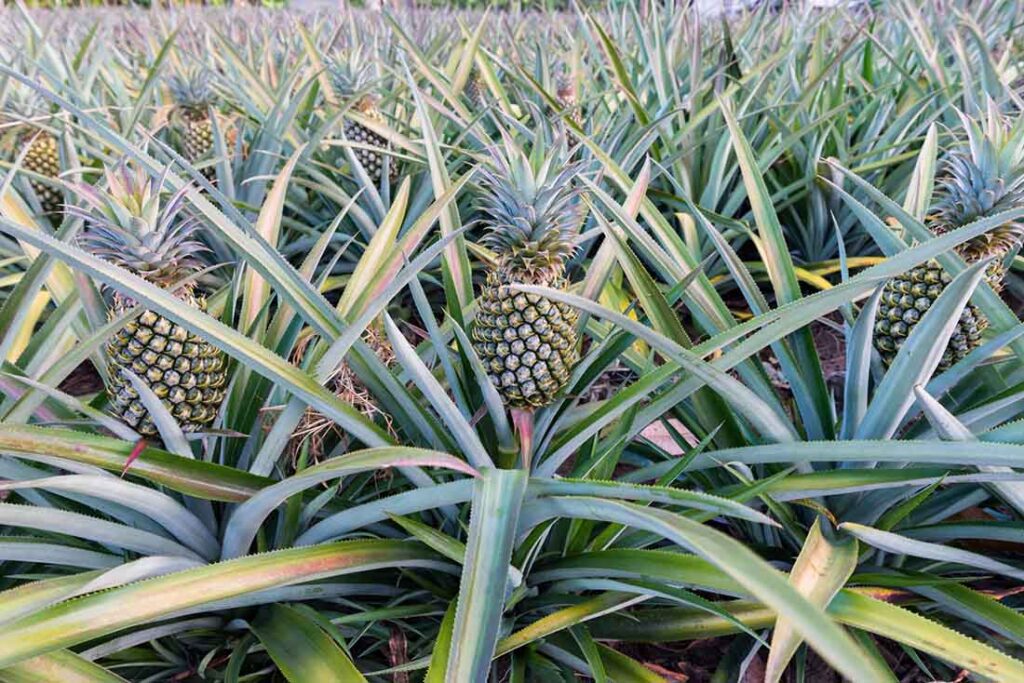
Ghana, Kenya and Côte d’Ivoire are major pineapple producers. For every metric ton of fruit harvested, 2 to 3 metric tons of leaf waste are generated. Pineapple leaf fiber (PALF) is lightweight, soft and flexible, strong relative to its fineness, biodegradable and compatible with viscose, polylactic acid (PLA) fiber and natural fiber blends.
PALF has gained global visibility through Piñatex, a leather alternative owned by Ananas Anam and used by fashion brands such as Hugo Boss and H&M. Piñatex sources some of its pineapple fiber from Côte d’Ivoire, demonstrating that African PALF can meet international quality and consistency requirements.
The patented Piñatex material is used for fashion textiles, specialty nonwovens and lightweight composites. PALF’s combination of softness and strength makes it particularly attractive for premium wipes and hygiene products — categories where consumers increasingly demand natural, skin-friendly materials.
Banana Fiber: A High-Cellulose Material With Hygiene Potential
Uganda, Rwanda, and Tanzania produce vast quantities of bananas. After harvest, the pseudostem — a thick, fibrous stalk — is typically discarded. Yet the stalk contains long, strong fibers with high cellulose content and excellent absorbency.
Banana fiber is suitable for spunlace wipes, hygiene topsheets, packaging, fashion textiles and molded fiber products. Ugandan cooperatives already extract banana fiber for artisanal textiles and pulp. With mechanization and investment, these operations could scale to industrial levels.
Banana fiber’s high absorbency and biodegradability make it a strong candidate for hygiene applications — particularly in markets where consumers are shifting toward natural, plant-based materials.
Sugarcane Bagasse: A Scalable Input For Pulp And Nonwovens
Kenya, South Africa, Eswatini, and Mauritius have established sugar industries. Bagasse — the fibrous residue left after juice extraction in the sugar production process — is abundant and underutilized.
Bagasse can be refined into pulp for wipes and tissues, molded fiber packaging, airlaid nonwovens, biodegradable trays and containers, and specialty papers. South Africa’s sugar mills already use bagasse for energy generation, which is better than burning the material in the fields, as happens elsewhere. However, energy generation remains a comparatively low-value option when measured against the material’s potential for fiber applications.
Bagasse pulp can be blended with recycled fibers or natural fibers to create biodegradable wipes and packaging — categories experiencing rapid global growth.
Kenaf: A Fast-Growing Crop For Technical Textiles
Kenaf thrives in Nigeria, Sudan, and parts of West Africa. With a cellulose content of 60 to 70 percent, kenaf is suitable for automotive nonwovens, insulation, biocomposites, technical textiles and reinforcement fibers.
It has a 4,000-year cultivation history in Africa. Its rapid growth cycle, low water requirements, and low pesticide demand make it an attractive crop for climate-resilient fiber production. As automotive OEMs seek natural fiber composites to reduce vehicle weight and carbon footprint, kenaf offers a compelling alternative to glass fiber.
Beyond The Big Five
Beyond sisal, PALF, banana fiber, bagasse, and kenaf, Africa offers several emerging fibers with niche potential. These include coconut coir, which is abundant in East and West Africa; rice straw, which is widely available in West Africa; maize husk fibers, with abundant stock in Southern Africa; and hemp and flax, which have relevance in South Africa and Morocco.
These fibers have potential in packaging, geotextiles, biocomposites and specialty nonwovens.
Why Africa Has Been Overlooked — Until Now
Despite its potential, Africa has not yet emerged as a major player in global biofiber supply chains. Several structural factors explain this:
- Limited processing infrastructure — decortication, pulping, and fiber refinement facilities are still scarce. Without processing, fibers cannot meet global quality standards.
- Fragmented smallholder production — most crops are grown by smallholder farmers, making aggregation and consistent supply challenging.
- Low visibility in global supply chains — African fibers are rarely included in global sourcing maps, certification schemes or R&D pipelines.
- Limited investment in fiber research and development (R&D) — most agricultural research focuses on food security rather than fiber extraction or material science.
- Perceived risk — global brands often view Africa as a high-risk sourcing region due to infrastructure gaps and inconsistent supply.
However, these barriers are not insurmountable, and early innovators are already proving what is possible.
Early Innovators: Proof Of Concept Across The Continent
Africa’s biofiber ecosystem is not hypothetical. Several initiatives already demonstrate commercial viability.
Ananas Anam, the owner of Piñatex and Piñayarn, a premium fiber derived from pineapple leaf, is already sourcing PALF from Côte d’Ivoire. Kenyan sisal estates are supplying fiber for composites and specialty applications. Ugandan banana fiber cooperatives are producing yarns, pulp and artisanal textiles, with some materials being piloted in feminine care applications. South African bagasse initiatives are piloting molded fiber packaging and pulp for wipes. In Nigeria, kenaf projects are exploring automotive and insulation applications.
These examples show that Africa’s biofiber potential is real, but still far from fully realized.
Technical Fit For Nonwovens And Fashion
African biofibers offer strong compatibility with modern processing technologies. Depending on the fiber and level of refinement, they can be adapted for spunlace, carded nonwovens, airlaid blends, needlepunched geotextiles, wetlaid pulp products and biocomposites.
They also offer strong blending potential. African biofibers can be combined with viscose, lyocell, PLA, recycled polyester, cotton and other natural fibers to achieve different performance and sustainability profiles.
Depending on the fiber, benefits include high tensile strength, biodegradability, absorbency, breathability, low density and thermal insulation. These attributes open up applications across hygiene topsheets and backsheets, wipes, fashion textiles, geotextiles, packaging, automotive interiors, insulation and molded fiber products.
This versatility makes African biofibers attractive to manufacturers seeking sustainable alternatives that are not only renewable but also functional.
Why Global Brands Should Pay Attention
There are five reasons why global brands should pay attention to Africa’s biofiber potential today.
First, Africa offers supply chain diversification. Most biobased fibers today come from Asia. Asia undoubtedly offers many advantages that are not necessary to repeat here, but climate-related disruptions, including typhoons in parts of the region, can create supply chain risk. Africa offers an additional sourcing base with geographic and climatic diversity.
Second, Africa offers lower-carbon inputs. Agricultural waste fibers require minimal additional inputs and have significantly lower carbon intensity than cotton or synthetics.
Third, biofiber extraction creates social impact. It can generate rural jobs, support smallholder farmers, and strengthen local value chains.
Fourth, African biofibers can help brands meet emerging requirements around biodegradability, traceability, deforestation-free sourcing, and extended producer responsibility.
Fifth, Africa represents a long-term strategic opportunity. The continent’s demographics — a young population, expanding agricultural output and growing manufacturing base — position the continent as a future materials hub.
Barriers To Scale And What’s Needed Next
Despite the potential, several challenges must be addressed before these opportunities can become a reality.
Processing infrastructure remains the first priority. Decortication, pulping and fiber refinement capacity is limited. Investment in machinery and industrial hubs is essential.
R&D and standardization are also still lacking. Fiber quality varies widely. Standards, testing and certification systems are needed to meet global buyer requirements.
Logistics and aggregation remain another challenge. Smallholder farming systems require coordinated collection models to ensure consistent supply.
Partnerships are also needed. Global brands and nonwoven producers have not yet formed enough long-term sourcing partnerships in Africa. These investments and partnerships are what will unlock the potential to scale.
Policy support is the final piece. Governments can accelerate growth through incentives, circular economy frameworks and export support.
Africa’s agricultural landscape offers a unique, underexploited opportunity to supply the next generation of sustainable fibers.
Conclusion: Africa’s Biofiber Moment
Africa’s agricultural landscape offers a unique, underexploited opportunity to supply the next generation of sustainable fibers. As global demand for biobased materials accelerates, the continent’s sisal, pineapple leaf fiber, banana fiber, bagasse, kenaf and other resources can play a transformative role in nonwovens, fashion, packaging and composites.
For brands seeking sustainable, traceable and socially impactful materials, Africa represents a frontier worth engaging now — before the rest of the world catches up.
Africa’s biofiber moment has not fully arrived yet. But the foundations are visible, the materials are available and the global need is growing. The companies that engage early will not simply source new fibers; they will help shape a strategic supply base for sustainable materials.