


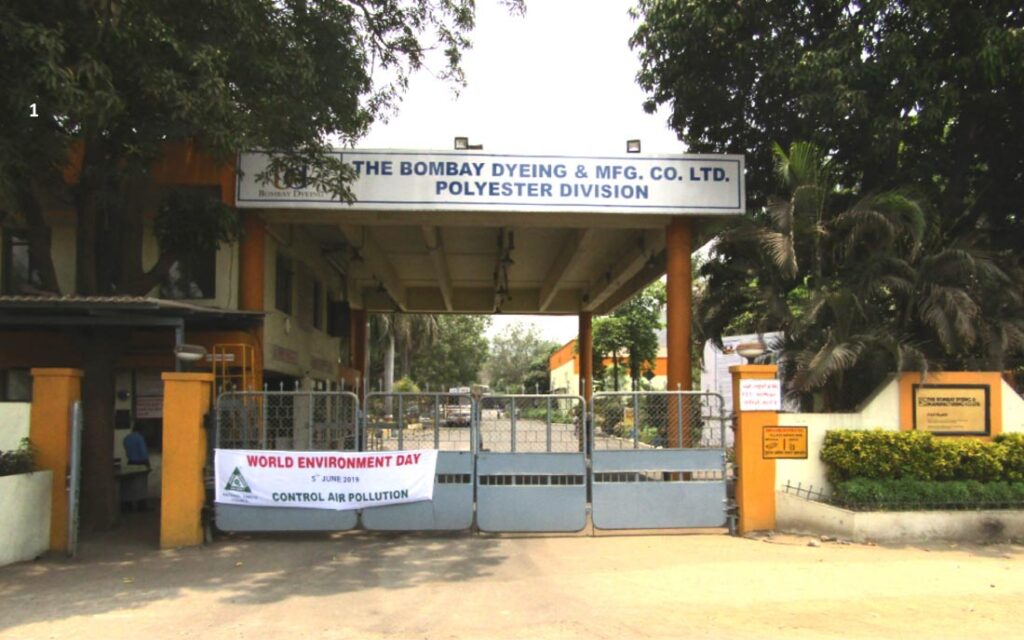
India-headquartered Bombay Dyeing & Manufacturing Co. Ltd has recently launched a biodegradable fiber that degrades within five years. The fiber manufacturer foresees a large market for this fiber, given consumers’ high awareness of environmentally friendly clothing. The garment made from this fabric will degrade within five years, and the company has licensed a technology to produce this biodegradable fiber. It will be one of the first Indian companies to produce biodegradable fiber and will also be among the pioneers worldwide. Every lot produced will include a certificate indicating that the fiber is biodegradable.
Bombay Dyeing will produce the same range of fibers in both deniers and cut lengths as they are currently offering in their PSF range. They have installed new equipment for manufacturing these biodegradable fibers, which are connected with the existing PSF production technologies. However, the cost of the biodegradable fiber will be higher than that of conventional PSF fibers.
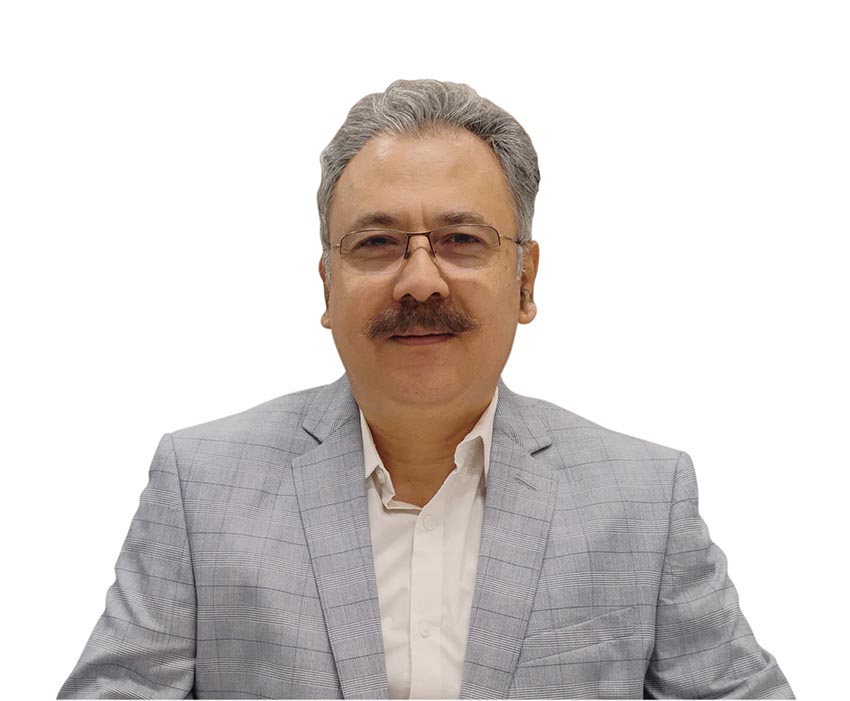
International Fiber Journal: Kindly provide a history about the textile division of Bombay Dyeing & Manufacturing Co.
Rajnesh Datt: Bombay Dyeing, owned by the Wadia family, traces its history back to January 10, 1736, and is one of the oldest business houses still operating in India. That was the day the group got its first order from the royal family of England to manufacture and supply a warship. In the early 19th century, the Wadia Group started dealing in textiles. The group would buy greige fabric in India, send it to England to be dyed or printed, then bring it back to India and sell it in the market.
On August 23, 1879, the company built a dyeing house in the city of Mumbai, which was called Bombay in those days, and hence the Bombay in its name. With the passage of years, Bombay Dyeing expanded into spinning and weaving and was the first in India to start home textiles retail store chains under the name of Bombay Dyeing and continues to be known amongst the best brands for home textiles in India, despite the entry of various retailers in the home textiles retail space.
The company forayed into the manufacturing of Dimethyl terephthalate (DMT) in 1983, a raw material for polyester production. With the advent of the 21st century, most polyester fiber manufacturers shifted to PTA, another raw material for PSF. And so in 2006, Bombay Dyeing decided to put up a PSF manufacturing plant at the same location as the DMT plant.
IFJ: Please share details about the manufacturing infrastructure and the annual capacity of the polyester fiber business.
Datt: Our PSF production capacity is close to 15,000 metric tons per month if only commodity PSF is manufactured. When speciality fibers are also manufactured alongside, then the capacity is around 13,500 metric tons per month.
IFJ: Which are the core company products and solutions you offer for the market and the nonwovens industry in particular?
Datt: We offer our fibers in denier ranges from 0.5 to 17.0 and in cut lengths from 32mm to 130mm. We are one of the biggest Indian manufacturers of specialty fibers. Speciality fibers include black, microfibers for nonwoven fabrics and super fine fibers for producing fabrics which give an effect similar to silk. Around 40% of our production is dedicated to specialty fibers.
Within specialty fibers, we also manufacture supermicro fibers with a denier of 0.5. 5.5 miles in length, these super microfibers weigh only 0.6 grams and are purchased by a nonwoven fabric manufacturer in Japan, which produces automobile fabrics destined for high-end car applications.
As a percentage of production, our exports account for 35-40%, with the rest consumed in the Indian market. Within fibers destined for nonwoven fabric producers, against the manufacturing of 2,500 metric tons per month, more than 90% is exported.
IFJ: What are the applications of fibers destined for the nonwovens industry?
Datt: Nonwoven fabric manufacturers use both polypropylene (PP) and polyester staple fibers (PSF) as raw materials. PP is more costly when compared with PSF. However, PP also has better strength than PSF. For example, where there is a high volume of footfalls like in airports, carpet backing is made from PP, while PSF is used in backings for carpets which have a one or two time use.
Nonwoven fabric producers prefer PSF when producing automobile fabrics, filling fabrics for winter jackets, furniture fabrics, face wipes, connecting fabrics for diapers, and even tissue paper. We have a very active product development team that continuously develops new PSF varieties and practically launches a new fiber variant every year.
Within nonwovens, we have a smaller domestic market in India compared to exports; Indian nonwoven manufacturers mostly prefer to produce nonwoven fabrics from PP. But the ones we supply in India are the biggest and most reputable nonwoven fabric producers. When considering exports to nonwoven fabric producers, a majority of our exports are shipped to countries in the European Union, and here too they include some of the biggest and most reputable manufacturers of nonwoven fabrics, with production plants in several countries. We also export to countries on the American continent. Our fibers are used in various technologies for the production of nonwoven fabrics like spunbond, spunlace, thermal bonding, etc.
IFJ: Please share details of biodegradable PSF which Bombay Dyeing has launched recently?
Datt: We recently launched a biodegradable fiber that degrades within five years. We foresee a very big market for this fiber, considering the high awareness among consumers for environmentally friendly clothing. The garment made from this fabric will degrade within five years, and we have licensed a technology to produce this biodegradable fiber. We will be amongst the first Indian companies to produce biodegradable fiber and will also be amongst the pioneers worldwide. Every lot produced will include a certificate indicating that the fiber is biodegradable.
Those consumers who personally believe in wearing sustainable clothing will be most delighted. We will produce the same range of fibers in both deniers and cut lengths as we currently offer in our PSF range. We have installed new equipment for manufacturing these biodegradable fibers, which are connected to our existing PSF production machinery. However, the cost of the biodegradable fiber will be higher than that of conventional PSF fibers.
IFJ: Could you share the key trends in consumer demand and the growth trajectory of the Indian apparel market, with a focus on polyester usage?
Datt: When speaking about PSF, it has properties that are very close to cotton and are naturally wrinkle-free. So, while yarn made from cotton is porous and breathable, PSF yarn is also porous, and so the fabric made from PSF yarn is also breathable. In contrast, polyester filament yarn is not porous, but fabrics made from it are tougher than those made from cotton or PSF and are used in home textiles, industrial fabrics, or luggage.
There is also a limitation in growing cotton in terms of land, as the same land also competes with other food crops like grains and vegetables. Cotton production in India and China, the two largest cotton producers in the world, has stagnated for many years, while PSF consumption is increasing each year. One-hundred percent PSF shirts may not be common, but 100% PSF t-shirts are common. Shirts are normally made from a blend of PSF and cotton in various percentages. Shirts made from PSF are also wrinkle-free.
IFJ: How important is the sustainability factor for your company? What sustainable products or solutions do you offer to your customers? Do you have any compliance certifications?
Datt: We have already shifted around 50% of our electricity consumption to solar power and are planning to increase the share of renewable energy to 100% by a combination of solar and wind by December 2026, subject to government approvals and regulations. We are also big-time into rainwater harvesting. We have nearly all types of compliance certifications, including BIS, Oeko-Tex, ISO, etc.
IFJ: What is the advantage of the products that you offer vis-à-vis those offered by the competition?
Datt: We are the only producers in India who manufacture only PSF, while other companies also manufacture PFY, POY, FDY, etc., along with PSF on the same machine. Since we produce only PSF, we maintain very specific technical parameters, ensuring consistent quality throughout the year. By contrast, manufacturers of POY, PFY, FDY, and PSF average all technical parameters across products.
For example, POY, PFY, and FDY need modified polymers, while PSF needs a non-modified polymer. PSF has a lower intrinsic viscosity, while others have a higher one. There are many other such parameter differences. For those producing quality PSF yarns or fabrics, we would be the first choice.
IFJ: Please share details of your presence in the Indian domestic and export markets. Also, please share details on your distribution or sales channels.
Datt: Within India, we usually sell directly to textile mills as the bale size is 881 pounds. But we also supply through distributors appointed in various regions of India. For exports, we mainly supply directly to textile mills in various countries, but we have also appointed distributors who store it in warehouses. In India, direct selling to mills accounts for 90% of our sales, while in case of exports, direct sales to mills account for around 60% of export sales.
IFJ: Any planned capacity expansion or new investments?
Datt: Bombay Dyeing is probably the only debt-free company in the world’s polyester manufacturing industry and is cash-rich. We now have plans to expand and are in talks with various Indian state governments to set up another PSF plant.
IFJ: What challenges do you foresee in the next few years?
Datt: Production and consumption have already reached pre-COVID-19 levels. I do not see any challenges for the PSF industry. PSF consumption has been growing at a simple annual rate of 2.5-3.0%, and I see the industry growing at the same pace in the future as well. Since PSF has limitations in use compared to PFY, the growth rate is ok.
IFJ: Your expectations on the future growth and opportunities in the Indian as well as overseas markets?
Datt: While PSF consumption is growing at a steady 2.5% worldwide, PFY is growing faster at around 5% due to a higher number of existing and new applications. But in a few countries, like Germany and Japan, growth has stagnated. The only silver lining we see is in the growth of biodegradable fibers. Garments are an eternal part of our lives, and various colours affect our emotions, so even if growth is not very high, it will remain stable. A huge population and rising incomes have become strengths for India, which is also luring various companies from the world.