



Hybrid biomaterial systems are moving nonwovens beyond one-for-one material substitution toward performance-driven designs that account for processing, markets and end of life.
The nonwovens industry is undergoing a key transition — one that goes well beyond the adoption of new materials. For decades, innovation was driven by optimizing single-material systems, primarily fossil-based polymers such as polypropylene and polyester. These materials delivered unmatched scalability, consistency and cost efficiency.
But today, that model is under increasing pressure, with two forces driving this shift. Concerns over microplastics are expanding, from long-standing attention to marine and environmental litter issues to now, human exposure and public-health concerns — a significantly more potent driver for change. More broadly, end-of-life accountability is dictating that it’s not enough that products work well in use, but it’s also about what happens to them after use.
It’s a welcome shift, as early attempts to make simple one-dimensional substitutions with biobased materials — polylactic acid (PLA) for polypropylene (PP), or viscose for polyethylene terephthalate (PET), as examples — have proven insufficient. Performance gaps, cost challenges, and processing limitations have slowed adoption. It’s becoming clear that the future of nonwovens will be built not on material substitution, but on system redesign.
The New Design Framework: Three Complementary Material Classes
At the core of this shift is a simple but powerful design framework based on three complementary material classes:
- Natural fibers including cellulose, wood pulp, cotton, wool and alginates;
- Regenerated/bioactive fibers such as viscose, lyocell or chitosan; and
- Biobased polymers such as PLA, polyhydroxyalkanoates (PHA), butylene adipate-co-terephthalate (PBAT), polybutylene succinate (PBS), emerging polyesters; melt blends and multicomponent fibers made from them.
Individually, each class has limitations. But when intelligently combined into hybrid systems, they can enable structure with functional performance — absorbency, filtration, softness or degradation, for example — processability at scale and designed end-of-life behavior.
The mindset that “no single material wins, rather, it’s systems that win,” is exactly what has successfully driven innovation in other industries such as composites and advanced materials.
Natural Fibers Reimagined: From Filler To Functional Component
Natural fibers are getting recognition, not as passive fillers or sustainability “add-ons,” but increasingly as engineered, functional components within high-performance nonwoven systems. Their value proposition is expanding to include features such as:
- intrinsic biodegradability;
- low carbon footprint;
- moisture management and tactile advantages; and
- favorable stiffness-to-weight characteristics.
In hybrid systems, these dimensions enable a diversity of benefits from improved acoustic and thermal performance to tailored fragmentation and biodegradation pathways — which is critical for microplastics mitigation — to reduced dependency on offshore oil-based supply chains.
This is a critical shift, with natural fibers moving from cost reducers to performance enablers.
The nonwovens industry has always excelled at engineering structures to deliver performance. What is changing is the design criteria. Hybrid biomaterial systems represent a new design language —one that integrates sustainability with end-of-life responsibility.
Microplastics: A Driving Force For Redesign
If carbon reduction pressures largely defined the last decade, microplastics concerns are largely defining the next. Nonwovens are at the center of this issue due to their high production volumes, short product life cycles and fragmentation-prone fiber-based structures. Hybrid systems enable the new design requirement that materials must perform in use and behave responsibly after use with the design of structures that break down along controlled pathways, for example by incorporating biodegradable fiber fractions such as cellulose, PHA, PLA, or PBAT to reduce persistent synthetic microfiber content. As the market-specific examples below illustrate, the winning hybrid systems address concerns over microplastics persistence while simultaneously gaining performance advantage by playing to the specific attributes of each material in the hybrid system such as world-class fabric softness with the incorporation of a degradable material such as PBAT.
Rather than offering incremental or evolutionary product tweaks, hybrid structures allow a more fundamental redesign of the product architecture. Elegant solutions are also being developed by leveraging combinations of biopolymers either via blends or multicomponent fibers to address application and market needs.
Processing As The Enabler
Historically, variability in natural fibers and limitations in biobased polymers constrained adoption. That is changing, with advances on multiple processing fronts enabling hybrid systems to scale reliably. These include advances in:
- hydroentanglement (binder-free bonding);
- airlaid and carding systems for natural fibers;
- spunmelt processing of PLA, more recently PBAT, and emerging polymers;
- process control technologies; and
- polymer blends and multicomponent fiber structures.
What it means is that processing is no longer the barrier; it is becoming “the unlock.”
Hybrid Systems By Market: Where The Shift Is Happening
Because each market is leveraging the three material classes differently, the most effective way to understand hybrid biomaterials is by looking at actual examples of how they are integrated into applications for specific markets.
1. Beverage Filtration: Food-Contact, High Volume
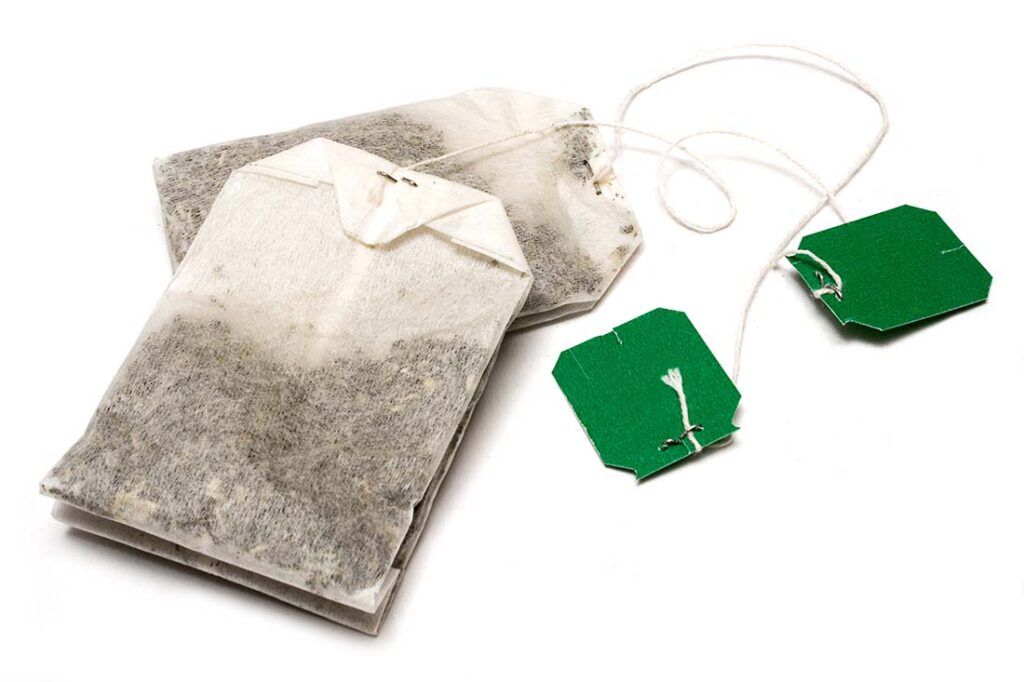
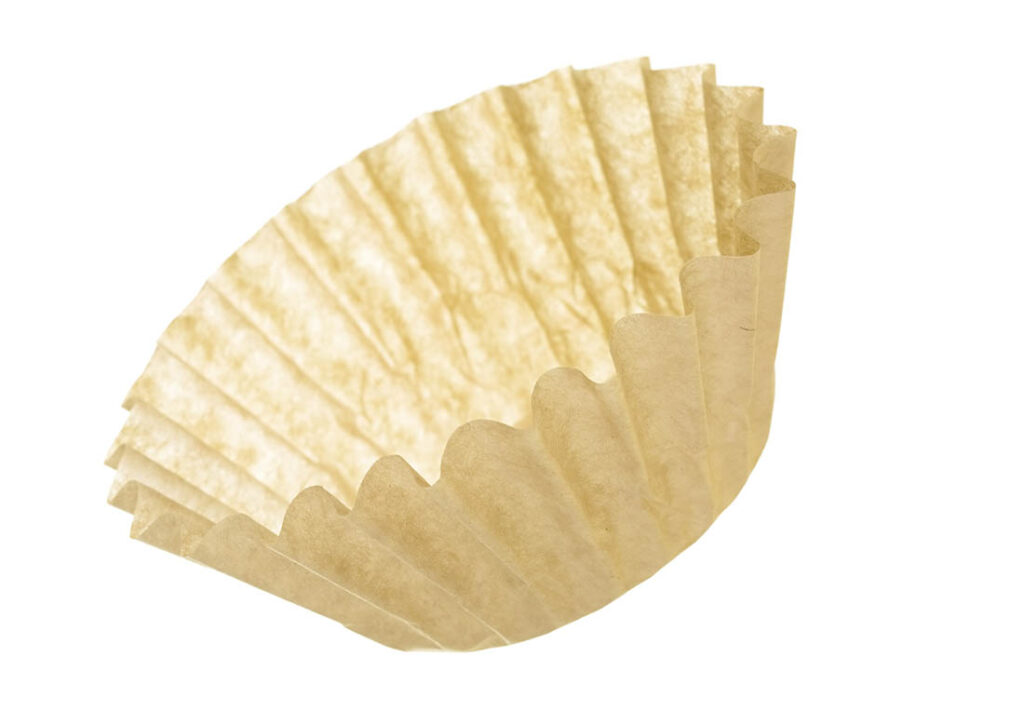
This is one of the most mature, and under-recognized, hybrid biomaterial markets. Typical hybrid systems already used in tea bags and coffee filtration include:
- natural fiber substrates → filtration media and compostability; and
- PLA fibers or mesh providing structural integrity and sealability.
Such systems, increasingly produced at billions of units annually, are designed explicitly for a compostable end-of-life, and demonstrate that concerns over microplastics persistence can be addressed while still providing high-performance, taste-neutral filtration. With these structures, the industry has already proven hybrid biomaterials at scale, and these structures and systems design thinking are now beginning to translate into other filtration applications and markets.
2. Technical Filtration: Heating, Ventilation and Air Conditioning (HVAC); Industrial And Consumer Air
Hybrid systems are rapidly emerging in filtration, where performance demands are high and microplastics scrutiny is increasing. Typical hybrid structures resulting from an integrated systems approach can involve:
- biobased polymers such as PLA — fine fiber layer for efficiency, with PLA meltblowns now achieving competitive fine particle capture;
- natural fibers — cellulosic layers are replacing portions of synthetic substrates, providing depth filtration and moisture handling; and
- optional regenerated fibers for structural enhancement.
This is effectively a biobased rethinking of spunbond/meltblown/spunbond (SMS)-type architectures, with filtration moving from “all synthetic performance” to hybrid performance with reduced persistence.
3. Absorbent Hygiene Products (AHP)
Hygiene represents one of the largest-volume opportunities — and one of the most complex transition challenges. Hybrid systems in AHP include:
- natural fibers such as wood pulp or cotton for absorbency and bulk;
- biobased polymers such as PLA for bonding and structural components, PBAT for hand feel and softness; and
- regenerated fibers such as viscose/lyocell for softness and skin contact performance.
With the recent introduction of grades specifically tailored for spunbond and meltblown processes, PBAT, in particular, is emerging as a new player in the nonwovens space. Its long-recognized flexibility and toughness in biodegradable films and fibers — with a prior presence in backsheet and structural components — is translating into topsheets with world-class softness, for example.
What’s changing is a stronger focus on reducing persistent microplastic load increasing the integration of biodegradable components, and hybridization to improve sustainability while simultaneously improving other attributes such as softness. AHP will not transition via a single material. The category will transition through multi-material hybrid systems optimized for cost, performance and end-of-life.
4. Wipes: Flushable, Personal Care and Industrial
Wipes are at the epicenter of the microplastics discussion, and a primary driver of hybrid innovation. Addressing market demands for plastic-free or reduced-plastic formulations, typical hybrid structures are increasingly using hydroentanglement, as well as exploring PHA for improved environmental degradation profiles. Typical hybrid structures include:
- cellulose/wood pulp for bulk, absorbency and flushability;
- regenerated fibers such as viscose/lyocell for softness and strength; and
- biobased binders or fibers, such
- as PLA or PHA, for wet strength and integrity.
Wipes are forcing the industry to consider and design for disintegration and degradation.
5. Medical Nonwovens: Advanced and Bioactive Applications
Medical applications are pushing hybrid systems into entirely new territory through functional hybridization. For applications such as wound care, tissue scaffolds and antimicrobial barrier materials, hybrid structures include:
- bioactive fibers such as chitosan and collagen → antimicrobial and healing response;
- biobased polymers such as PLA and PHA → structural integrity and absorbability; and
- cellulosic components → purity and compatibility.
What’s different here with the hybrid systems shift is that materials are designed to interact with biological systems, and performance includes biological function, not just physical properties.
The Role Of Next-GenerationBiopolymers
While PLA has led early adoption, the next wave of innovation will be driven by broader material sets, including:
- PHA, which offers biodegradability across a broad range of environments, including marine;
- PBAT for softness, flexibility, toughness and compatibility in blends and bicomponent structures;
- emerging biopolyesters, which offer improved thermal and mechanical performance.
Expect these materials, along with melt blends and multicomponent fibers based on them, to be integrated into hybrid architectures tailored to specific applications.
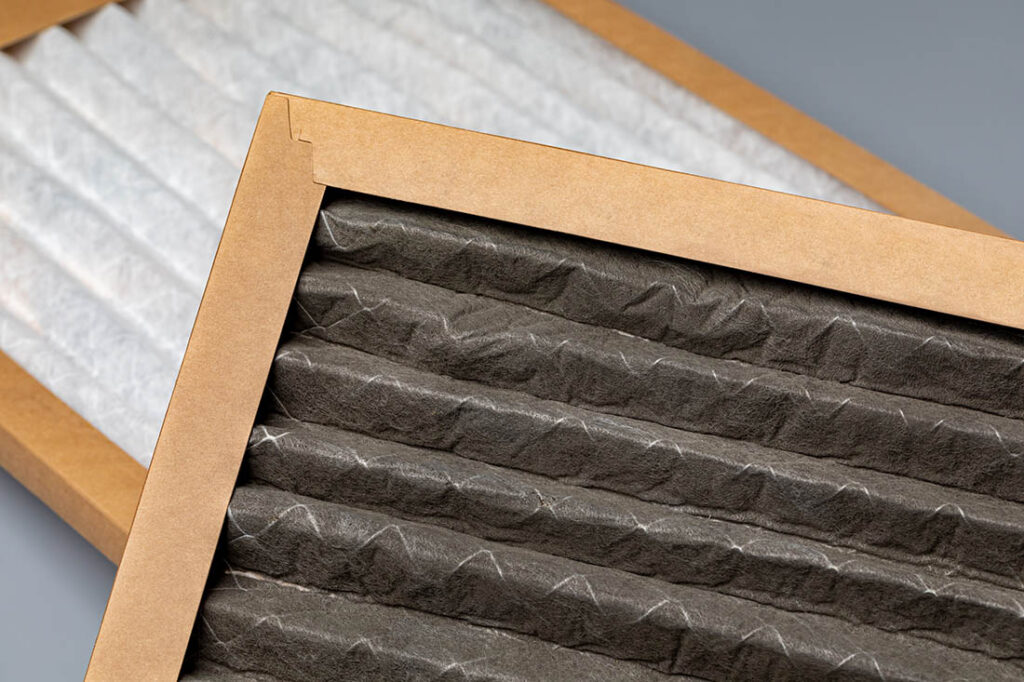
consumer air filtration applications. iStock/JJ Gouin
Strategic Implications: Competing In A Hybrid World
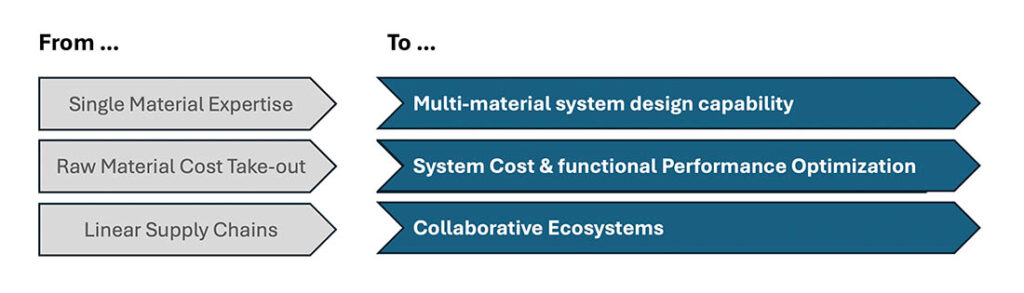
This transition has profound implications for how companies compete. The industry is moving as illustrated in Figure 1.
It’s a market environment where winning will require combining cross-material understanding, application-driven engineering, strategic partnerships across the value chain and end-of-life design integration.
Final Thought: A New Design Language For Nonwovens
The nonwovens industry has always excelled at engineering structures to deliver performance. What is changing is the design criteria. Hybrid biomaterial systems represent a new design language — one that integrates performance with sustainability and end-of-life responsibility.
The question is no longer whether biomaterials will play a role. The question is: Who will lead in designing the hybrid systems that redefine nonwovens across markets? The future will not be defined by better individual materials, but by better systems, designed intentionally from the start.
Reference
- As an example, although not yet facing significant regulation, (unintentionally generated) microplastics are now seeing substantive discussion at US and EU policy levels. In April 2026 US HHS announced $144 million in funding over 5 years for human health related research. Such framing around reproductive health, chronic disease, endocrine disruption, fertility, etc., often precedes and sets the foundation for more aggressive regulation.
Related story: A Year Of Legal Firsts: How The Nonwovens Industry Is Navigating America’s Uncharted Tariff Terrain

