



Scales For The Future. At JEC World 2026, scalable production, advanced fiber engineering, digital integration and circularity showed how composites are moving from possibility to industrial reality.
JEC World 2026 held at Paris-Nord Villepinte, Paris, offered a clear view of an industry broadening its horizons. While composites have delivered steady growth since the 1960s, recent expansion has been more measured, at around 2 to 3 percent annually. Even so, with fibers and resins now representing a global market worth approximately $41 billion annually and end-use parts valued at more than $100 billion, the sector remains strategically vital across aerospace, automotive, infrastructure and energy.
What defined this year’s JEC World event was not a single breakthrough, but the alignment of multiple forces — scalable manufacturing, advanced fiber engineering, digital integration and an increasing commitment to circularity. Across the exhibition halls, awards programs and startup showcases, the message was consistent. Composites are no longer just about achieving lightweight performance but delivering that performance at speed and scale and with sustainability built in from the outset.
Fibers: The Backbone
Despite the growing visibility of resins and processing technologies, fiber and textile reinforcement materials remain the backbone of composites performance. Whether carbon, glass, aramid or natural fibers, it is their construction that ultimately governs mechanical behavior. Strength, stiffness, fatigue resistance and impact tolerance are all dictated by how the
fibers are arranged, oriented and integrated within a structure.
This central role has driven increasing sophistication in textile design.
Traditional woven fabrics continue to offer stability and ease of handling, but they are now complemented by non-crimp fabrics, multiaxial reinforcements and highly engineered fiber placement strategies. These approaches allow fibers to be aligned precisely along load paths, maximizing efficiency and minimizing waste.
Other constructions are also gaining traction. Braided reinforcements provide excellent damage tolerance and geometric flexibility, particularly in infrastructure applications, while unidirectional tapes enable peak performance in highly loaded directions. In thermoplastic composites, these reinforcements must also meet the demands of processes such as automated fiber placement (AFP) and high-speed consolidation, placing new constraints on material design.
The result is a closer integration between materials and manufacturing. Reinforcements are no longer passive components but active enablers of production efficiency, particularly as the industry shifts toward thermoplastic systems that can be rapidly heated, formed and welded and then disassembled at end of life.
Industrial Readiness

The JEC Composites Innovation Awards once again highlighted how the sector is evolving. Over nearly three decades, the program has attracted more than 2,200 company participants, with hundreds of collaborative projects recognized. This year’s winners reflected a clear shift toward industrial readiness, with multi-partner teams working across borders to deliver solutions that can be scaled.
In the Aerospace Product category, France-based Daher’s winning thermoplastic wing rib program perfectly illustrated this transition. Developed with partners including the Netherlands-based AniForm Engineering; Cetim, the France-based technical center for mechanical industries; the Luxembourg Institute of Science and Technology; and England-based Victrex Plc, traditional metallic components are being replaced with a carbon fiber reinforced structure based on low-melt polyaryletherketones (LMPAEK™). This material has the toughness, chemical resistance and high-temperature performance associated with the PAEK family, while offering a lower processing temperature and improved weldability. These characteristics make it particularly well suited to automated manufacturing processes such as automated fiber placement (AFP) and infrared welding, enabling both weight reduction and high production rates.
A similar emphasis on scalability was evident in the Aerospace Process category, where the Sauber 4.0 project, led by Airbus subsidiary CTC GmbH, Germany, has focused on the production of large, integral wing structures for next-generation aircraft. By combining resin transfer molding (RTM) with inductively heated tooling and advanced preforming techniques, the project aims to move aerospace composites beyond small-batch production toward fully industrialized manufacturing.
Moving Into The Mainstream

In the automotive sector, the push toward high-volume production is even more pronounced. Germany-based BMW M’s collaboration with Switzerland-based Bcomp Ltd., Thailand-based Cobra Advanced Composites Co. Ltd., Germany-based PPG Wörwag Coatings GmbH & Co. KG and Germany-based SGL Carbon SE demonstrates how natural fiber composites are moving from niche applications into mainstream use. Flax-based materials, validated under demanding motorsport conditions, are now being applied to both interior and exterior components, offering reduced emissions alongside competitive performance and aesthetics.
Equally significant is the development of a lightweight battery housing by Germany-based Chemnitz University of Technology and its partners. Using glass fiber reinforced thermoplastics and high-speed compression molding, the team achieved cycle times of under two minutes — a requirement for large-scale electric vehicle production. The resulting component delivers a 15 percent weight reduction and around 25 percent lower life cycle emissions compared to aluminum alternatives, while enabling waste-free manufacturing.
Composites are increasingly being designed not just for performance, but for compatibility with the rapid production cycles required by the automotive industry.
Practical Reality
Sustainability was a recurring theme throughout the JEC World 2026 Innovation Awards, with a growing focus on circularity. A notable example is a collaboration between France-based Airbus, Daher, Toray Advanced Composites and France-based Tarmac Aerosave, which demonstrated the reuse of thermoplastic composite components from end-of-life Airbus A380 aircraft. Carbon fiber reinforced parts are being repurposed into new structures for the A320neo, extending material life and avoiding landfill.
This approach highlights one of the key advantages of thermoplastic composites — their ability to be reheated, reshaped and reused. As environmental pressures intensify, such strategies are proving central to the industry’s development.
Digital Integration
Alongside advances in materials and processes, digital technologies are transforming how composites are designed, manufactured and maintained. A project led by the University of Southern Queensland, Australia, in collaboration with Boeing Australia, France-based Dassault Systèmes and Australia-based MEMKO demonstrated a fully integrated digital network for aerospace structures.
By linking inspection systems, automated damage detection, manufacturing data and validation processes, the platform creates a continuous digital thread throughout the life cycle of a component. This enables more efficient repairs, improved traceability and faster return-to-service times, illustrating how digitalization can enhance both performance and reliability.
Energy And Infrastructure
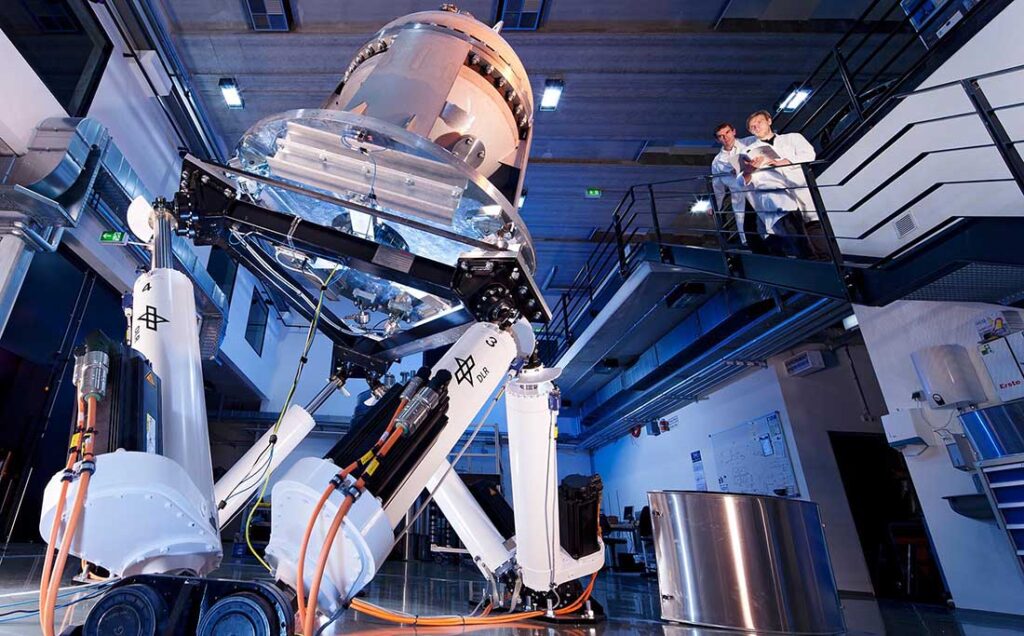
Composites are also playing an increasingly important role in emerging energy applications. The LeiWaCo project, led by CTC with a wide consortium of partners including the German Aerospace Centre, has addressed the challenge of cryogenic microcracking in liquid hydrogen tanks. By combining optimized lay-ups with thermoplastic matrices and advanced manufacturing techniques, the project produced a demonstrator capable of supporting future hydrogen mobility.
Braided reinforcement constructions played a central role in delivering the required combination of strength and resilience for a thermoplastic composite cantilever system for railway electrification, developed by England-based Composite Braiding Ltd. in collaboration with Amey Ltd., England, and other partners, significantly reduces weight and simplifies installation.
Meanwhile, in renewable energy, Türkiye-based Metyx introduced a composite photovoltaic module designed for vehicle integration. By replacing glass with a transparent glass fiber composite front sheet and a carbon fiber sandwich back, the system offers improved impact resistance and flexibility, opening new possibilities for solar-powered mobility.
Designing For Longevity
Beyond industrial sectors, composites are also evolving in consumer products. A German collaboration led by Fenix Composites introduced a repairable and recyclable road bike frame made from thermoplastic carbon composite tubes joined to titanium lugs through reversible induction welding. This design allows individual components to be replaced without discarding the entire structure, addressing one of the key challenges with high-performance sports equipment.
Startup Booster
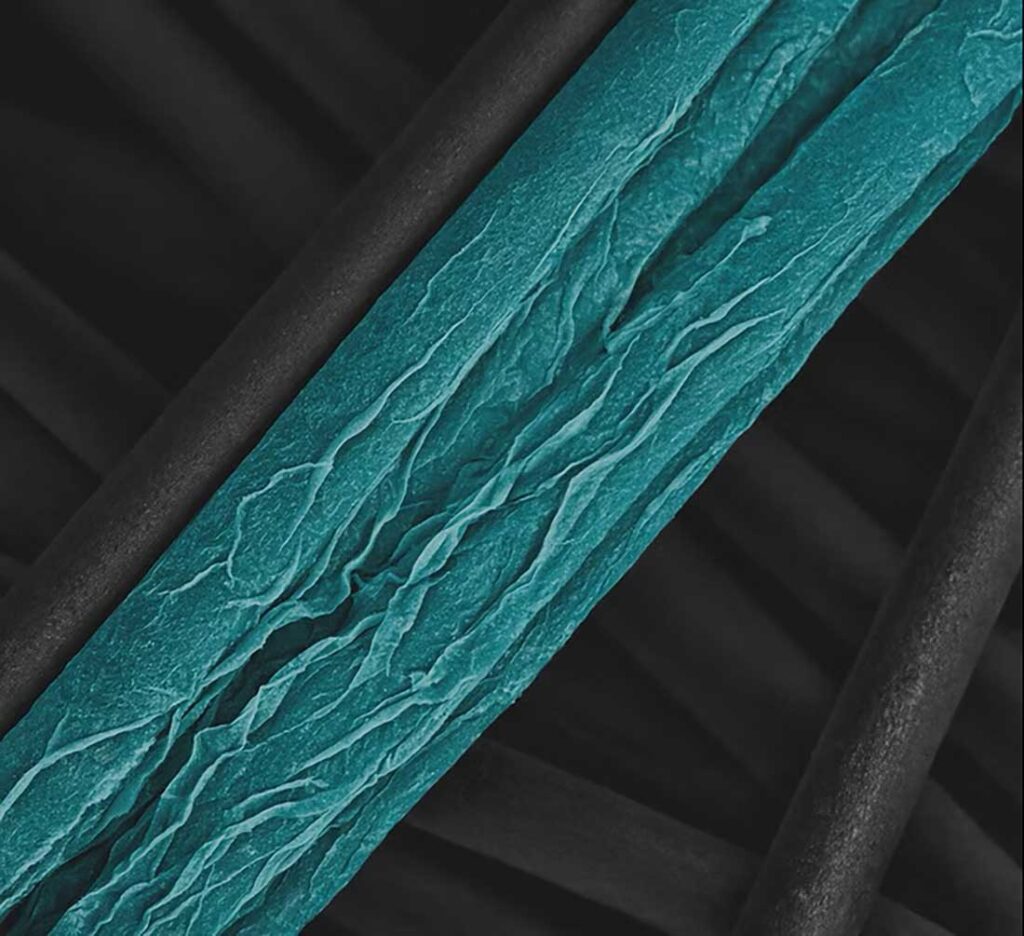
The JEC Composites Startup Booster continues to highlight the role of emerging companies in driving innovation. This year’s winner, Orlando, Fla.-based Soarce, is developing biobased nanofiber reinforcements derived from agricultural feedstocks. By applying proprietary solvent treatments, the company produces nanocellulose fibers with tunable properties, improving adhesion and load transfer at the critical interface between fibers and resins.
This interface has long been a limiting factor in composites performance. Traditional sizing and binder systems have reached their limits, often forcing manufacturers to add extra layers to achieve the desired strength and increasing both weight and cost. Soarce’s approach addresses this issue directly, enhancing performance without additional material or processing complexity.
Other startups also demonstrated the growing importance of digital and sustainable technologies. Germany-based Nebumind GmbH’s software platform creates digital product twins by storing and visualizing manufacturing data, while AC Biode, which operates in Japan and Western Europe, has developed Plastalyst, catalysts that enable low-temperature depolymerization of plastic waste and offer new pathways for recycling.
Bio-Materials Village
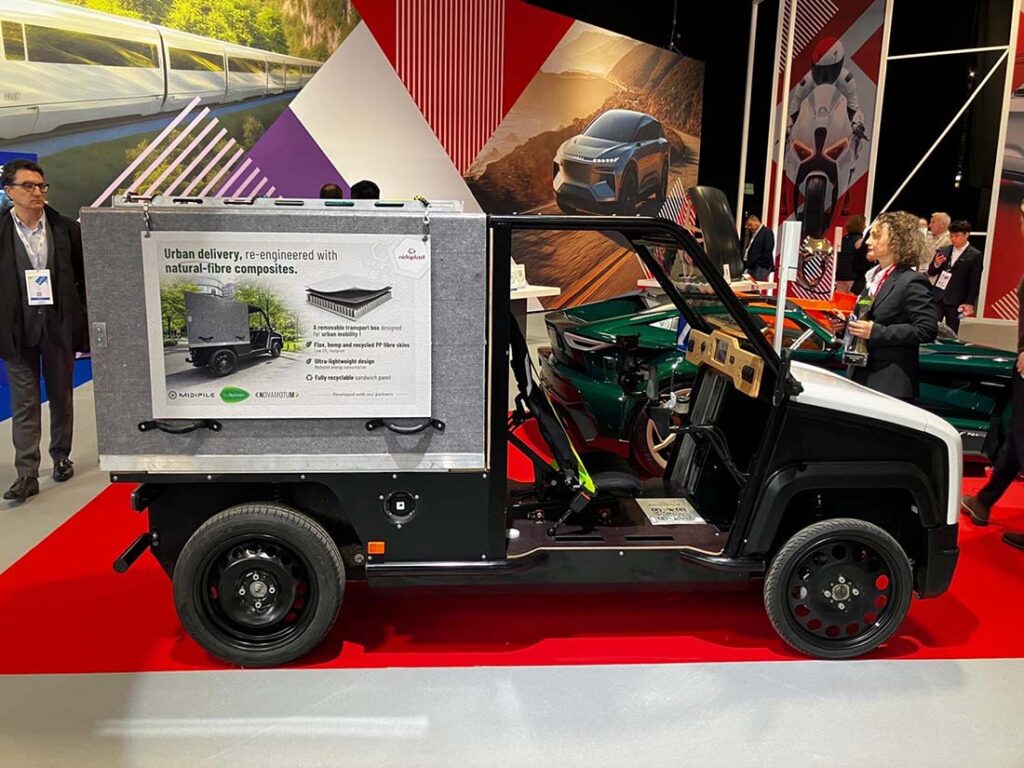
The expanded Bio-Materials Village at JEC World 2026 underlined the rapid progress of natural fiber composites. Bringing together the full value chain, from cultivation to finished products, applications ranging from mobility to construction and sports equipment were showcased.
Innovations included lightweight electric delivery vehicles using flax and hemp sandwich constructions, as well as advanced reinforcement technologies designed to improve the consistency and reliability of natural fibers. In automotive applications, natural fiber seatbacks developed for the Cupra Born VZ high-performance electric hatchback car demonstrated that these materials can meet the demands of series production while significantly reducing emissions.
In construction, biocomposite panels made from hemp fibers and bio-resins are already being used in high-profile buildings, offering a combination of structural performance and low environmental impact. Meanwhile, in sports and leisure, flax-based composites are gaining popularity for their vibration damping properties, which enhance comfort and reduce fatigue in applications such as surfboards, skis and tennis rackets.
Collaboration
JEC World 2026 made it clear that the future of composites will be defined not by isolated breakthroughs, but by the convergence of materials, processes and partnerships.
Collaboration has become essential. The complexity of modern composite systems requires expertise across materials science, engineering, manufacturing and data analytics, often spanning multiple countries and organizations. As a result, innovation is increasingly measured not just by technical achievement, but by readiness for industrial adoption.
From high-performance thermoplastics and natural fiber reinforcements to biobased nanomaterials and digital manufacturing platforms, the composites industry is entering a new phase. It is a phase defined by practicality as much as possibility, where the challenge is no longer to prove what composites can do, but to deliver those capabilities efficiently, sustainably and at scale.