


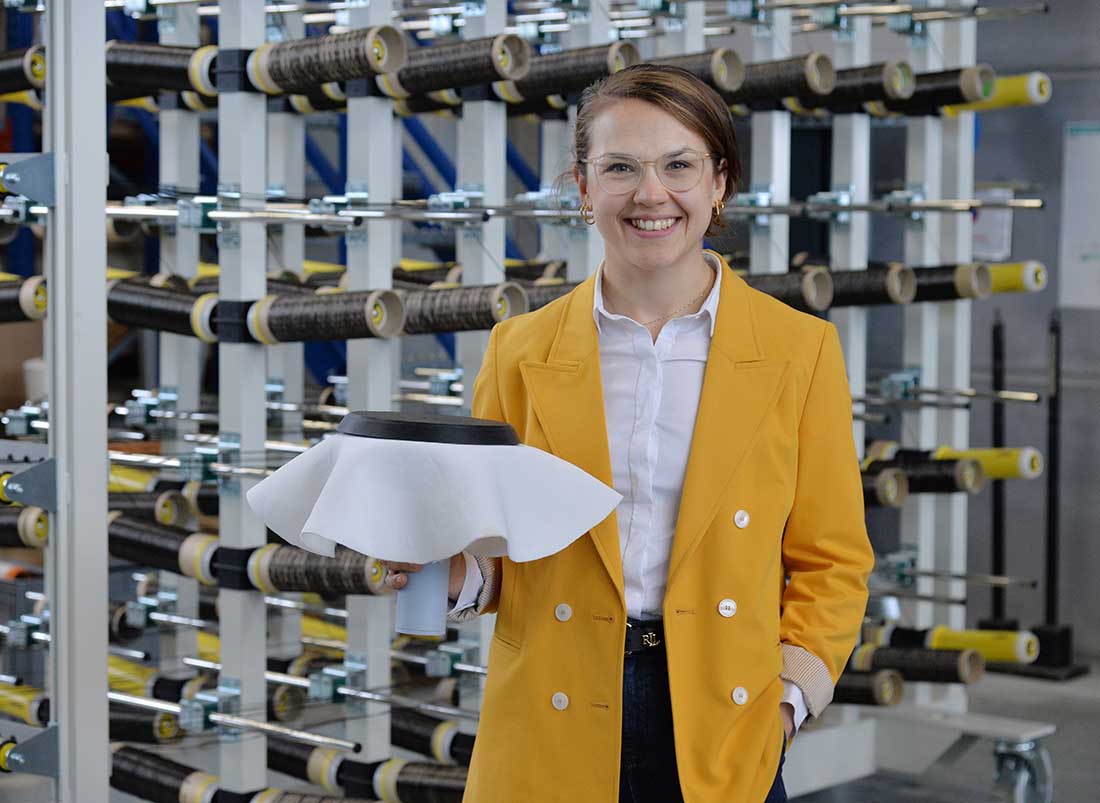
Natural Fibers and the Recycling of Textile Waste were Some of the Major Talking Points at this year’s Dornbirn Global Fiber Congress.
As the global textile industry grapples with mounting environmental pressures, the spotlight is increasingly turning toward circularity and responsible material choices. At the heart of recent industry dialogues, textile waste recycling has emerged as a pivotal theme, underscoring the urgent need to divert millions of tonnes of discarded fabrics from landfills and incinerators.
From post-consumer garments to pre-consumer offcuts, stakeholders are exploring innovative pathways to reclaim and repurpose fibers, reducing the sector’s carbon footprint and resource dependency, and disrupting the linear take-make-waste economy of plastics and man-made fiber textiles. At the same time, natural fibers, such as cotton, wool, hemp, and flax, are gaining renewed attention for their biodegradability, regenerative potential, and role in sustainable design.
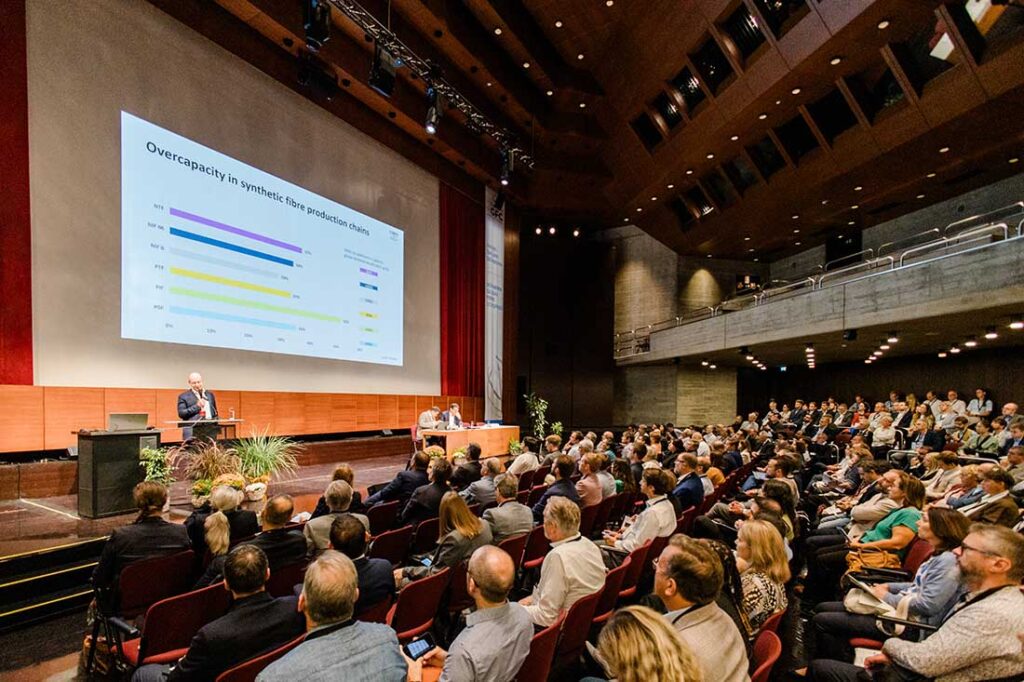
Given textiles’ contribution to the climate crisis, the recycling of fibrous waste was a key underlying theme of this year’s Dornbirn Global Fiber Congress (GFC). The 64th annual event attracted around 500 participants from 35 countries, including representatives from over 260 companies, organizations, and institutions, from fiber producers through to retail brands.
Urgent Need for Systemic Change
Opening the congress, Robert van de Kerkhof, president of the Austrian Fibers Institute and chief executive officer (CEO) of ReHubs, described the macro-challenge escalation of today’s global business environment, and encouraged delegates to develop new approaches to innovation, rethink feedstocks, and reinvent processes. “Systemic change, which is urgently needed, emerges when policy, science, and industry-led infrastructure move in the same direction,” he added.
“Dornbirn GFC has always been about connecting people and ideas. The message is clear: the global fiber and textile community is eager to collaborate, innovate, and tackle today’s most pressing challenges. The congress is not only a showcase for technologies but a catalyst for real-world solutions.”
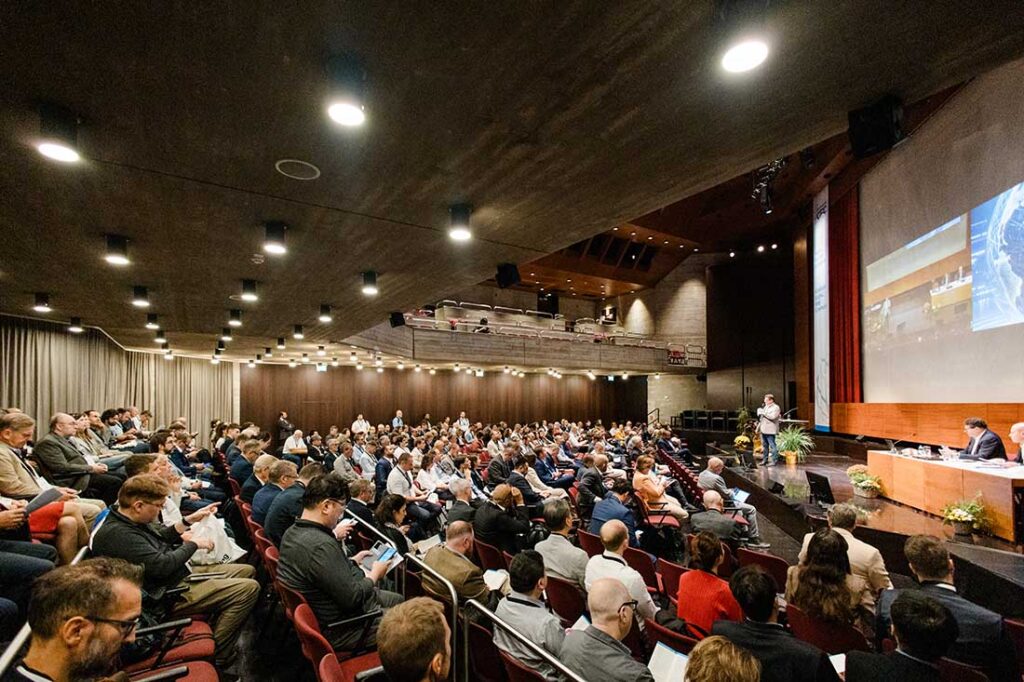
Despite the fiber industry’s challenges, Frédéric van Houte, director-general of CIRFS, the Brussels, Belgium-based European Man-made Fibres Association, said that changes and opportunities lie ahead, such as the transition to a circular and bio-based economy, innovation and investment in green technologies and fibers, digitalization, traceability, collaboration, and autonomy.
Global Net Zero: Highly Unlikely
In a thought-provoking keynote presentation, Professor Franz Josef Radermacher, chairman of the Research Institute for Application-oriented Knowledge Processing (FAW/n), Germany, argued that the 1.5°C goal – the Paris Climate Agreement target to limit global average temperature rise to 1.5°C above pre-industrial levels to avoid the most dangerous impacts of climate change – is far out of reach.
Under the Paris Agreement, only industrialized countries are obliged to reduce their carbon dioxide (CO2) emissions in absolute terms. Together, they currently account for less than 30% of global CO2 emissions, with most coming from developing nations outside the Paris accord due to their relatively poor populations. Africa alone will double its population by 2050; therefore, it will have to build its industrial base, at least until 2030, Radermacher pointed out.
“Even 2°C is unlikely if we do not get rid of the conditional nationally determined contributions (climate targets) to solve the world’s climate problems and achieve net zero,” he said, adding that the only solution is for rich nations to provide aid to the tune of US$1.2 trillion a year for climate protection in developing and emerging economies.
Beyond Man-Made Fibers
The Dornbirn Man-Made Fibers Congress, as it was originally called, was founded in 1961 by Lenzing and CIRFS as a platform focused on innovation in synthetic and cellulosic fibers. The first event in 1962 attracted just 130 delegates from 23 countries.
The name was changed to the Dornbirn Global Fiber Congress in 2018 to reflect its broader international scope. It expanded its focus beyond man-made fibers, embracing sustainability, the circular economy, and advanced textile technologies.
One of the noticeable features of this year’s conference was the continued evolution towards embracing natural fibers, with several presentations discussing cotton, wool, hemp, human hair, chiengora (dog wool!), and natural fiber composites.
Dalena White, secretary general of the International Wool Textile Organization, raised important questions about current tools for measuring carbon footprints, accounting systems, and sustainability claims for textiles. “With fossil emissions continually rising at an increasing rate, the key is to draw down more CO2 by encouraging biomass production,” she said.
Sweet Solutions
Dr. Matt Farrell, manager of textile chemistry research at Cotton Incorporated, USA, gave an overview of efforts to convert cotton textile waste into useful chemical components such as glucose for potential use in bio-based products.
In pilot trials at North Carolina State University, Thomas Jefferson University, and the University of Massachusetts—Lowell, the researchers investigated the enzymatic hydrolysis of cellulose using environmentally friendly and chlorine-free oxidation methods, such as ozone and alkaline hydrogen peroxide in combination with mechanical refining pretreatment.
Cotton is the most widely used natural fiber in the textile industry, accounting for 80% of all natural fibers produced globally. Further, cotton production employs around 150 million people worldwide.
Myths Versus Reality
In dispelling myths from the cotton world, Elke Hortmeyer, head of economic research and communication at the Bremen Cotton Exchange, Germany, noted that the production of 1 kg of cotton fiber requires on average 2,025 liters of water – not 10,000–20,000 liters as has been widely reported. “Such old, outdated and false data is widely spread online that can build competitive marketing claims on shaky ground,” she said.
Cotton is the most widely used natural fiber in the textile industry, accounting for 80% of all natural fibers produced globally. Further, cotton production employs around 150 million people worldwide.
Hortmeyer added that cotton grows well in dry and semi-arid areas, can be grown where little else grows, provides the best economic return per unit of water used, and uses scarce water efficiently. In addition, cotton plants absorb CO2 and sequester carbon in their biomass, while cotton fibers and textiles and naturally biodegradable and recyclable.
Think About Eco-Design
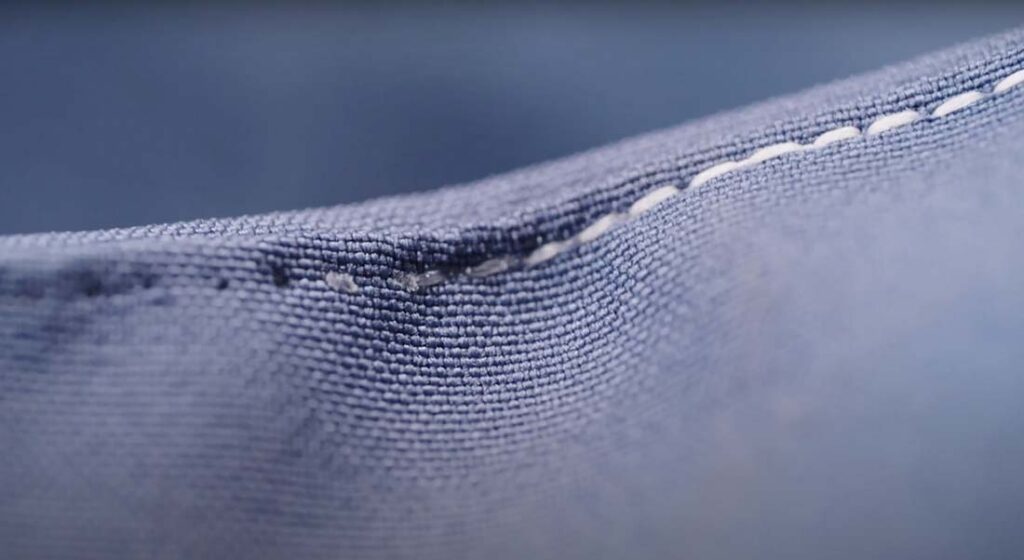
During the ReHubs session on the opening day of the congress, Dr. Acerina Trejo Machin, chief technical officer of Resortecs, Belgium, and a member of the ReHubs board of directors, pointed out that 78% of clothes are difficult to recycle because they are difficult to disassemble, with inefficient sorting also an issue. This results in feedstock costs that are up to three times more than recyclers are willing to pay. “Eco-design is needed to face legislation, rising costs, and changing customer demands,” she said.
Two innovations from Resortecs, which focus on high-value, easily collectible textile products, are Smart Stitch – sewing threads that melt at high temperatures (150–200°C), enabling easy disassembly of garments, and Smart Disassembly – industrial thermal systems that disassemble and sort garments sewn with Smart Stitch.
Trejo Machin said the technology has already been implemented in almost one million products sold by major brands in more than 60 countries. The company is planning nine Smart Disassembly hubs across Europe, the Middle East and Africa, Asia, and the US, strategically located to reduce logistics complexity and cost. The first line, with an annual processing capacity of 3,000 tonnes, is due to come into
operation in Belgium by the end of 2025.
Steps Toward Circularity
Marta Fabra Regalado, quality director at Recover Textile Systems, Spain, said recycled cotton must become a key player, not a niche, if the textile industry is to embrace true circularity. The company produces a range of post-industrial recycled cotton from carefully sorted materials.
Cécile Martin, innovation and recycling manager at the French producer responsibility organization Refashion, outlined the lessons from more than 100 experiments since 2022 on sorting and preprocessing non-reusable post-consumer textiles and footwear for recycling.
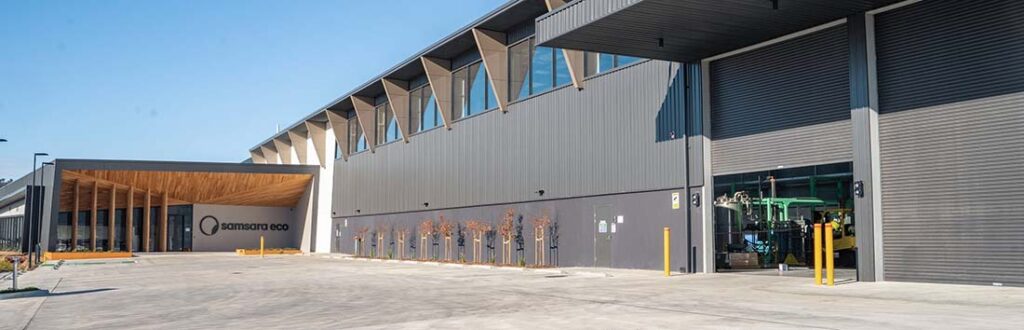
Meanwhile, in early September, the week before the Dornbirn event, Australian biotech company Samsara Eco opened its first commercial-scale plant to recycle waste textiles and plastics in Jerrabomberra, New South Wales.
The lululemon-backed company’s patented EosEco technology uses artificial intelligence-engineered enzymes to break plastics and textiles back into their monomers so they can be recreated into new apparel, packaging, airbags or other textiles.
Samsara Eco currently offers recycled polyamide (PA) 6,6 and recycled polyester, with recycled PA 6 under development, reported Meg Fisher, business development associate.
Despite advances in recycling technology, very few textiles are currently recycled back into new textiles, with most waste still downcycled, incinerated, or exported.
Industrializing Textile Circularity
Europe’s circular economy in textiles and apparel is facing a formidable challenge. Increasing volumes of discarded textiles, fragile collection systems, and the flood of ultra-fast fashion from Asia are intensifying a crisis of overproduction, waste, and lost value.
Despite advances in recycling technology, very few textiles are currently recycled back into new textiles, with most waste still downcycled, incinerated, or exported. The industry is stuck in a supply/demand deadlock as recyclers struggle to scale without brand commitments, and brands are hesitant to commit without a reliable, cost-competitive supply.
ReHubs has now unveiled its new strategy and tactical action plan: an industry-wide roadmap and portfolio of initiatives designed to unlock textile-to-textile recycling at scale and break the supply-demand deadlock.
Supported by more than 30 organizations from across the value chain, the initiative aims to recycle 2.5 million tonnes of European post-consumer textile waste by 2032, which represents 35-40% of Europe’s yearly textile waste, while unlocking €5-6 billion in investments and creating up to 10,000 new jobs across the region.
The two pillars at the core of the strategy are: end-to-end supply chain management to deliver reliable, competitive recycled fibers, and financing orchestration to mobilize and de-risk billions in investment.
Other Conference Highlights
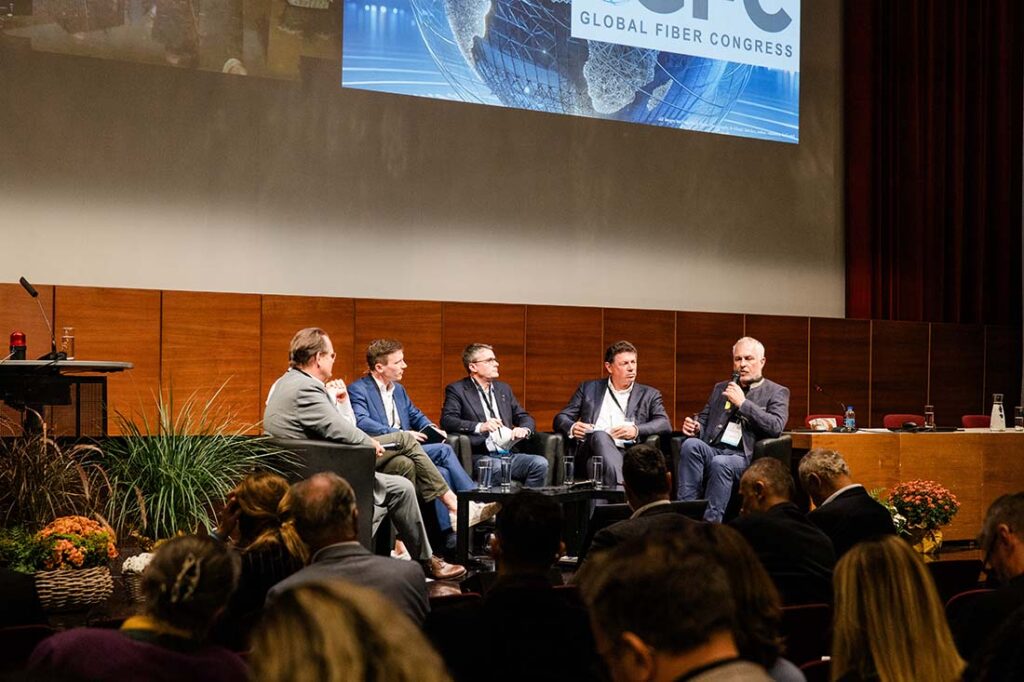
Other highlights of the conference, which featured 100 presentations over 2½ days, included a CEO panel; the Micro/Force Initiative, a science-based collaboration platform between the Technical University of Crete, Scripps Institution of Oceanography and TU Wien to address microfiber and microplastic challenges; cross-industry sessions linking fibers with energy, pulp and paper; sessions on work and protective wear/defense; and a dedicated session from ITA/RWTH Aachen University, Germany.
And throughout the event, discussion and audience participation was enhanced by the introduction of the Sli.do, a digital interaction tool for delegates.
Industry Awards
During the plenary session, ITA postdoctoral researcher Dr. Leonie Beek was awarded the Paul Schlack Prize for her work on bionic textiles for oil-water separation, based on the model of superhydrophobic biological surfaces, focusing on sustainable separation of oil and water. A prototype floating device – the Bionic Oil Adsorber – has a technology readiness level of 4 and can remove up to four liters of diesel per hour.
The congress also featured the first Dornbirn GFC Innovation Award, where seven start-ups had five minutes each to present their business case to a jury comprising Martin Gritsch-Martyan, Syngroup Management Consulting; Dr. Marina Crnoja-Cosic; mccinnovare; Dr. Andreas Bartl, TU Wien; Dr. Thomas Riegler, IPEF; and Matthias Gluth, Dornbirn GFC/Austrian Fibers Institute; who asked questions and voted,
along with the audience, for the winner.
First place went to Amrei Becker, co-founder and CEO of re.solution, Germany, who described a new chemical recycling technology that recovers polyester raw materials from mixed textile waste for the production of new textiles. The process is characterized by a low chemical and water foot-print and runs on green energy, she explained.
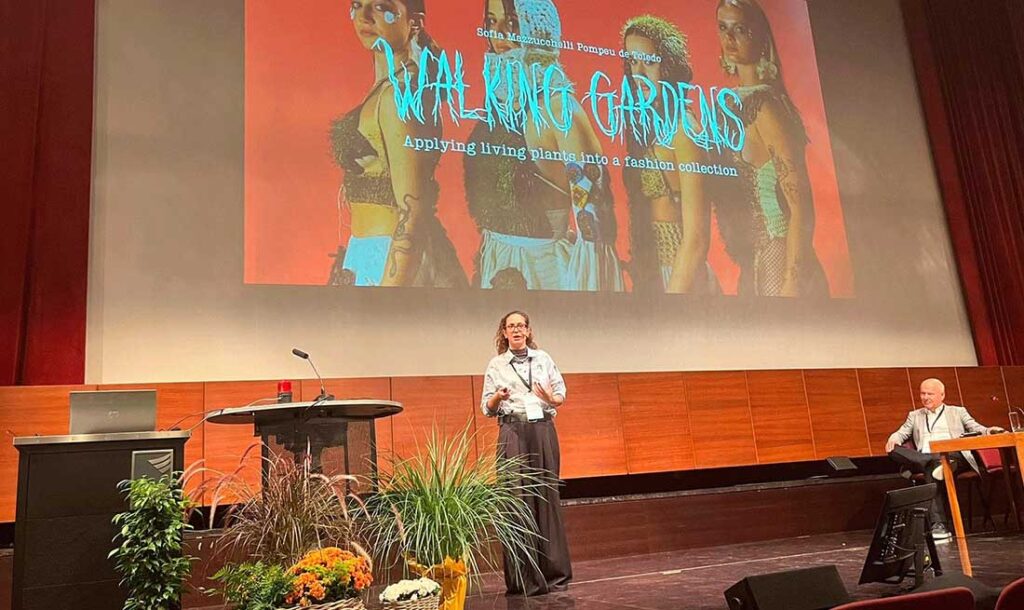
Meanwhile, fashion designer Sofia Mazzucchelli of IED Barcelona, Spain, and André Cunha, a PhD student in Chemistry at the Universidade da Beira Interior, Portugal, were the joint winners of this year’s Lenzing Young Scientist Award, which was presented during the gala evening hosted by the City of Dornbirn.
Connecting Ideas
Summing up the conference, Matthias Gluth, Austrian Fibers Institute managing director, said: “Our mission is to provide more than just a conference. We create a unique platform that brings together industry leaders, researchers, and policymakers to accelerate the transformation toward greener, more resilient value chains.
“What truly makes Dornbirn GFC special are the personal meetings, the spontaneous discussions, and the chance to interact face-to-face. Attending in person is key – it is here that ideas connect, partnerships emerge, and innovation meets real business relevance.”
Next Global Events
The 65th Dornbirn GFC will take place from September 16–18, 2026 – the year Dornbirn celebrates its 125th anniversary as a city. However, the conference remains a distinctly European affair with around 55% of delegates coming from Germany, Austria, and Switzerland. Few Asian visitors attended this year, although the organizers plan a series of regional events to expand the Dornbirn GFC brand to a global audience.
For example, a Dornbirn GFC Asia Techtextil India Symposium will take place in Mumbai on November 18, 2025, ahead of the Techtextil India exhibition, while the 5th Dornbirn GFC Asia/South Korea will be held in Seoul in May 2026. An event in China is also being considered, according to the organizers.