



Europe Moves to Mandate Recycled Content as Fiber-to-Fiber Recycling Accelerates.
Legislators in the European Union are considering introducing mandatory recycled content requirements for all new textiles placed on its markets – a move viewed by industry leaders as the fastest way to scale fiber-to-fiber (F2F) recycling.
The proposal has been put forward by the T2T Alliance, formed in March 2025 and bringing together several leading ‘NextGen’ fiber recycling companies, including Circ, Circulose, Re&Up, Samsara Eco and Syre. The Alliance is a collaboration of leading recyclers formed to advocate for policy changes, particularly within the EU’s Ecodesign for Sustainable Products Regulation (ESPR), to promote closed-loop textile recycling and increase recycled fiber use.
Regulatory Push
Since January 2025, EU member states have banned the landfilling and incineration of textile waste while rolling out extended producer responsibility (EPR) schemes. Brands and retailers must now fund the collection of used textiles for reuse or recycling, tackling the six to seven million tons of textile waste generated annually across the bloc.
At the first Textile Recycling Expo in Brussels in June, the T2T Alliance called for mandatory recycled-content targets of 10% by 2028, 15% by 2030, and 30% by 2035. Dolly Vellanki of Circ emphasized that both post-consumer and post-industrial waste must be valued equally to secure the volumes needed for scale. Robust verification combining chain of custody and mass balance will only work, she argued, if these targets are legally binding.
Marco Lucietti, Head of Global Marketing and Communications, RE&UP Recycling Technologies, warned against protectionism, noting that spinning and weaving supply chains are inherently international. He highlighted that F2F recycling could become a $30 billion industry by 2030, presenting a global commercial opportunity if quality and performance are maintained.
Scaling Technologies
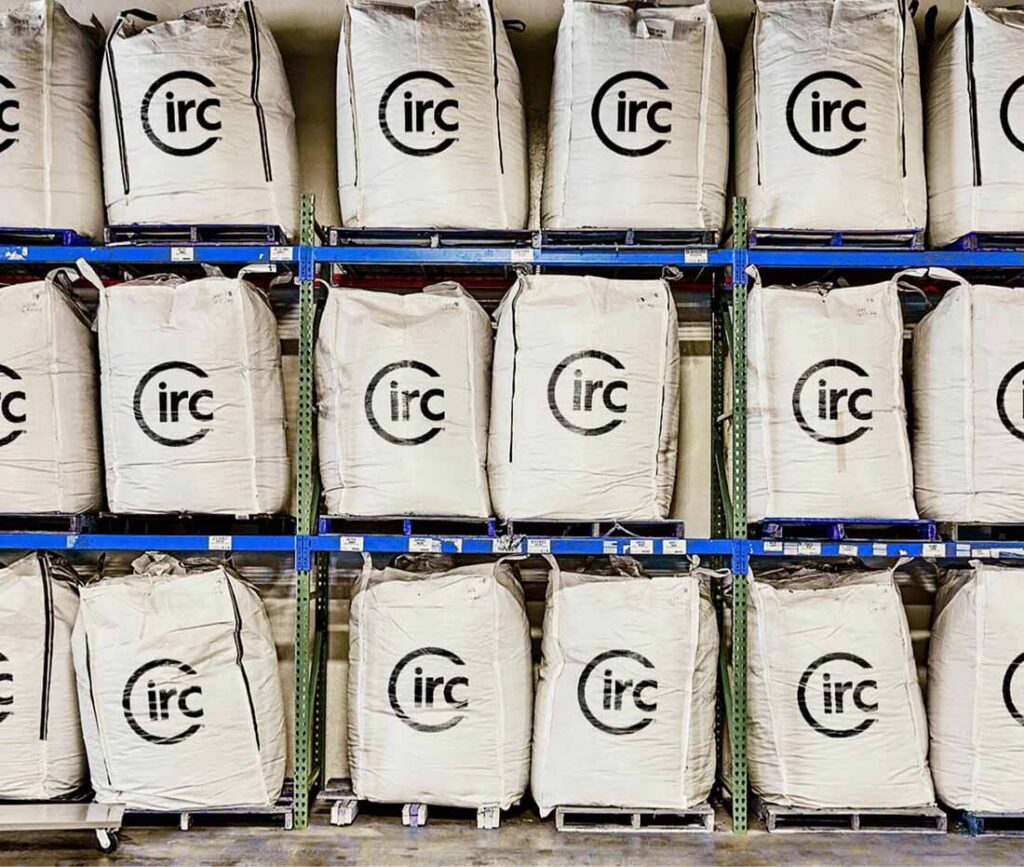
The urgency of regulatory change coincides with significant investment in recycling infrastructure. A wave of new facilities is demonstrating that commercial-scale F2F recycling is now technically and financially viable.
In France, construction is scheduled to begin in 2026 on a €450 million Circ plant in Saint-Avold that will recycle 70,000 tons of polycotton blends each year. Circ’s hydrothermal process separates cotton and polyester from post-consumer and post-industrial blends, which account for most of the global market. This will be Circ’s first full-scale facility, supported by more than $100 million in investment and secured offtake agreements with brands and fiber producers.
Australia’s Samsara Eco opened its first full-scale enzymatic recycling plant in Jerrabomberra in September. Using AI-designed enzymes, the facility breaks down mixed plastics into raw materials for recycled nylon 6.6 and polyester. The plant will supply global brands such as lululemon and forms the basis for a network of commercial facilities, including a 20,000-ton nylon plant in Asia planned for 2028.

Syre is pursuing a similar strategy for polyester. Following a $100 million funding round, it is building a $1 billion recycling plant in Vietnam with a capacity of up to 250,000 tons per year by 2028. A smaller “blueprint” plant in North Carolina will begin operations in 2026. Syre’s chemical depolymerization process yields PET pellets that match virgin polyester quality while reducing carbon emissions by up to 85%.
Strategic Partnerships
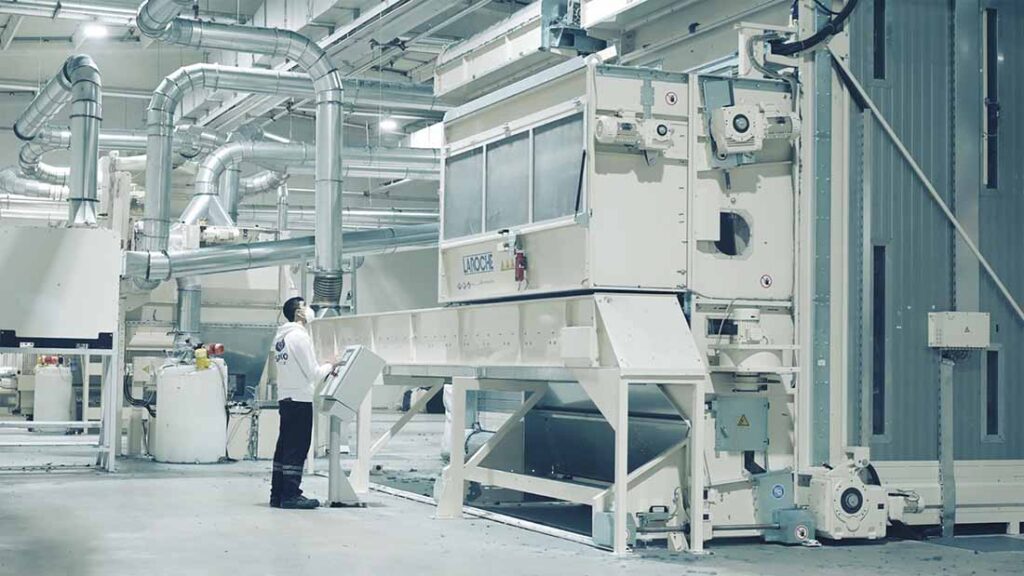
A striking feature of 2025 has been the scale of long-term offtake agreements between recyclers and major textile producers—a crucial factor in financing these capital-intensive plants.
Circ has signed a series of multi-year deals to guarantee both supply and demand for its recycled fibers. Agreements with Selenis in Portugal and Sanyou Chemical Fiber in China will support large-scale polymerization and lyocell fiber production, while a new partnership with India’s Arvind will integrate Circ fibers into mainstream apparel manufacturing. These contracts underpin financing through a mix of equity and debt.
Re&Up’s partnership with Puma exemplifies how brands are embedding F2F recycling into core product lines. Puma’s Re:Fibre program now produces millions of jerseys using recycled fibers, with a target of 30% F2F polyester across all the brand’s apparel by 2030. Bestseller’s Only brand has also launched a jersey program using Re&Up polyester, proving cost competitiveness at scale.
A striking feature of 2025 has been the scale of long-term offtake agreements between recyclers
and major textile producers—a crucial factor in financing these capital-intensive plants.
Circulose, the successor to Renewcell, has shifted its strategy to prioritize binding agreements following its 2024 bankruptcy. Deals with H&M, Mango, and Tangshan Sanyou aim to build stable demand while avoiding the price volatility that undermined its previous model.
Syre, meanwhile, has announced partnerships with Gap, Houdini Sportswear, and Target. Gap alone plans to use 10,000 tons of Syre polyester annually, while Houdini is committing to source half its polyester from Syre for three years as it pursues a fully circular model by 2030.
Financing the Transition
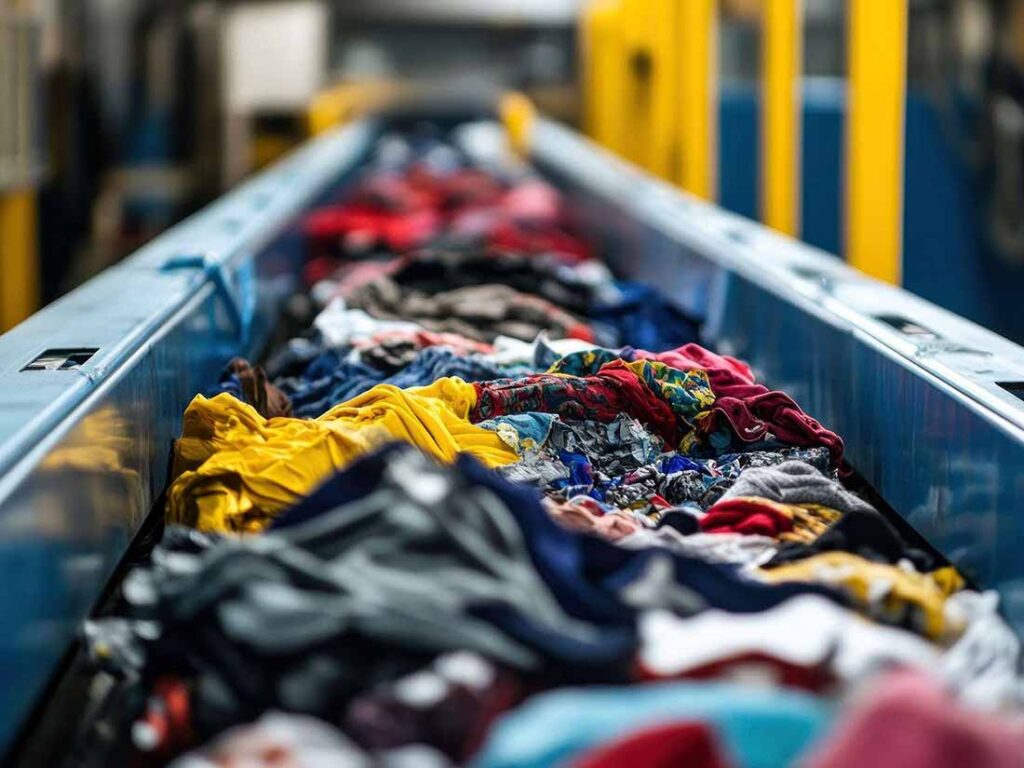
The scale of investment now flowing into textile recycling is unprecedented. Alongside Circ’s €450 million French project and Syre’s $1 billion Vietnam plant, other players are mobilizing significant capital.
Re&Up, based in the Netherlands, secured a €70 million loan from Proparco to fund its Gaziantep facility in Turkey. Using mechanical and thermomechanical recycling, it will soon be able to process 200,000 tons annually and aims to surpass one million tons by 2030. Powered by renewable energy and capable of handling blended textiles, the plant represents one of the largest operational F2F recycling sites worldwide.
Such financing is being reinforced by strong policy signals. Mandatory recycled content targets, combined with EPR schemes and waste bans, are reducing market risk and encouraging investors to back large-scale infrastructure projects.
Samsara Eco has raised over A$150 million (Australian Dollars) from investors including CEFC, lululemon and Temasek. In July, Lululemon signed a ten-year agreement that will see Samsara supply around 20% of the brand’s fiber portfolio by 2030.
“Scaling circular materials requires bold partnerships and a shared commitment to rethinking how our industry operates. Our partnership with Samsara Eco is a powerful example of what’s possible when innovation meets collaboration,” said Ted Dagnese, Chief Supply Chain Officer at lululemon. “As we work toward our 2030 impact goals, we’re taking a diversified approach—investing in multiple partnerships to advance solutions and help reduce our reliance on fossil-fuel derived resources. Together with our partners, including Samsara Eco, we’re helping to turn our vision of a circular model into a reality.”
Such financing is being reinforced by strong policy signals. Mandatory recycled content targets, combined with EPR schemes and waste bans, are reducing market risk and encouraging investors to back large-scale infrastructure projects.
Traceability
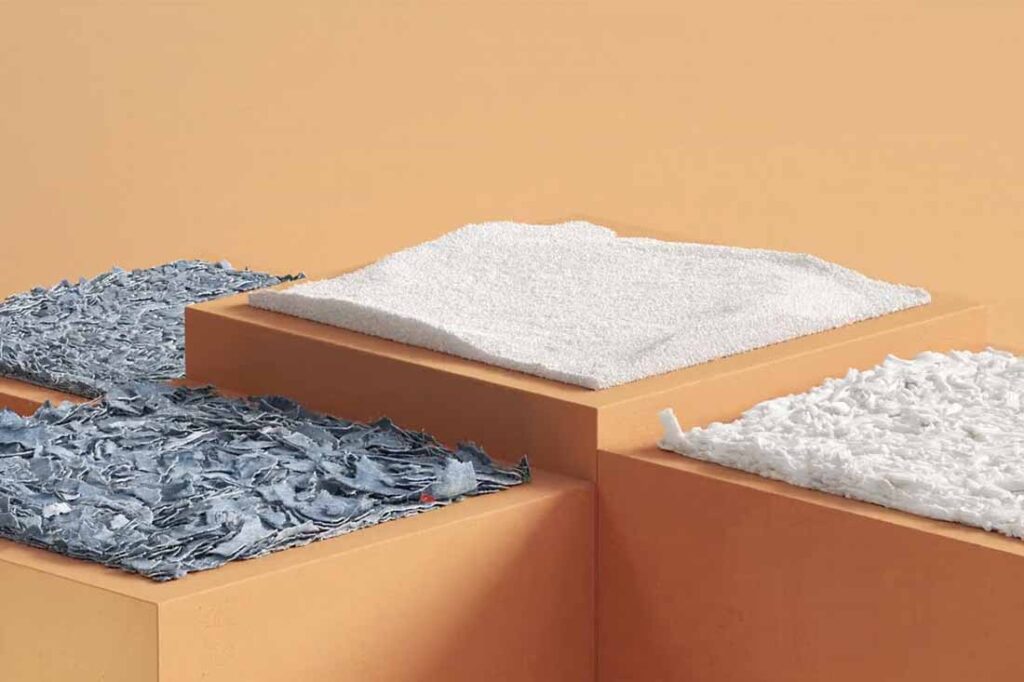
As recycled content targets tighten, traceability has become essential for regulatory compliance and consumer trust. In September, Circulose announced a partnership with TextileGenesis to digitally trace every kilo of pulp from production through to finished garments. Using the TextileGenesis Fibercoin system, each unit receives a unique digital token that records every transformation step, preventing double-counting and ensuring real-time chain-of-custody data.
This model aligns with the broader EU push for transparent supply chains and is likely to become a standard requirement as circular materials move from niche pilot projects to mainstream manufacturing.
Lessons From Early Movers
The collapse of Renewcell in 2024 still looms large as a cautionary tale. After pioneering Circulose pulp and building a state-of-the-art plant in Sweden, the company scaled too rapidly amid post-pandemic supply disruptions and rising costs, and demand failed to materialize quickly enough. Its rebirth as Circulose under new ownership has brought a more pragmatic focus on stable pricing, customer agreements, and partnerships in Asia.
This experience underscores the need to balance technological ambition with commercial realism. Successful recyclers are now pairing innovative processes with conservative business planning, long-term contracts, and diversified geographic strategies.
Global Shift
The convergence of regulation, technology, investment, and partnerships is rapidly reshaping the textile sector. Mandatory recycled content in the EU would create clear demand signals, forcing supply chains to adapt at speed. But the shift is global—from European plants and Indian manufacturing partnerships to Chinese fiber production and American enzyme research, the infrastructure for F2F recycling is becoming truly international.
The coming decade is set to define whether circular textiles can scale beyond pilot projects and niche collections to become the industry standard. The signs in 2025 are promising. Industrial plants are being built, financing is flowing, traceability is tightening, and brands are signing multi-year commitments. If legislation follows through, F2F recycling could soon move from the margins to the mainstream of global textile production.