



Over the past decade, the rise of SUVs, electrification, and added safety/comfort features has steadily increased vehicle weight, reversing earlier trends toward lighter cars, which has implications for automotive textiles.
New cars have become substantially heavier today than they were a decade ago. For example, between 2016 and 2023, the average curb weight of new vehicles in the UK rose from 1,553 kg to 1,947 kg—an increase of nearly 400 kg, according to test data published by Autocar.
Weight gain was not as marked in other European countries: passenger cars in the Netherlands, for instance, gained about 94 kg (8.1%) on average between 2015 and 2025, with new models showing the sharpest increases, according to figures for the country’s fleet of motor vehicles.
However, the overall trend globally is upward. Historically, cars in the 1980s–1990s were much lighter: a 1985 Honda Civic weighed around 820 kg, while a 1995 VW Golf was 1,035 kg; today’s equivalents are often 50–100% weightier.
Why Cars are Heavier
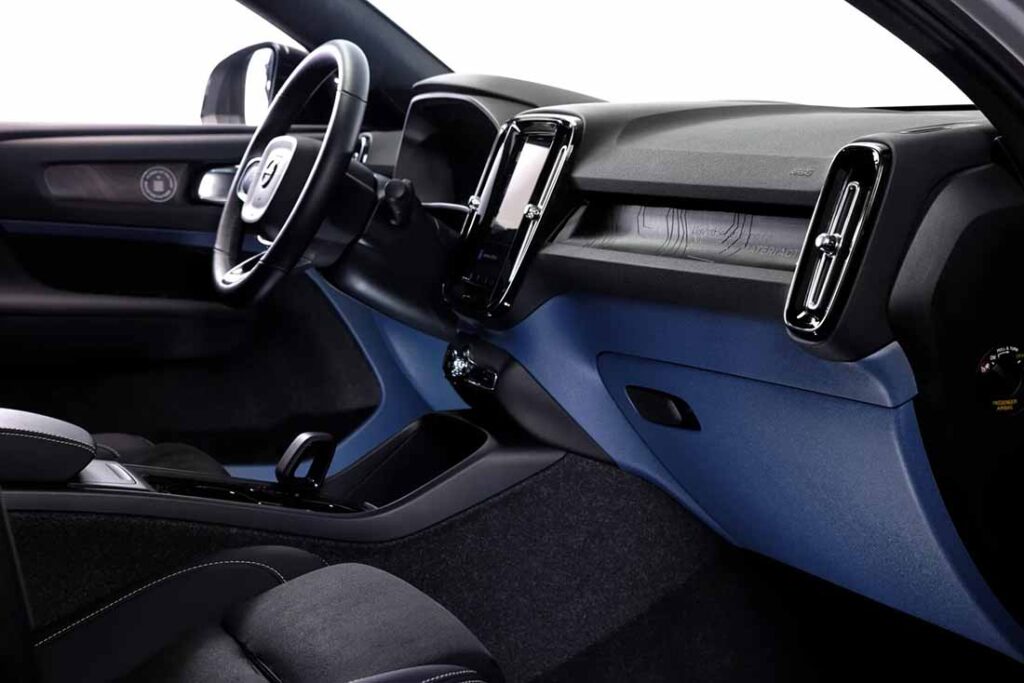
There are a number of reasons why cars are now heavier. One of the principal factors is the sport utility vehicle (SUV) boom: SUVs and crossovers now dominate sales across all the main regions worldwide—Europe, North America, and Asia. These models are larger and heavier than traditional sedans or hatchbacks.
In 2016, the average SUV weighed averaged 1,722 kg; by 2023, that had risen to 1,906 kg, although smaller city cars remain more common in some global markets, slightly moderating the averages.
Electrification is also playing a major role: electric vehicles (EVs) are heavier owing to their large battery packs; battery-electric cars average around 1,991 kg, some 100 kg heavier than combustion-
engine equivalents.
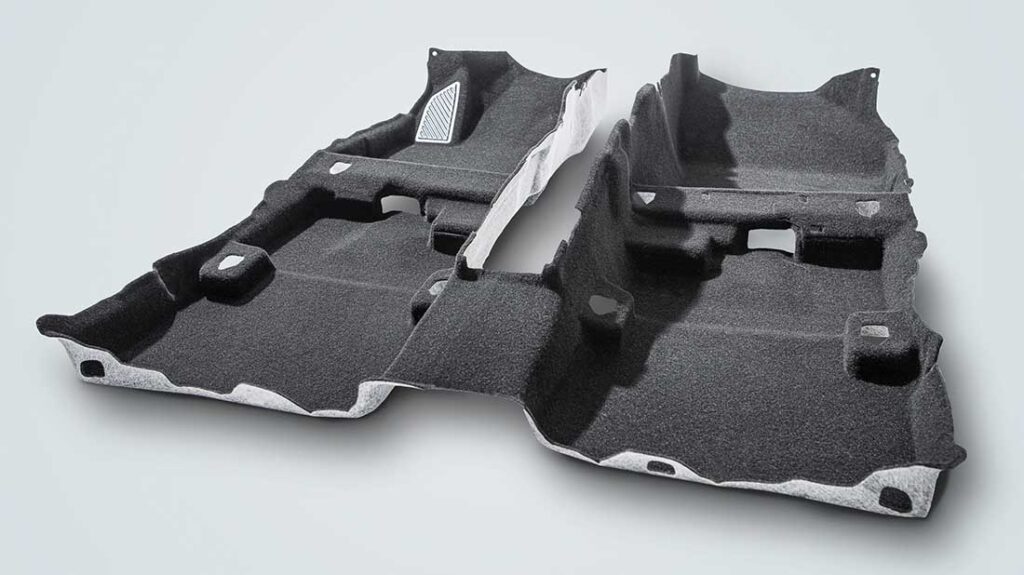
Safety and technology features, such as advanced driver-assistance systems, crash structures, infotainment, and luxury amenities, all add bulk to vehicles. In addition, car buyers increasingly want spacious, feature-rich vehicles rather than minimalist, lightweight models.
Implications for Automotive Textiles
The dramatic weight gain across all vehicle types has numerous implications for automotive textiles. As cars get heavier, the role of textiles becomes even more critical to offset weight gains. Lightweight technical textiles and fiber-based composites are increasingly used to replace heavier metals and plastics, helping manage overall vehicle mass despite the added interior features and battery weight.
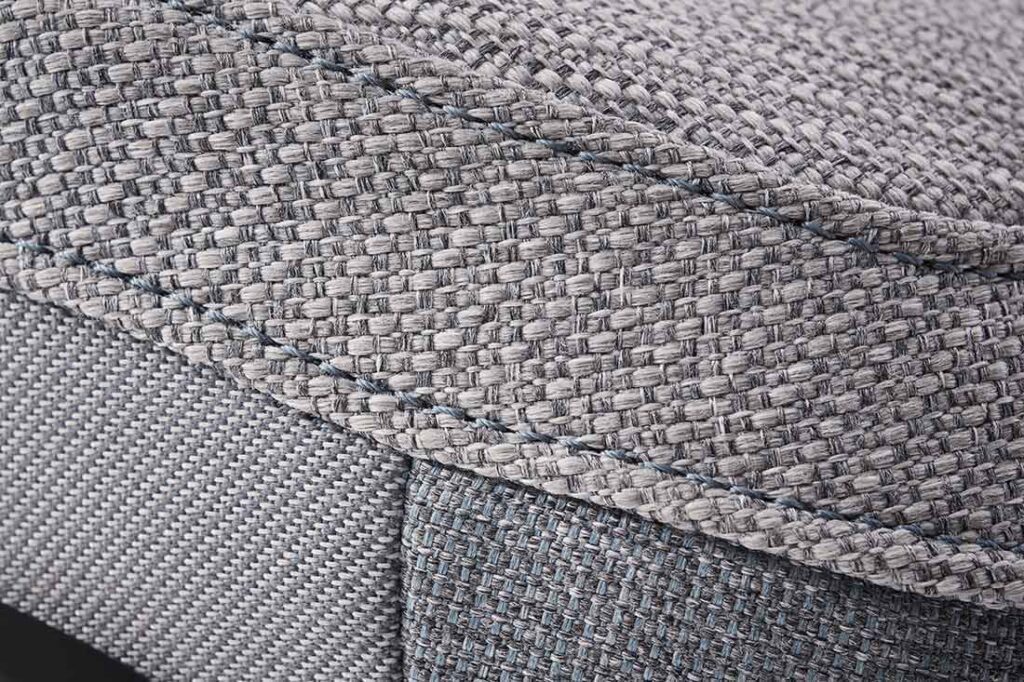
Materials such as carbon fiber-reinforced polymers and glass fiber composites provide exceptional strength-to-weight ratios, enabling the production of lighter yet robust automotive bodies and components.
Heavier vehicles consume more energy, so using textiles that reduce weight directly supports better fuel economy and lower emissions, which are vital as average vehicle weights rise and particularly as emissions standards become ever more stringent.
In terms of safety and durability, textiles in safety components, such as airbags and seatbelts, must maintain or improve performance as vehicles get heavier, ensuring occupant protection is not compromised. At the same time, heavier cars can better protect occupants but increase the risks to pedestrians and smaller vehicles involved in collisions.
With heavier vehicles often featuring more luxury and technological features, textiles can enhance interior comfort and aesthetic appeal—without adding excessive weight.
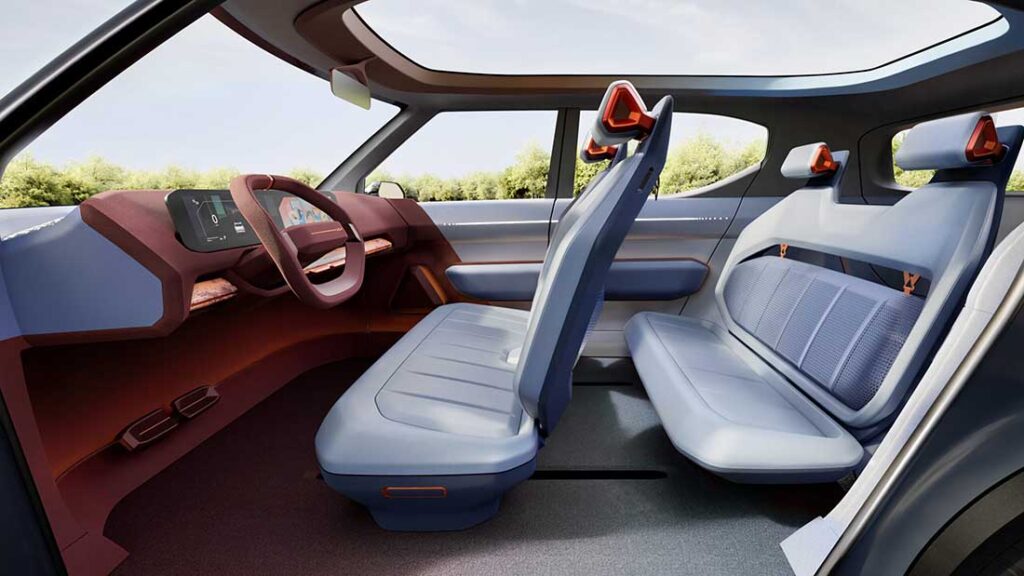
Automotive original equipment manufacturers are continually pushing for sustainable textile developments to balance the environmental impact of heavier vehicles, including the use of recycled fibers and bio-based materials. Nonwovens, too, can be of value in the transportation sector by helping to make vehicles lighter, quieter and more comfortable, as well as saving resources.
Global automakers are also investing in lightweight materials, such as carbon fiber, aluminum, and advanced composites, to counteract the weight gain, especially in EVs: every kilogram eliminated from an EV translates directly into increased range, reduced battery requirements, and lowered manufacturing costs, positioning advanced textiles as essential performance enablers rather than mere comfort components.
According to Philippe Godano, Head Core Technologies, Autoneum: “Increasing vehicle weight is a challenge for efficiency and range, especially in electric vehicles. Fiber-based composites help address this by reducing mass in both exterior and interior components. For example, lightweight materials are used in underbody shields, wheelhouse liners and frunks without sacrificing durability.

“Inside the cabin, fiber solutions for acoustic parts improve comfort while contributing to weight reduction. These technologies support better fuel economy and extended EV range, combining functional performance with sustainability.”
Challenges for Recyclers
While reducing vehicle weight should be a primary goal for automakers aiming to improve fuel efficiency and lower emissions, industry data indicates that passenger vehicles worldwide are getting heavier, largely due to the shift toward SUVs and EVs—a trend that shows no sign of reversing. And while lightweight materials are being introduced, the overall global fleet tendency is upward in terms of mass, reshaping fuel economy, safety, and sustainability debates.
This trend toward heavier vehicles is driving innovation in sustainable, smart textiles to balance performance with environmental goals. However, integrating advanced textiles can increase manufacturing complexity and costs, which require careful design trade-offs.
In particular, the decline of lightweight small cars means that automotive recyclers will need to adapt to handling more large, complex vehicles, making the methods required to dismantle and recycle heavier end-of-life vehicles, especially those with large battery packs, even more demanding.
The removal and recycling of valuable materials, such as lithium-ion batteries, also pose a specific challenge, especially with the revised extended producer responsibility (EPR) requirements coming into force in Europe.