



False Claims in Textile Fiber Composition and Promotion Hype Continue to Unsettle the Market for This Wonder Carbon Super-Material.
Over the years, there have been many false claims and deliberate or otherwise incorrect labeling of textiles, including materials alleged to be made from Egyptian or organic cotton, Vietnamese silk, cashmere, and polyester made from recycled plastic bottles, to name just a few. So, how can manufacturers, and ultimately we as consumers, tell if the textiles we use or wear really are what they claim to contain?
One of the latest materials to be affected by the fraudulent use of marketing hype is graphene, the wonder material that offers, among many things, high electrical conductivity, strength, and flexibility, and low weight.
Advanced carbons such as graphene, carbon nanotubes, biochar, and MXenes are among the latest nanomaterials exciting the textile market, but do the claims of commercialized products stack up?
Carbon Super-Material
Graphene is characterized by its extraordinary strength—up to 200 times stronger than steel. It is a single layer of carbon atoms arranged in a two-dimensional honeycomb lattice, and owing to graphene’s unique hexagonal structure, each carbon atom is bonded to at least three others, according to the International Organization for Standardization (ISO).
Terrance Barkan, executive director of the Advanced Carbons Council, explained that the graphene family includes many forms, including few-layer graphene (three to 10 layers), graphene oxide, shell graphene, and turbostatic graphene.
Graphene can deliver a range of superior performance attributes when used in a wide range of textiles, often in amounts of less than 1%, including greater durability, better comfort, reduced bacterial load, and improved hygiene, virtually without any tradeoffs in performance, which makes graphene a “very interesting” material, said Barkan.
Graphene can either be incorporated into fibers or fibrous sheets or coated onto a textile substrate. Textile producers are often told that their raw materials contain graphene, but most do not test for it, underscoring the need for a verification process to authenticate these claims. Thorough third-party testing is key to preserving both market integrity and consumer trust.
Verified Graphene in Textile Applications
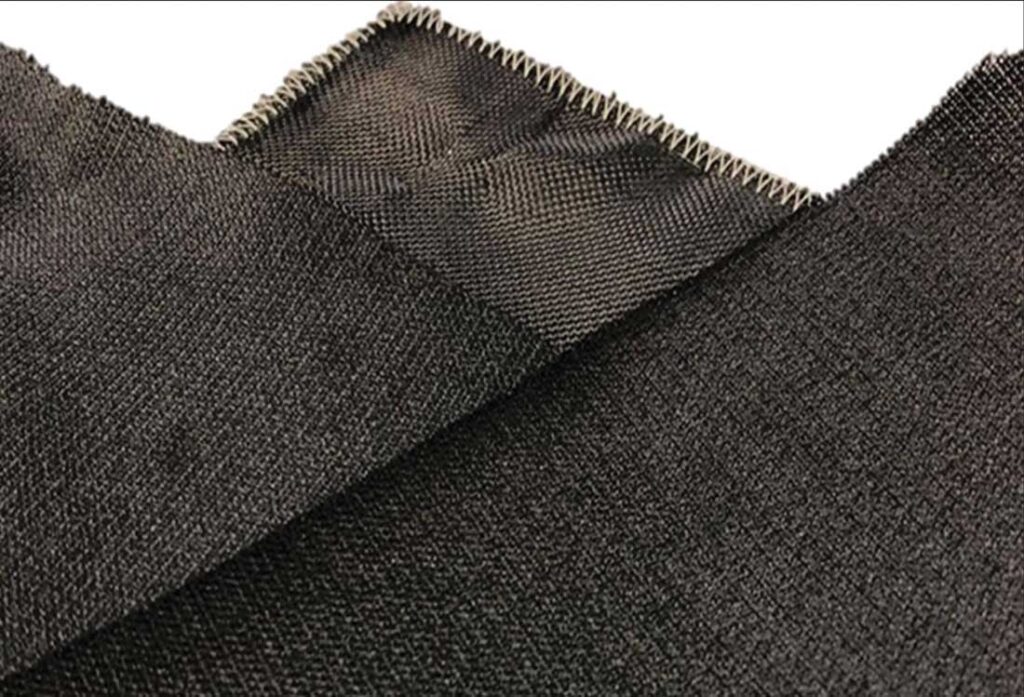
In a recent webinar on verified graphene materials in textiles hosted by the Advanced Carbons Council, Dr. Cary Hill, director, nanomaterial & emerging contaminant safety at ITA International, Blacksburg, Virginia, USA, disclosed the results of a case study—a rigorous testing program of eight protective gloves commercially available on the open market and advertised as including graphene.
He noted that a 2023 study that thoroughly characterized 34 commercially obtained graphene oxide materials found that only four of the materials exhibited the claimed properties.
The latest study conducted by ITA and the Graphene Council assessed the claimed graphenic content of eight commercially sourced cut-resistant gloves, selected from the American, European, and Asia/Pacific markets.
The samples were assessed as received and after extraction via concentrated sulfuric acid and solvent extraction. The analytical techniques included Raman spectroscopy and scanning electron microscopy (SEM) with energy-dispersive X-ray spectroscopy (EDS).
The fibers were digested in sulfuric acid, then liquid paraffin at 170°C, with the particles extracted via a polypropylene or glass filter and assessed by SEM and Raman spectroscopy.
However, only one of the eight gloves was validated to contain the claimed graphenic additives as assessed by Raman spectroscopy. SEM analysis showed particles resembling typical graphene oxide morphologies on this one glove’s fibers as well as in dissolved extracts.
Two gloves were found to contain graphite, but not graphene, and Raman spectroscopy did not detect any graphenic signatures in any of the other samples. Similarly, SEM analysis found no conclusive morphological evidence of graphene in the other samples.
The elemental analysis (SEM-EDS) found that many of the gloves appeared to use traditional cut-resistant additives, such as steel fibers, silica, glass fibers, carbon fibers, or titanium dioxide.
Verifying Claims of Graphene Content
Hill concluded that verifying claims of graphene content in commercial products may require significant preparation and analysis by multiple instruments. The dissolution of matrix materials may require multiple solvents at high concentrations and temperatures. Raman spectroscopy is the most conclusive, but additional analyses may be needed for specificity.
He emphasized that rigorous independent testing is needed to ensure the integrity of the graphene-enabled market. False claims can be made intentionally to profit from the popularity of “graphene” as an additive. False claims can also be made unintentionally when material provided from a supplier is non-graphenic or when material is ambiguous (i.e., similar but not within the accepted definition of graphene).
Finally, Hill noted that carbon exists in many forms. “That is one of the reasons it is such a unique and important material, both biologically and in advanced materials,” he said.
Carbon is highly allotropic, and the industry is now learning that graphene is a family of materials, with new atomic arrangements innovated frequently, all of which have different applications: graphene can impart different properties depending upon its morphology.
Hill advised manufacturers to seek clarity of the morphology and properties when integrating “graphenic” material into their products. “It is important to know what you are dealing with and which graphene is best for which application,” he concluded.
Standards Set the Rules
According to Barkan, industry-led standards are critically important for the advanced carbons sector, as they facilitate commercial adoption, help leading companies differentiate from competitors, and can be used by regulators to expedite regulatory approvals and frameworks.
The Advanced Carbons Council is working on six standard task forces to define global standards for advanced carbon materials: graphene, carbon nanotubes, recycled and reclaimed carbon fiber, carbon nanofibers, biochar, and MXenes.
The Graphene Classification Framework (GCF), which was started by the Graphene Council several years ago, consists of:
- A list of material characteristics and properties that have been deemed most relevant for commercial use;
- Identification of the preferred method of testing;
- A range of measurement values for each of the material characteristics and properties;
- A syntax to be used for the consistent naming and description of different forms and types of graphene materials;
- A template of a technical data sheet that conforms to the GCF structure and format.
This template is now part of the recently published ISO/TS 9651: Nanotechnologies – Classification framework for graphene-related 2D Materials.
The Graphene Verification Program is currently the only in-person, confidential and through inspection of bona fide graphene production facilities and processes, which includes a detailed characterization of the material and products produced.
The program is administered worldwide by the Graphene Council and is based on international standards and best practices, using first-class measurement laboratories and experts.
Graphene-Enriched Fabrics
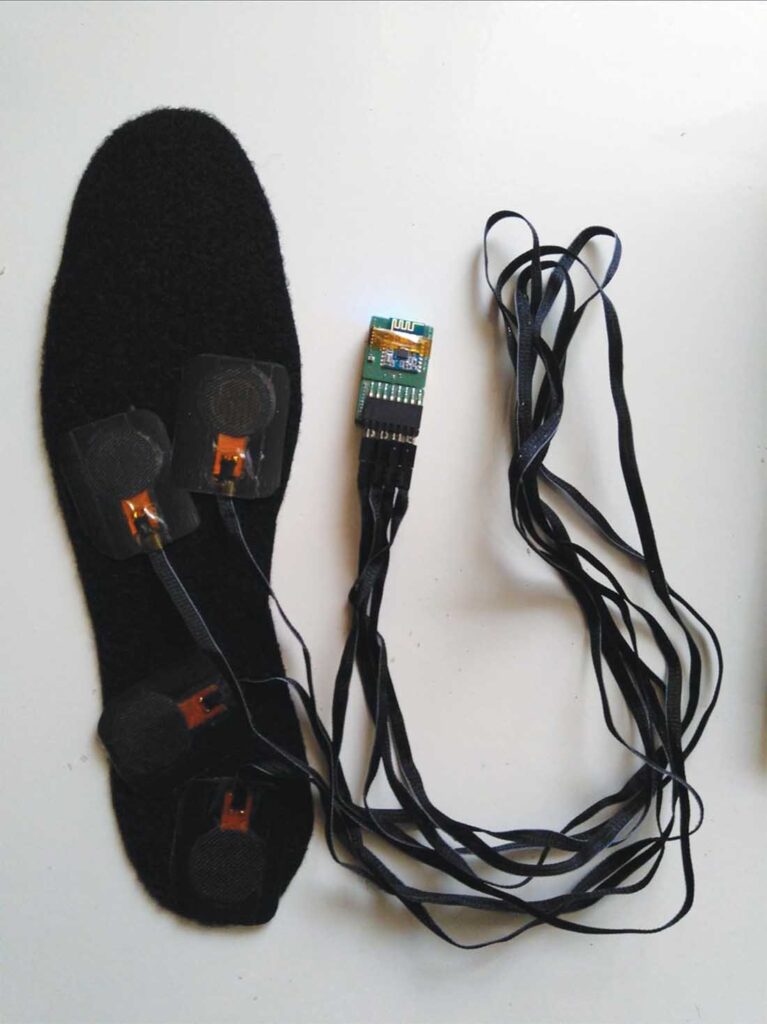
Despite the challenges of verification in textiles, several sports and clothing brands are working with graphene suppliers to produce graphene-enriched fabrics, according to the Graphene Flagship, an EU scientific research initiative that aims to advance Europe’s strategic autonomy in technologies that rely on graphene and other 2D materials.
For example, global sportswear brand Umbro integrated Versarien’s Graphene-Wear technology into its 2023 spring/summer collection’s Elite Pro-Training Kit range. Graphene-Wear features novel properties that allow wearers to experience enhanced thermal transmittance, increased moisture management and improved drying rate, without compromising air or water vapor permeability.
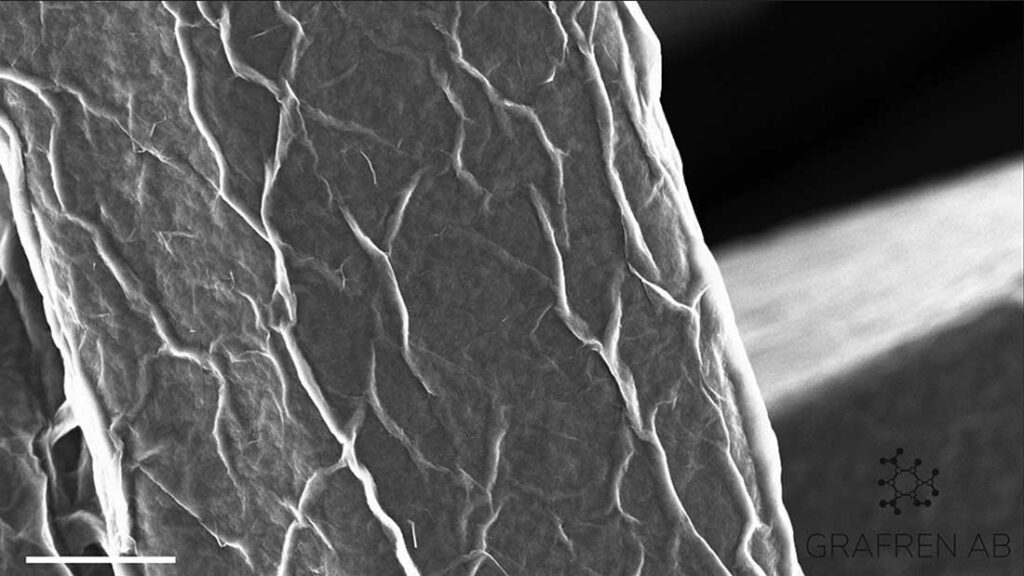
Sweden-based Grafren is testing its graphene-coating method with a range of textile materials. The method does not use binders or glue to embed conductive components in the fabric, but instead incorporates graphene flakes to create a soft, flexible, skin-like product with controlled electrical conductivity.
The VTT Technical Research Centre of Finland has received graphene-based layered materials from the UK’s University of Cambridge and compounded it with polyethylene terephthalate. The material was then spun and woven into a fabric by German brand Trevira, which could become a new lightweight, conductive yarn.
Sweden-based Grafren is testing its graphene-coating method with a range of textile materials. The method does not use binders or glue to embed conductive components in the fabric, but instead incorporates graphene flakes to create a soft, flexible, skin-like product with controlled electrical conductivity.
Health Monitoring
Meanwhile, a team led by researchers from Eindhoven University of Technology in the Netherlands has produced a conductive ink containing graphene flakes, nontoxic solvents, and a stretchable thermoplastic binder of polyurethane. The ink remains conductive even under 100% strain and is highly stable over 1,000 cycles of 20–50% strain, corresponding to the stretching of human skin.
This combination of high conductivity, stretchability, and durability makes these conductors promising candidates for applications in wristbands for sweat sensing or pulse monitoring, on-body heaters, smart sportswear, wearable power sources, and wearable electrocardiogram sensors.
A team led by VTT has also developed a graphene-enhanced shirt for cardiac monitoring, which could help healthcare professionals diagnose and treat various health conditions, while sportspeople could analyze and improve athletic performance and track their fitness and progress.