



This article takes stock of some of the near-term developments that are likely to be seen in e-textiles, as well as outlining some important industry and academic events this coming year that will no doubt offer additional insights and trends in the sector. E-textile developments are important in considering the current and short-term landscape, and perhaps more crucially for the signpost they offer to future research, development and fully commercialized products.
Key Trends And Developments
E-textiles and wearables are continuing to grow and to mature in terms of the technology, applications and consumer demand. The users of these products have really come to the fore this past year, helping to drive new developments, with the expectation going forward of even greater emphasis on user-centered design, as well as improved energy efficiency and lower environmental impacts. All of this is likely driven by consumer, health, societal and workplace demands. To break this down a little in the near-term, some alignment is very likely between the progression of wearables with trends and developments in other fields such as digital health and artificial intelligence (AI).
As the potential for wearables continues to expand, key subsectors are emerging. Remote and distance wearables is an example of this potential, and is expected to be a particularly strong trend in 2026. According to a report from Future Market Insights, the remote health care market is expected to be valued at approximately $13 million in 2025, with the value expected to rise to more than $84.6 million by 2030 with a compound annual growth rate (CAGR) of 20.5 percent. Surveying the main technology research report agencies, the wearable health care device market in general is expected to grow anywhere between 10.9 percent CAGR and 25.5 percent during this period, so that 20.5 percent CAGR for remote and distance wearables is not out of line with other predictions.
The World Health Organization (WHO) in their “Global Strategy on Digital Health 2020-2027” report stresses the need for digital health to be an integral part of health priorities. In a separate report from Enterprise Ireland — a government agency responsible for supporting Irish businesses to enter new markets and achieve scale — Dr. Christian Stafford outlines what he sees as multiple benefits of digital health wearables: “In a world where we want to push care to the home and community, using smarter devices and data to monitor and track patients remotely, technology to diagnose and treat and only bringing the most acute cases to hospital — you can readily see how a new way of delivering care, locally and community-based is inherently greener and more sustainable while also offering greater quality of life.”
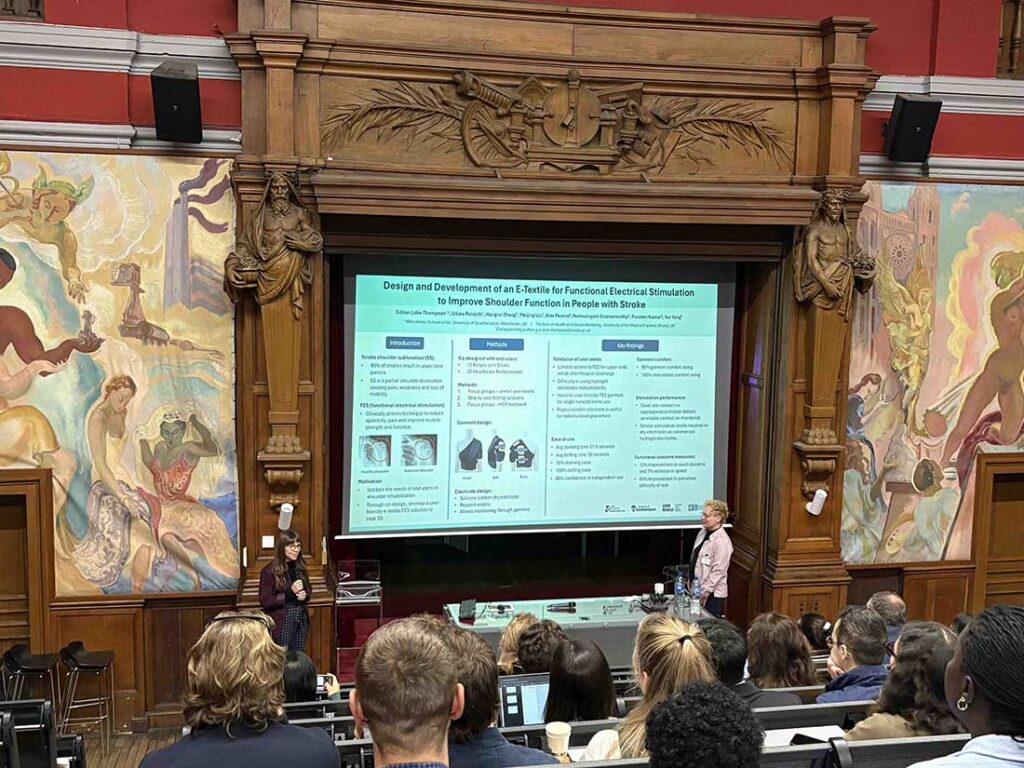
Remote and distance wearables provide for the treatment of people outside hospitals and formal health care facilities. It can for example allow elderly patients to be discharged more quickly from hospitals and cared for in their own homes or care home facilities. It also has potential for patients to receive treatment post-surgery, such as rehabilitation, in their own home. This reduces the risk of infection and improves patient outcomes while reducing the financial and resource cost to the health care provider.
The ability of wearables to provide continuous monitoring over distance can allow health providers to reach people who are geographically remote. Countries such as Canada and Australia have largely concentrated populations in small areas relative to their size. They are also home to remote groups of people, including indigenous populations that can be difficult to reach in a sustained or timely way. Workwear wearables are also looking beyond fixed work locations to consider the health and safety of workers in remote and extreme environments as well as sector-specific groups such as long-distance truck drivers who may suffer fatigue or other health problems that can endanger themselves or others.
The WHO digital health report stresses the need for interconnectedness in terms of digital technology, visualizing a system for the trusted and secure exchange of data and the sharing of relevant information across the health ecosystem to create a continuum of care. Remote and distance wearables developments will undoubtedly be informed by this strategic thinking, allowing the sector to develop to scale while contributing to the delivery of better health care across societal, cultural and geographic borders.
Key Trade Shows AndConferences: Techtextil
Two Techtextil trade shows will take place this year, with the larger of the two to be held April 21-24, 2026, in Frankfurt. This is a biennial event and includes all aspects of e-textiles from new fiber and yarn developments, to woven, knitted, nonwoven, coated and printed electronics. Exhibitors from industry, research institutes and academia are global as are the attendees. Application areas are equally diverse with wearables, medical and health, transport and building sectors all strongly represented. Collocated sister show Texprocess is a platform for processing technologies and machinery section of the event. Exhibits will highlight individual machines, as well as robotics and connected technology. These Frankfurt events are not 100 percent e-textiles focused, but the sector has a strong showing. The annual Techtextil North America will be held August 4-6, 2026, in Raleigh, N.C. This is a smaller version of the Frankfurt event, but e-textiles will also have a presence.
E-Textiles 2026
E-Textiles is an annual conference held in a rotating series of so far European cities each year. E-Textiles 2026 — the 8th International Conference on the Challenges, Opportunities, Innovations and Applications in Electronic Textiles — will take place in Pilsen, Czech Republic, November 24-26, at the Parkhotel Congress Centre.
The four-day conference attracts speakers primarily from academia, research institutes, small to medium-sized enterprises (SMEs), and start-ups. There is a small exhibition area that includes manufacturers, universities and research institutes, as well as a strong student poster area with many from these sections also presenting. It is a showcase for new research and developments with wearables, medical and health applications particularly well represented. One of the event’s strengths is in disseminating progress on some of the very large European grants that have multiple partners from academia and industry with these commonly continuing over three- or five-year periods often with follow-on to commercialization.
AT Expo 2026

This trade show and conference organized by the Advanced Textiles Association (ATA) takes place annually. AT Expo 2026 will be held in Orlando, November 3-5. E-textiles feature strongly both on the show floor, conference and campfire education programming. The conference is held the day before the show floor opens, with campfire sessions located on the show floor itself during the trade show and free to attend. North American exhibitors feature strongly with some from Asia and Europe also attending. Show attendees are primarily from North America. This is the flagship ATA event. Although not an exclusively e-textile event, all aspects of the sector are covered, with a heavy focus on fiber and yarn developments, as well as woven and knitted structures. Exhibitors from industry, research institutes and academia are represented with the National Aeronautics and Space Administration (NASA) exhibiting and presenting each year. Application areas are diverse with wearables, workwear, medical and health all featuring strongly. One of AT Expo’s strengths is in disseminating progress on very large grants and research specialisms that look to the medium and long-term.
Beyond 2026: LOPEC
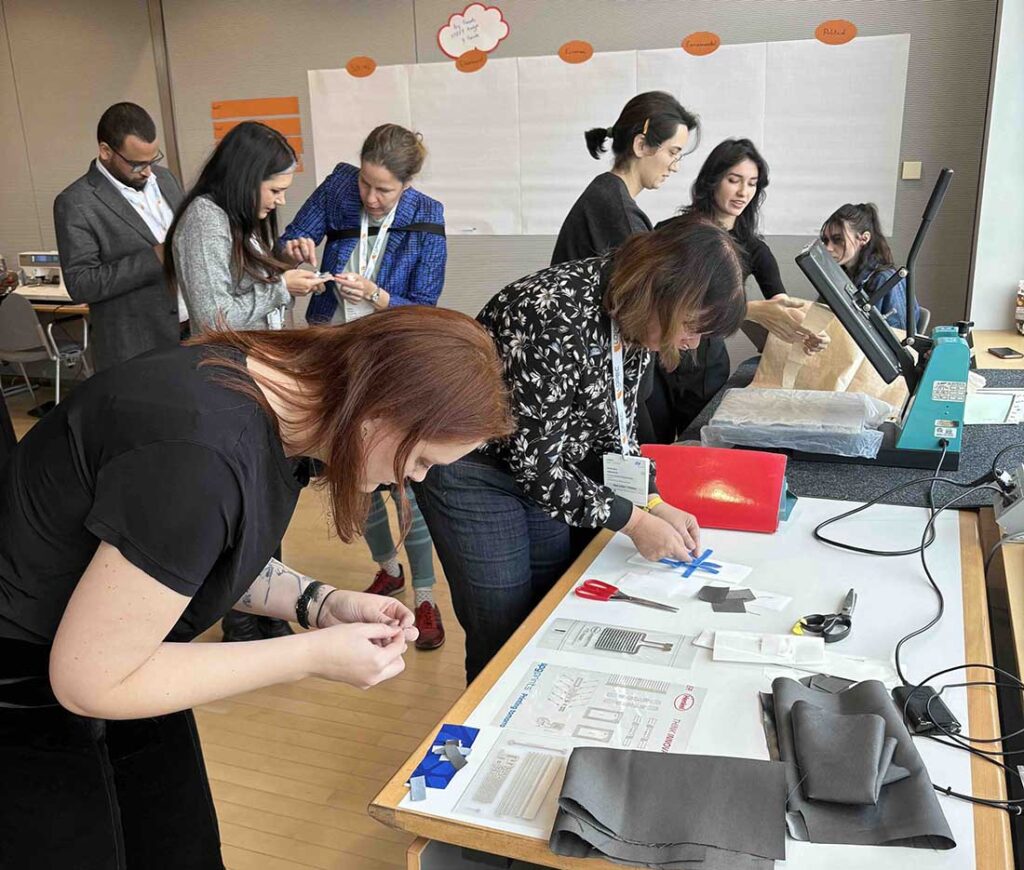
The Large-Area, Organic & Printed Electronics Convention (LOPEC) is an annual conference that takes place next March 2-4, 2027. LOPEC is the primary annual conference and trade show for the printed electronics sector and it takes place in Munich, Germany. The event focuses on printed electronics and flexible hybrid electronics, with exhibitors ranging from manufacturers to SMEs, start-ups, testing equipment providers and academia. European companies have a strong presence, but exhibitors from North America and Asia are also present. The conference is the primary education program, which features speakers from industry, academia, and associated areas such as industry standards. The show floor hosts a number of panel discussions, as well as a student poster exhibit area just outside the main show floor. I instigated Design@LOPEC with Marina Toeters in 2025 to bring design and industry together for a workshop with some exciting results. The workshop ran for the second year in 2026, and I hope to see it return in 2027.
Most of these trade shows and conferences are covered by IFJ journalists including myself. Look for coverage of the upcoming events in future issues of IFJ.